Carrot Day 2024

Jan 1, 2025

The last time I wrote, in early November, I was celebrating the tenacity of some vegetables and the continued productivity of 41 Western Ave. garden. I closed the pre-election blog with this sentence, “May the valiant zucchini and hearty poblano pepper, and the optimistic bean be our guide.”

Well, the election did not turn out the way I had hoped but at least Trump did win the popular vote. I am 64 now and I am trying to take advantage of my previous experiences with elections and how I respond to them. Today I am calmer in my reaction, maybe not reaching equanimity but accepting.  The most difficult election for me was 2000 and in retrospect the most consequential 1980 but I carry on. I am not saying that I have been able to reach the level of equanimity I had hoped for in the pre-election post but I am okay and I hope you are too. 

As I wrote then “Well here is what I tell myself. Equanimity. If the election goes as I hope, remember there is still much to do and I should do my best. If the election goes as I fear, remember there is still much to do and I should do my best.” Well there is still much to do and even more now and I know that there are many who are happy with the election. For those, like me, who are not, may the valiant zucchini and hearty poblano pepper, and the optimistic bean be our guide as we attempt equanimity and commit ourselves to service for others, for our earth and for those who will outlive us.
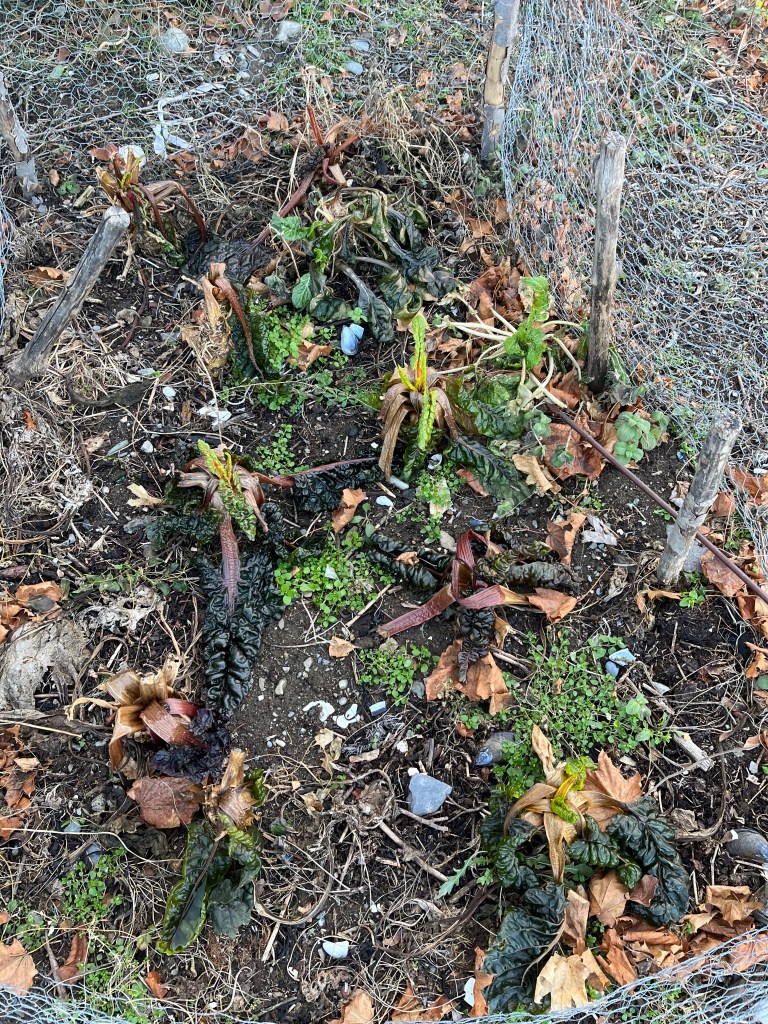
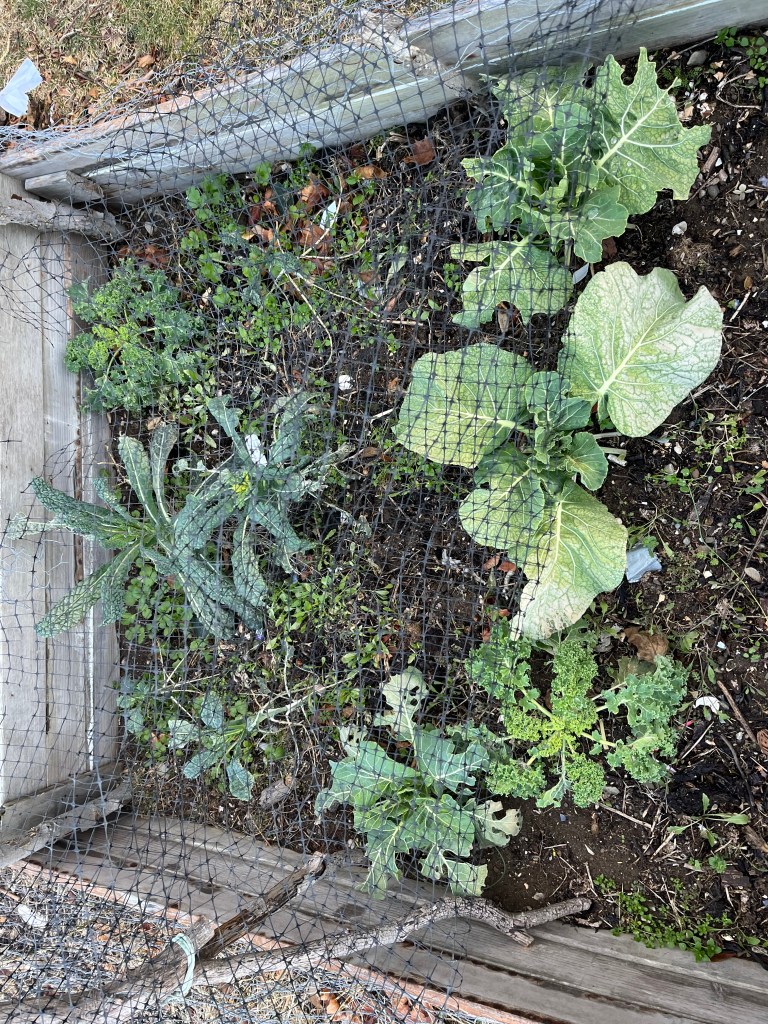
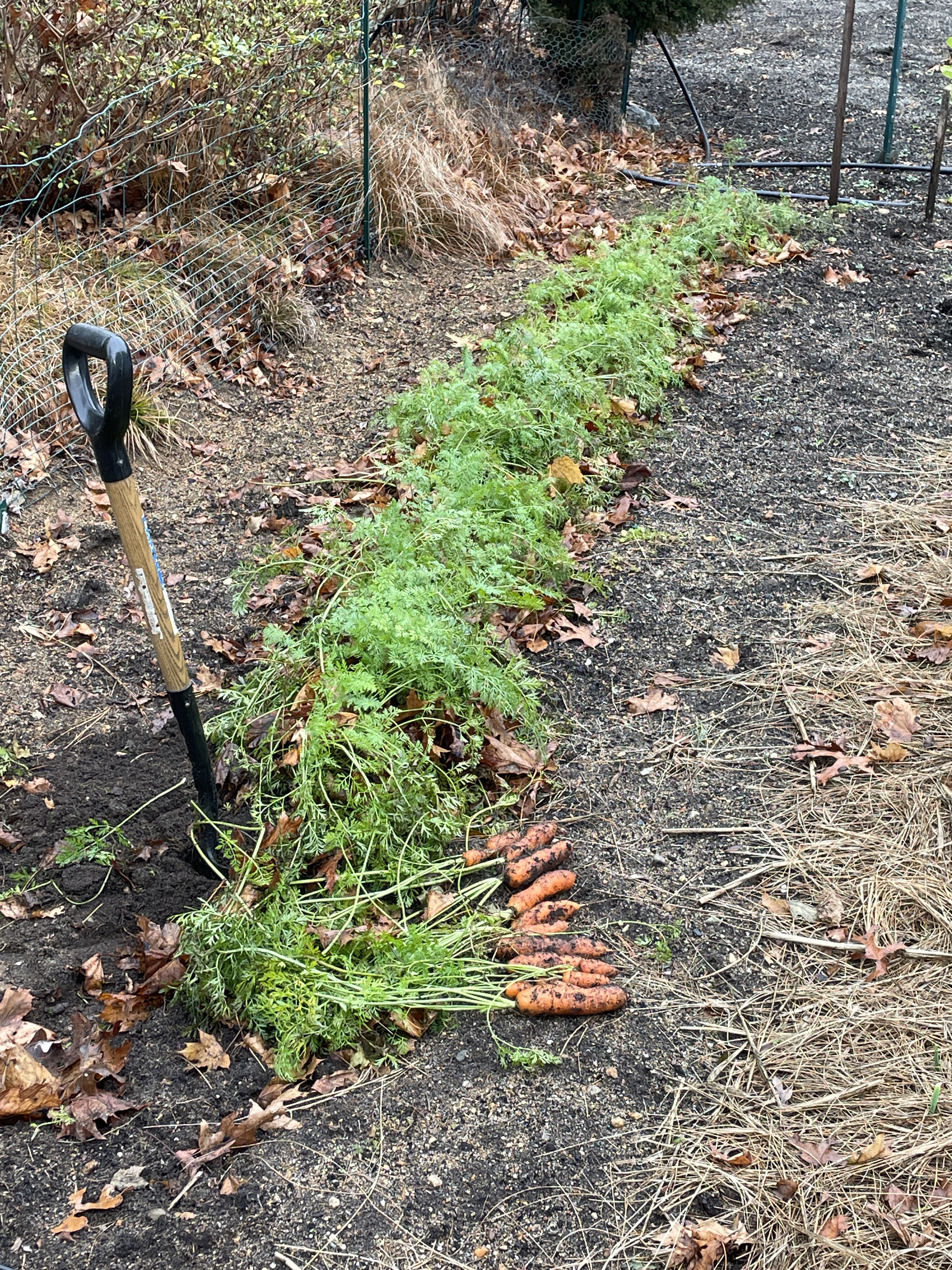
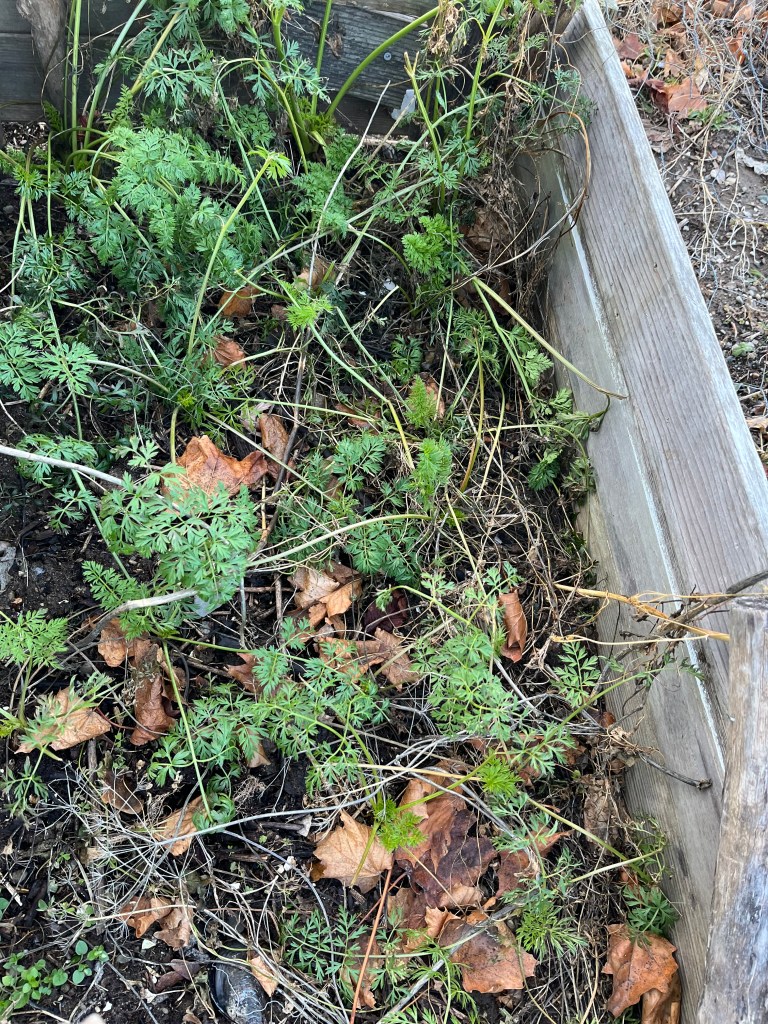
Winter has truly arrived here in Hull and unlike most years I do not have cold frames out. I am letting the garden go fallow this winter. Most years on January 1 about a quarter of the garden is under cold frames but I will leave the cold frames in the basement until early February. Then I will get them out and start the spring garden. Perhaps the collards and kale will make it through and I will pile leaves on the chard plants to give them a chance. Having nothing under cold frames will allow me to spread seaweed on every inch of the garden. In preparing to write today’s post it shocked me to see what the garden looked like eight weeks ago and how sad and forlorn it looks now. There was a bright spot in the garden and that was the early planted carrot bed which on Carrot Day I neglected. On December 31st I pulled the carrots and while the texture of the top two inches was not good the bottoms of the carrots were frost kissed and beautiful.
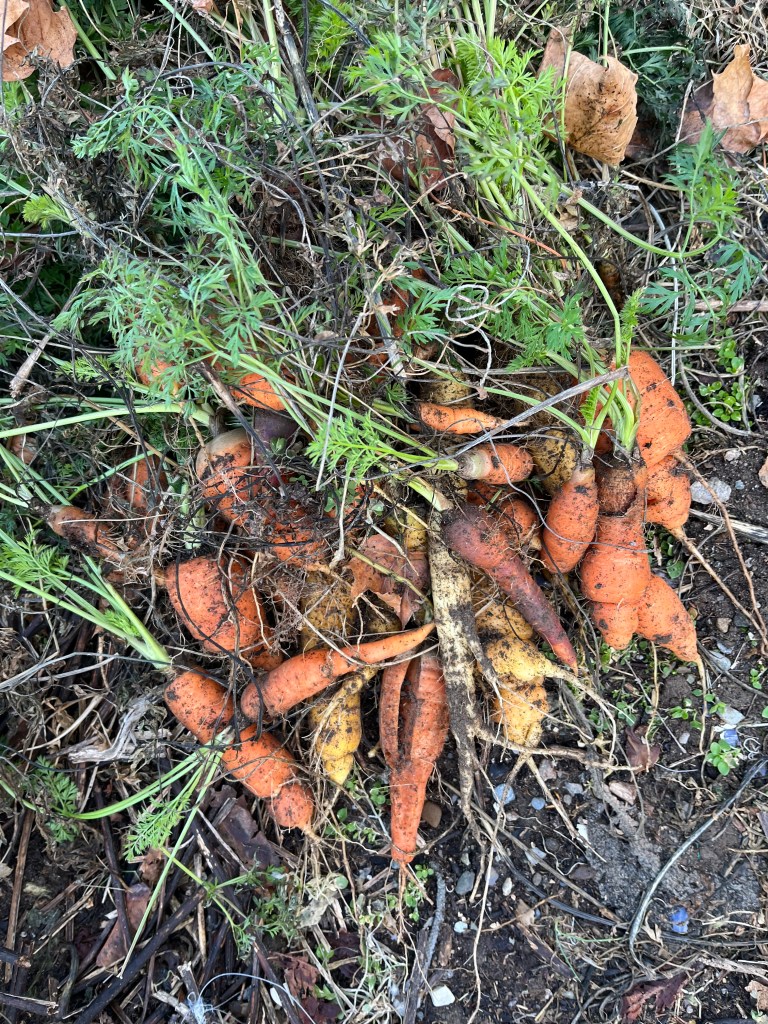
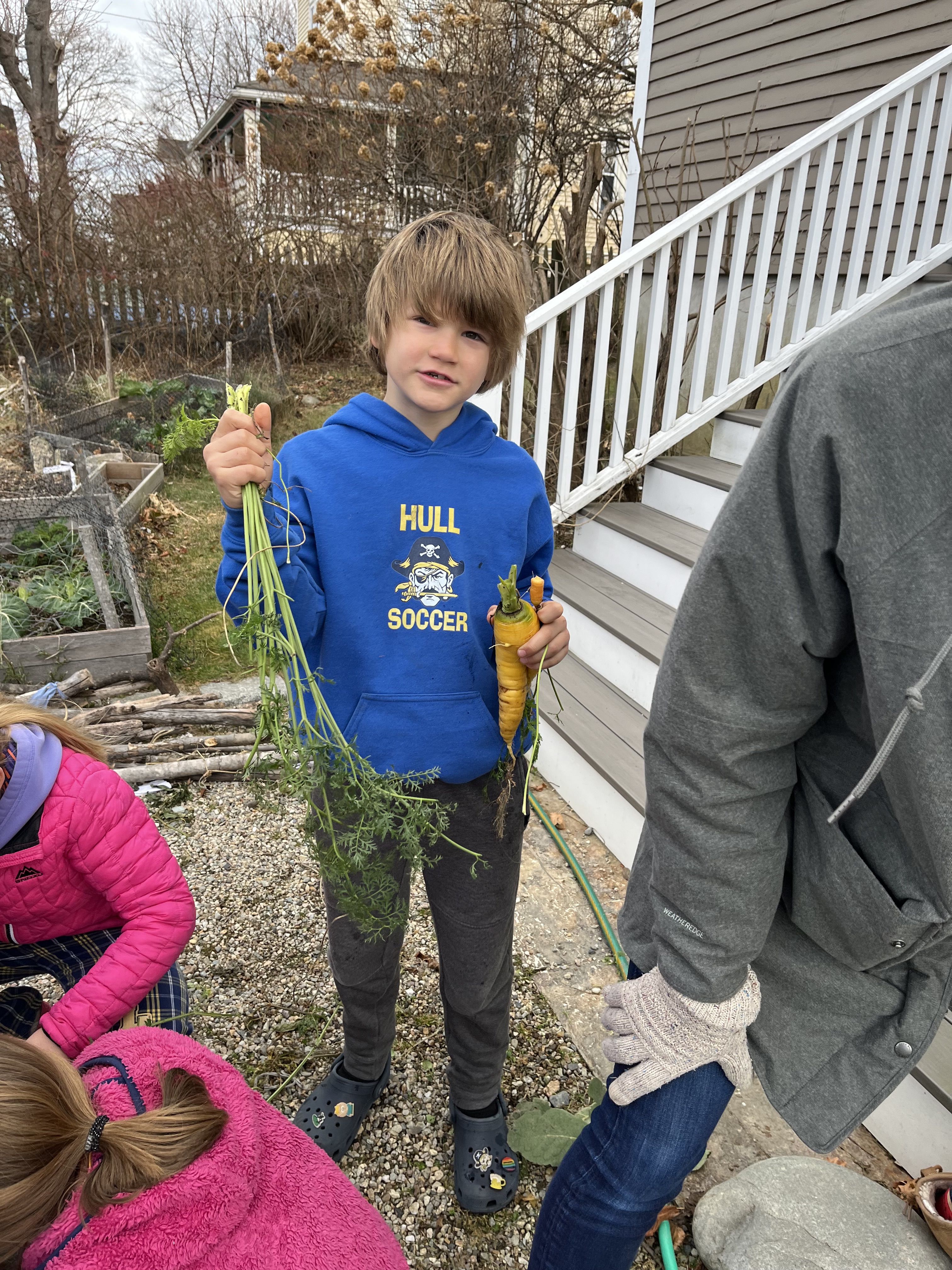
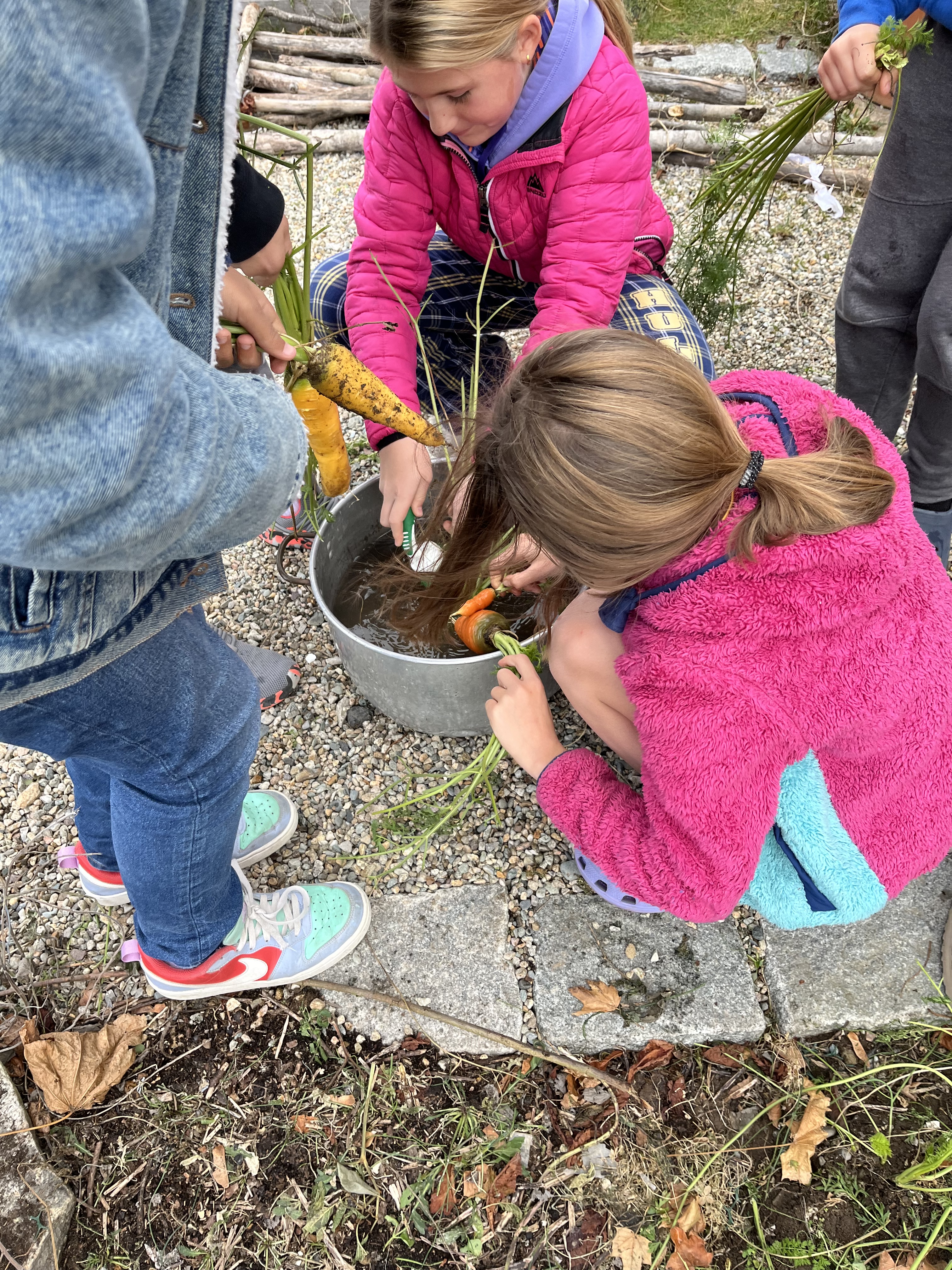
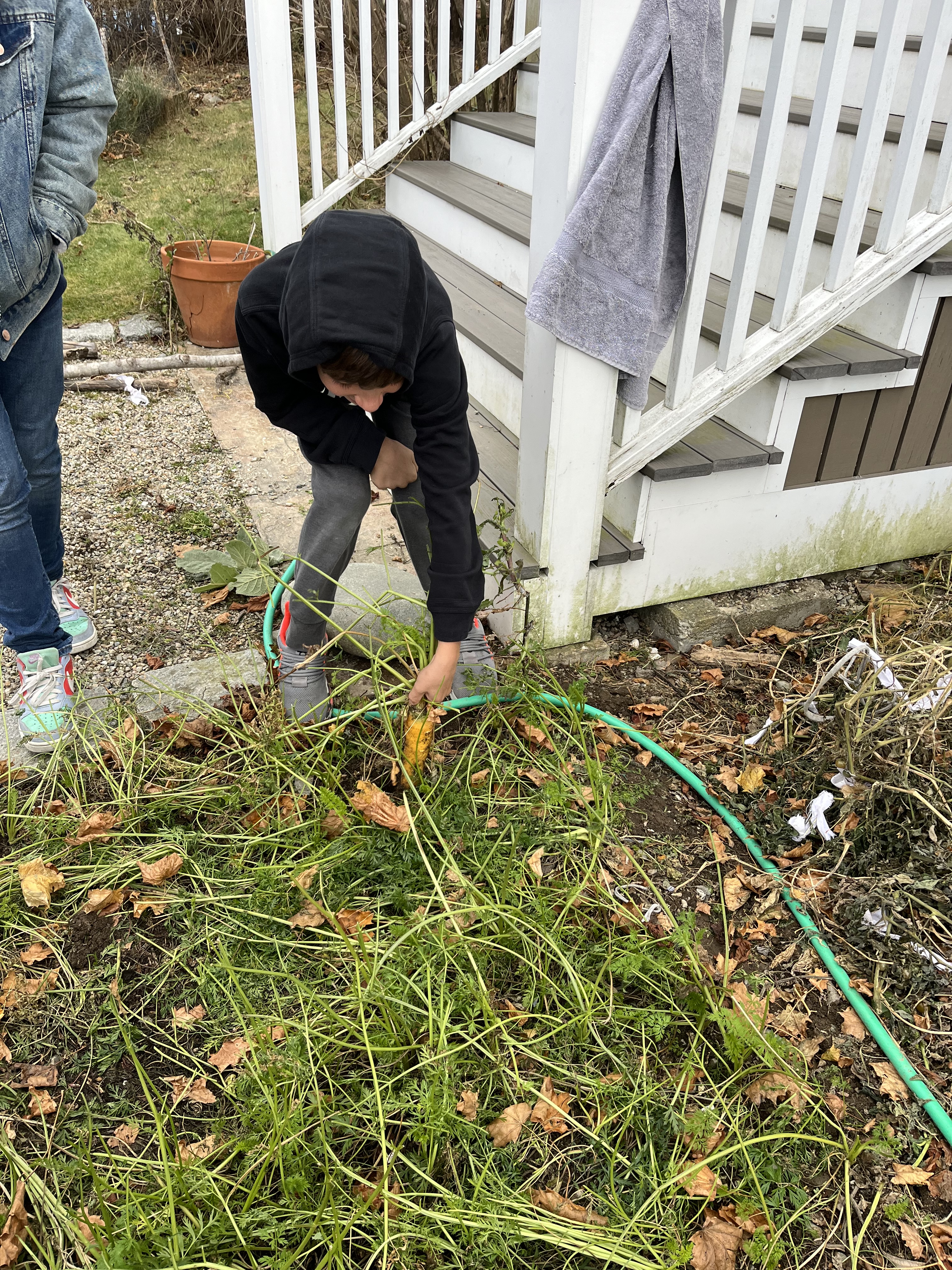
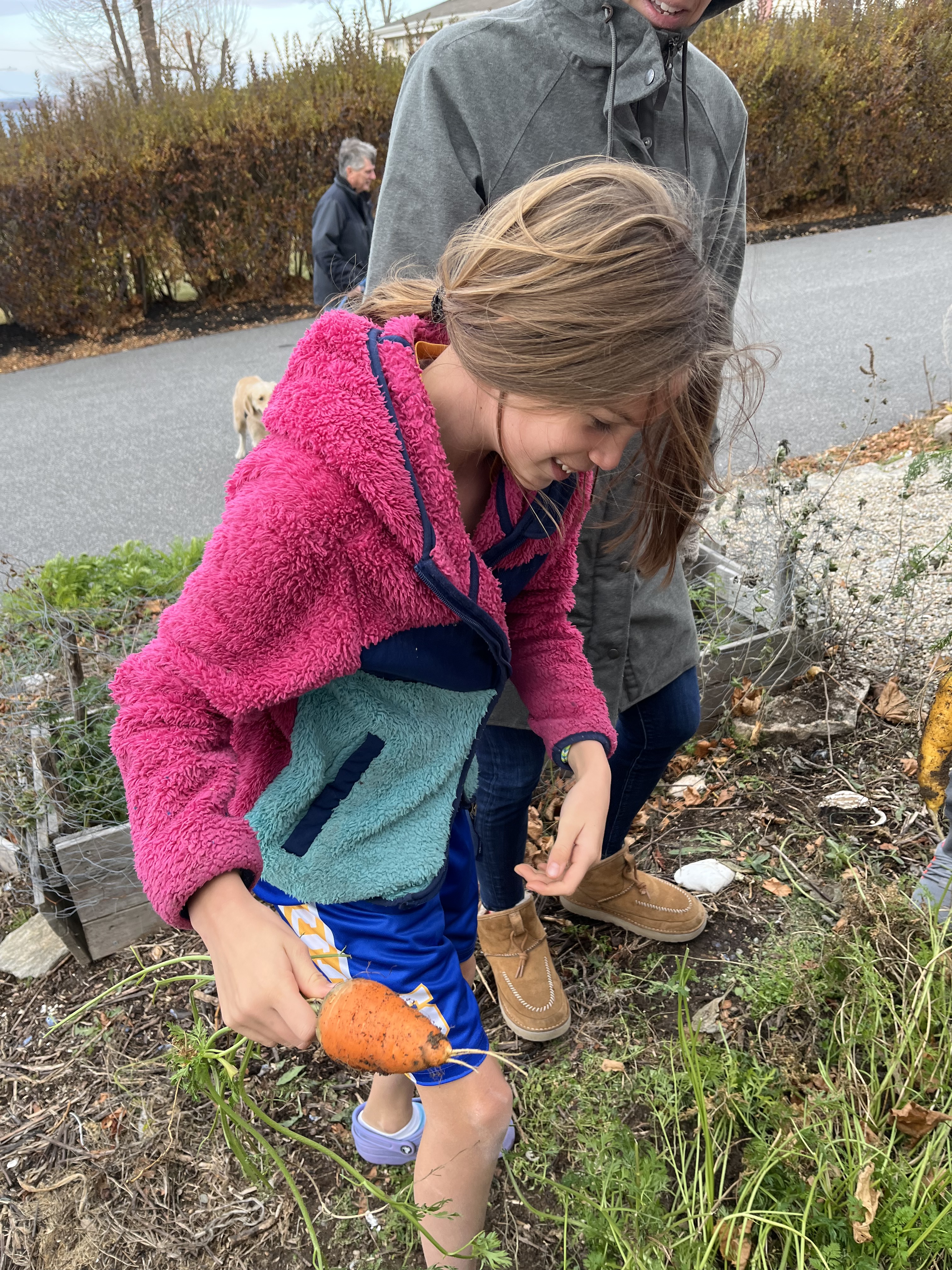
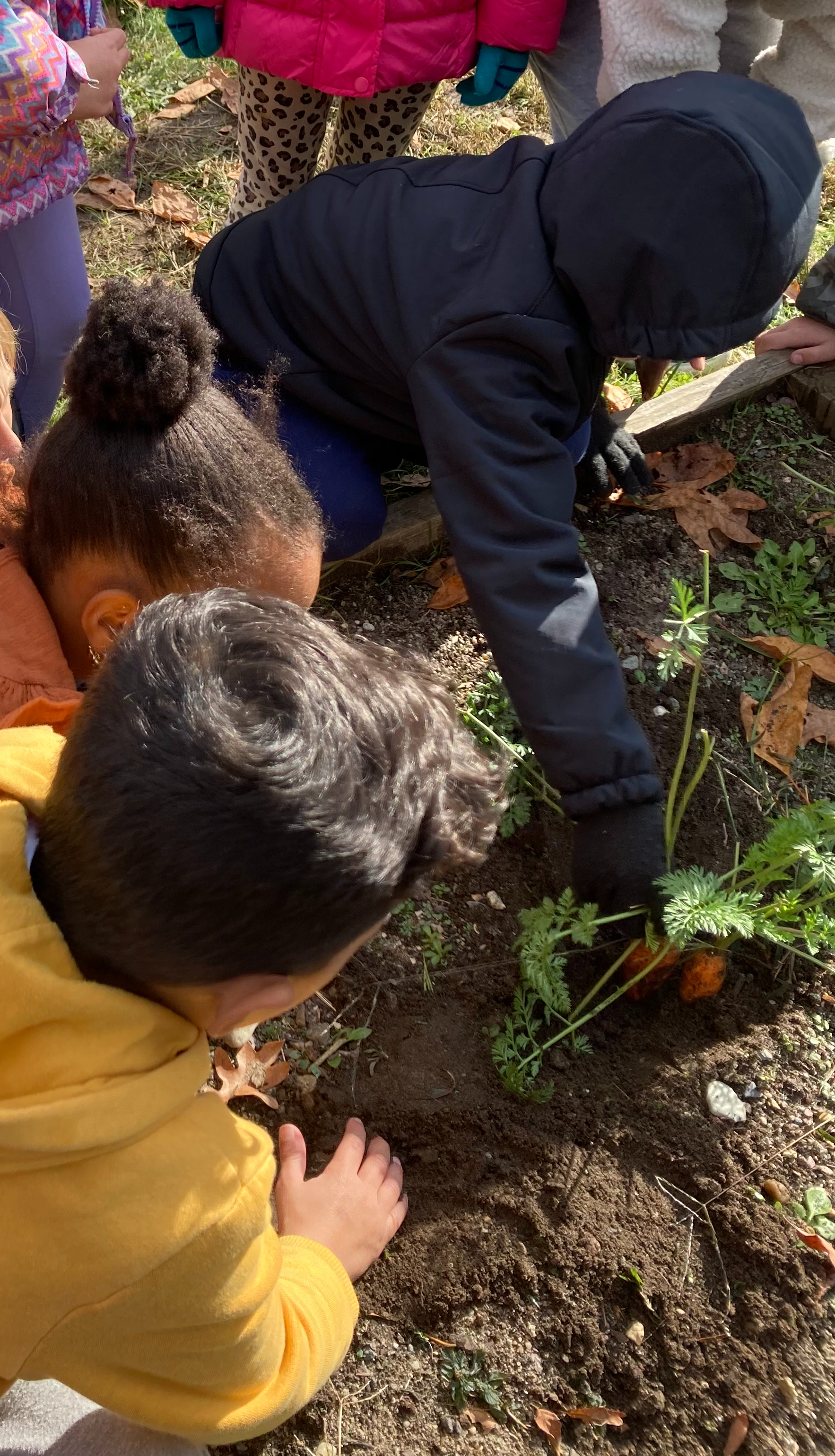
In Early December, with the neighborhood kids, we celebrated Carrot Day in Hull. I took down the carrot bed fence and got a bucket of warm water and some scrubbing tools and the neighbors came over.  The new insurance company who is insuring our house had told us we needed to cut back some branches. One of the limbs we cut back held our tire swing. In years past the neighborhood kids picked their carrots and then washed them and would eat for five minutes or so and transition over to the tire swing while still eating their carrots. Well the tire swing is gone and after a few minutes the kids moved over to the house with the trampoline. They kept eating their carrots so essentially it was the same as they picked their carrots, washed their carrots, declared them good and most importantly they ate the carrots with gusto. But nothing stays the same and I missed seeing them on the tire swing.

Below are the pictures of the Hull crew on Carrot Day.

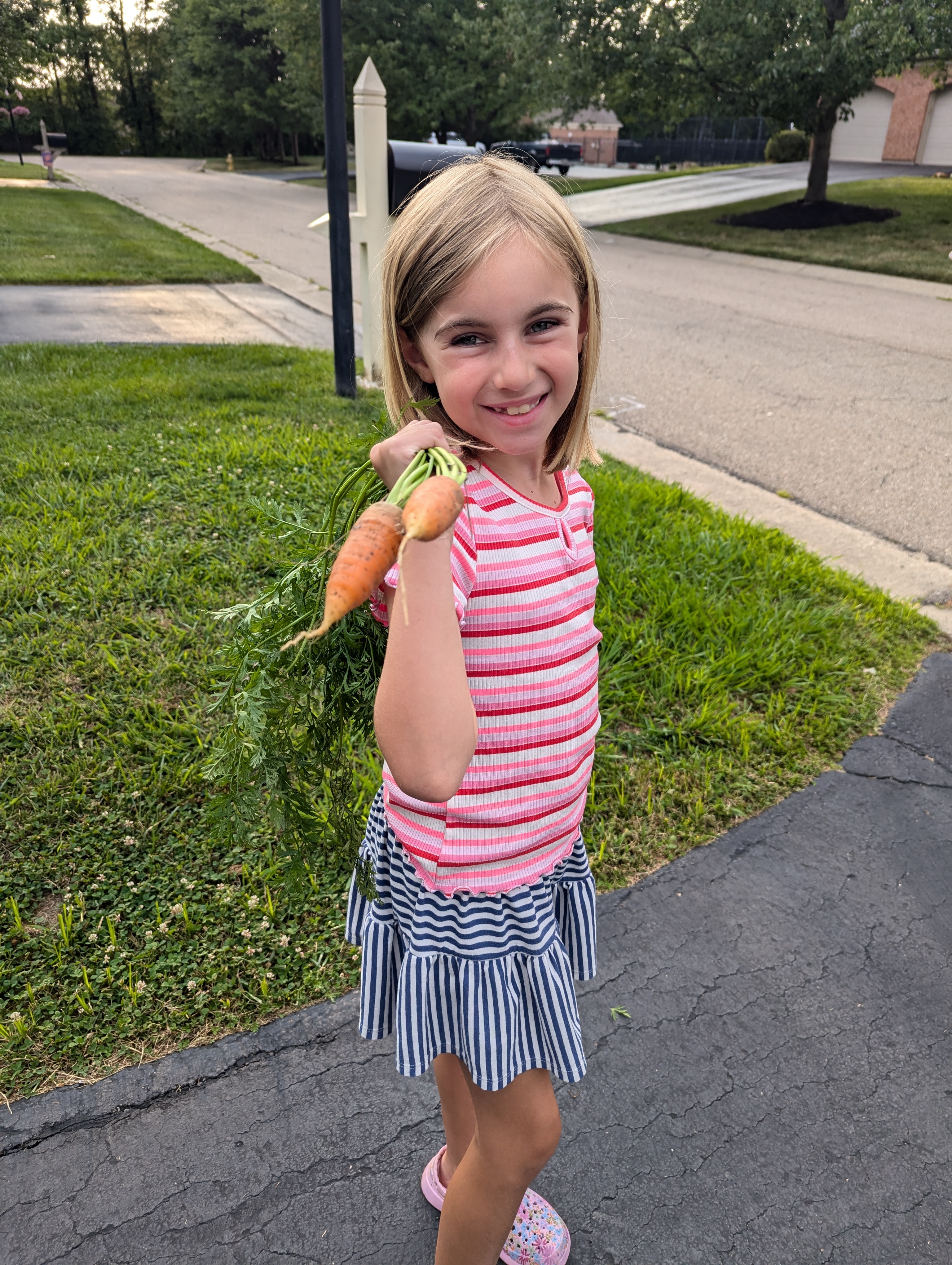
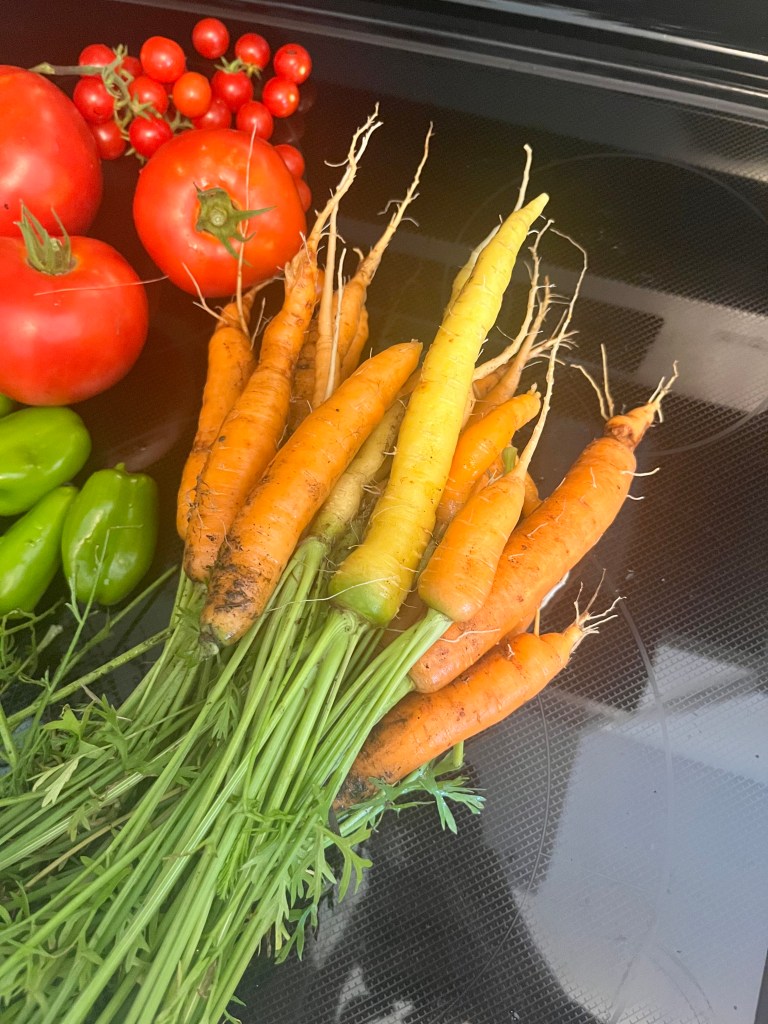
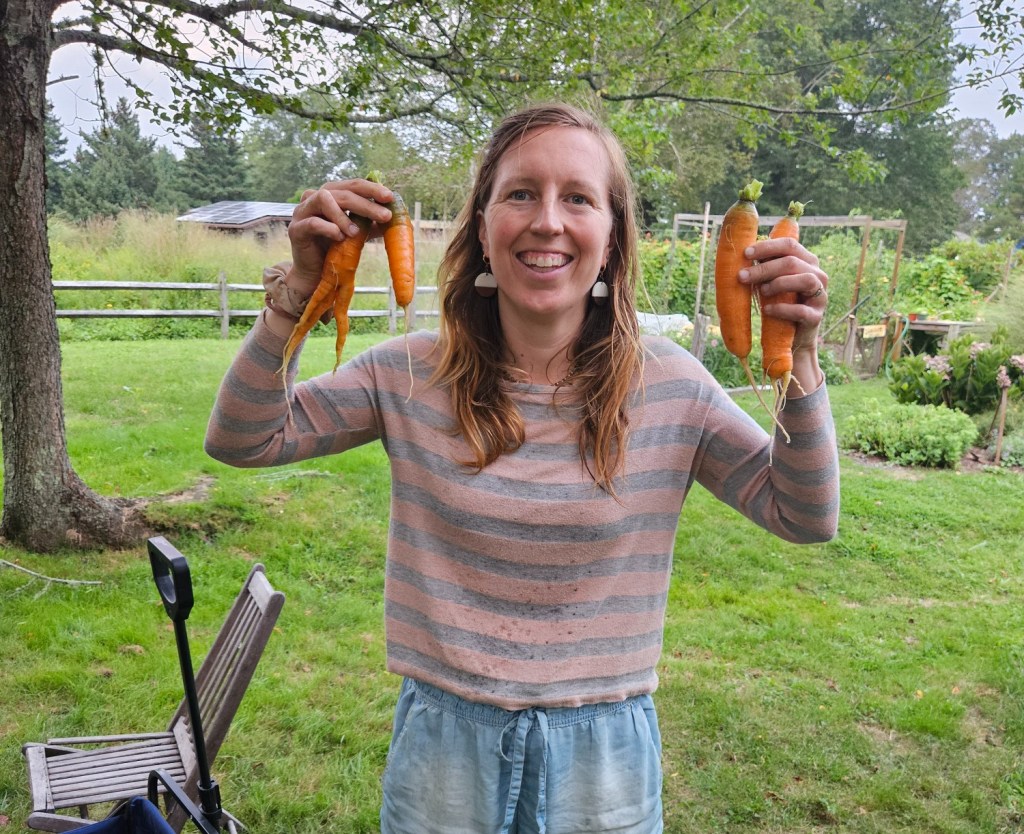
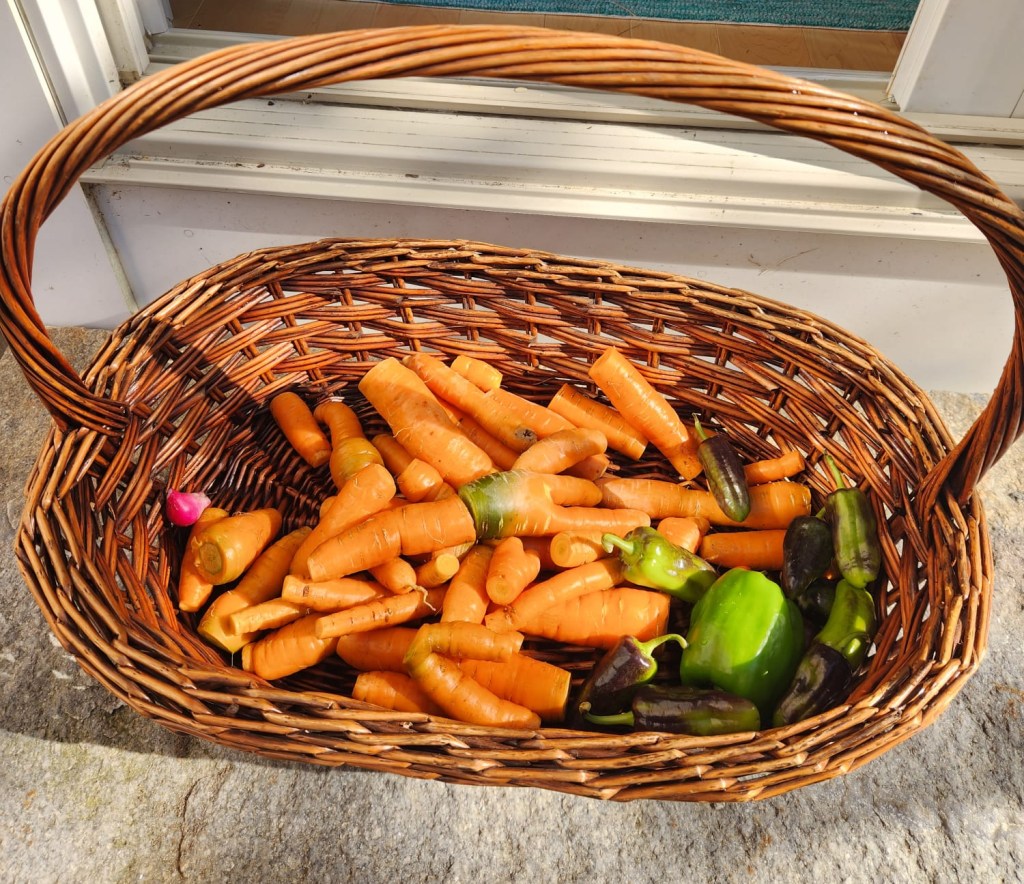
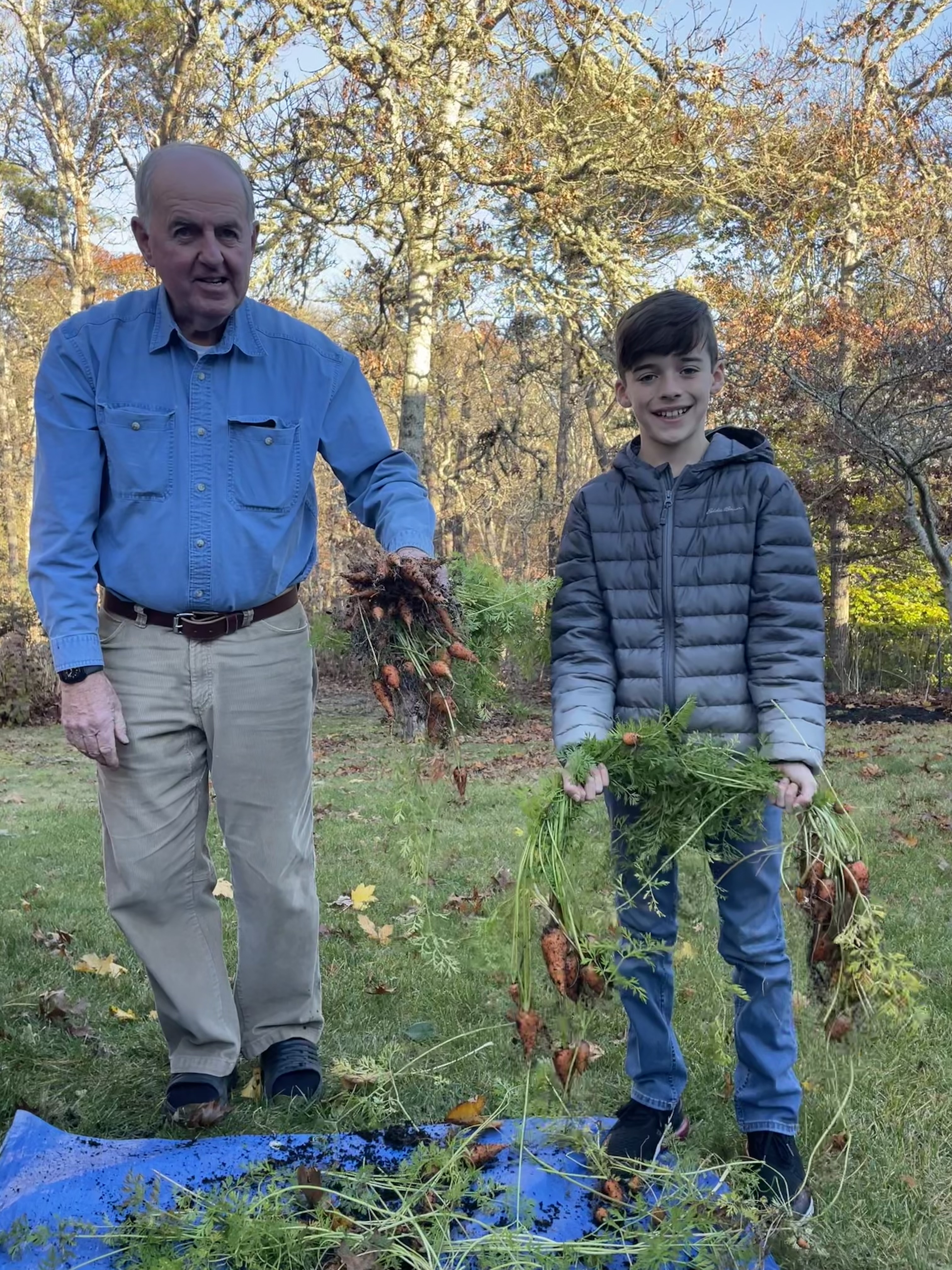
Below are pictures that folks sent to me from Connecticut, Ohio and Cape Cod.

Two partners, Holly Hill Farm in Cohasset MA and CitySprouts in Boston/Cambridge MA have been with Carrot Day since I began this as a Blog in the spring of 2019. Again in this, our sixth year, they contributed again and the pictures below give a sense of both organization’s commitment to children’s garden education.

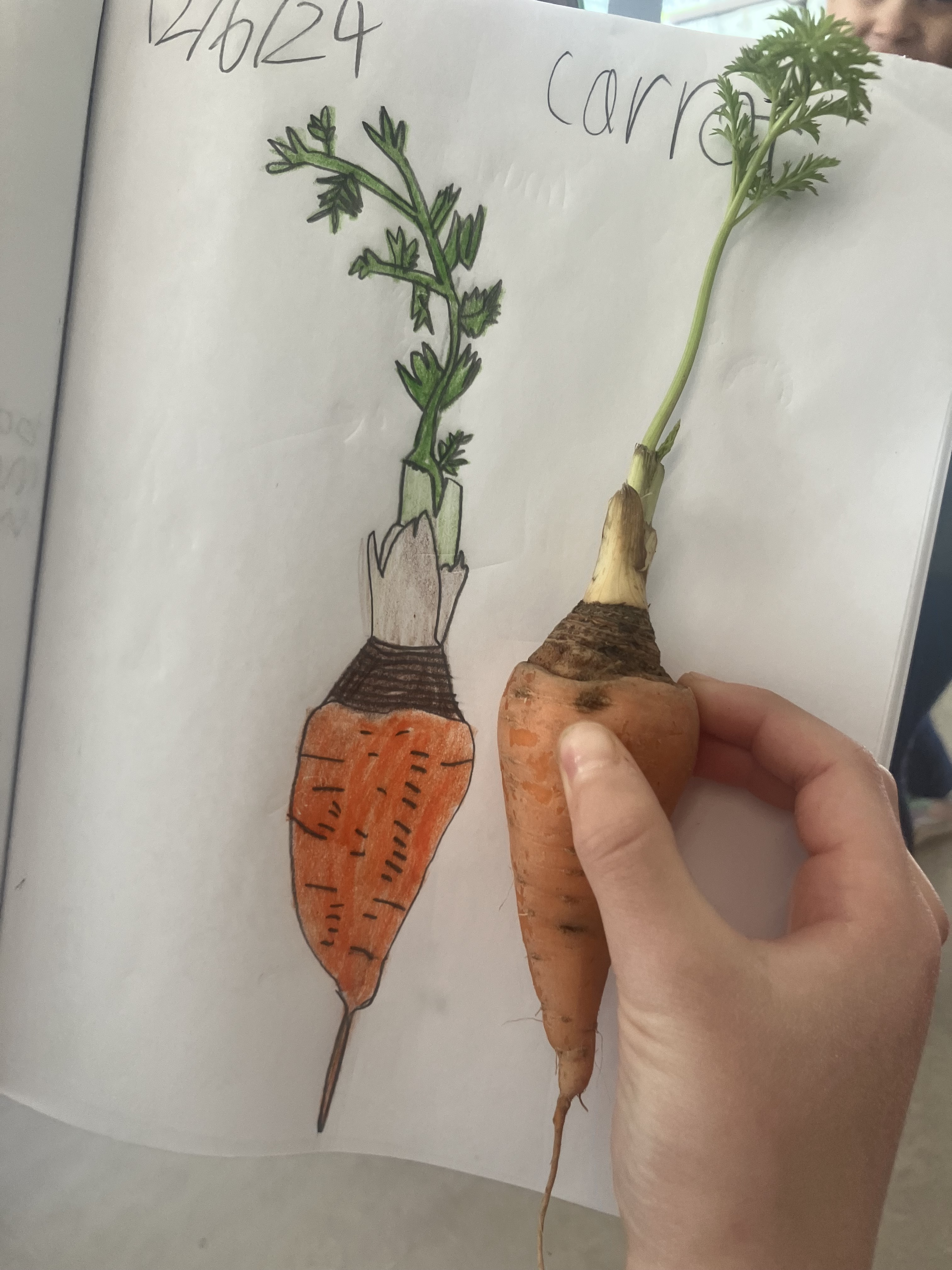
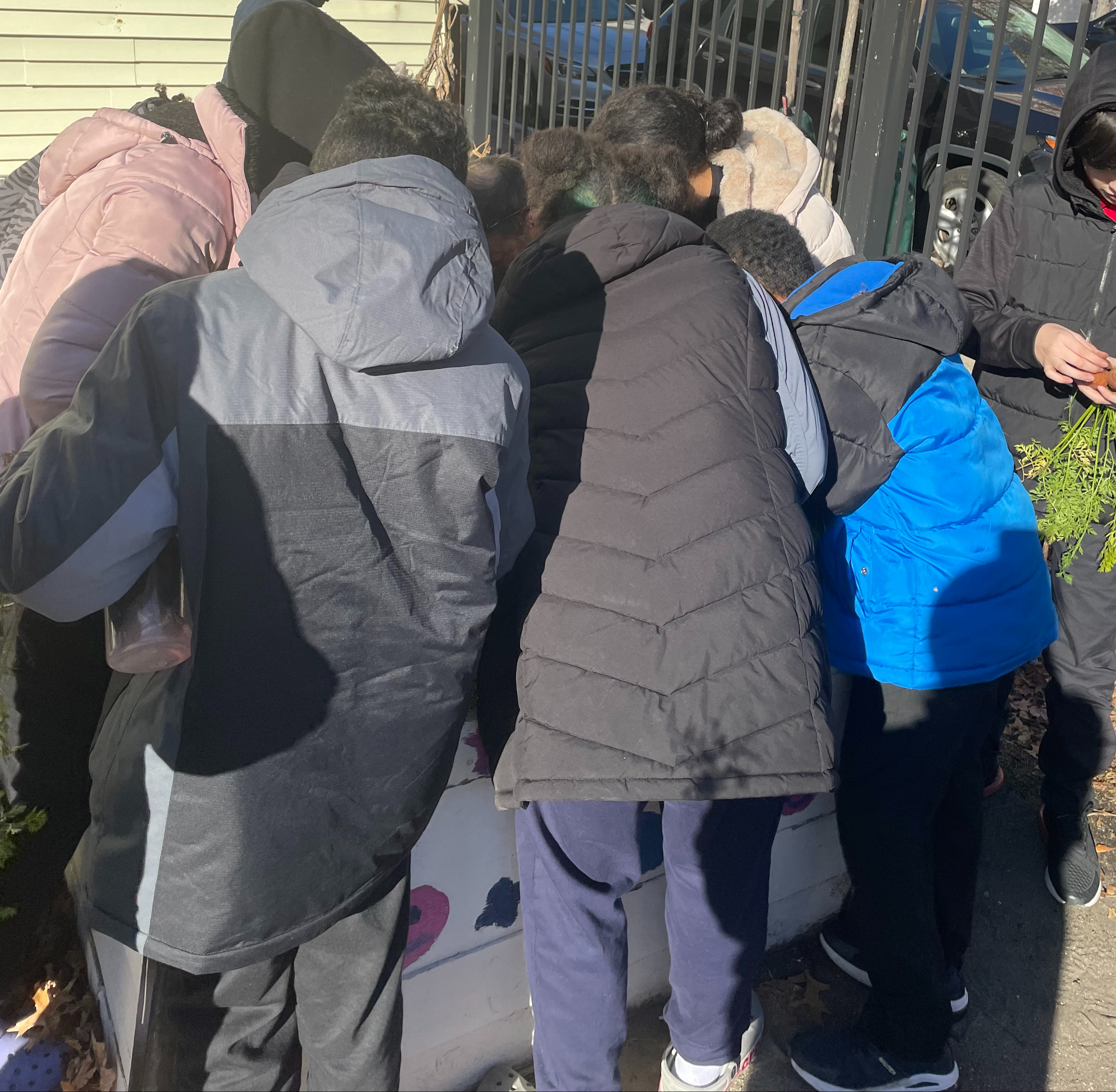
In the photo on the left, Jonny Belber of Holly Hill models the act of appreciating and loving food for a young farmer. In the photo on the right there is the hand and drawing of an elementary student in the CitySprouts program at the MLK Jr. School in Cambridge. This year MLK Jr. was selected as a Blue Ribbon School by the US Department of Education showing the value of gardening for schools. Maddie Kartoz, a City Sprouts educator, wrote to me: “Students finally got to harvest the carrots they planted way back in the spring.  With the guidance of a CitySprouts educator, they created drawings in their science notebooks before getting a taste. It’s an honor to carry on the work that Jane started!”

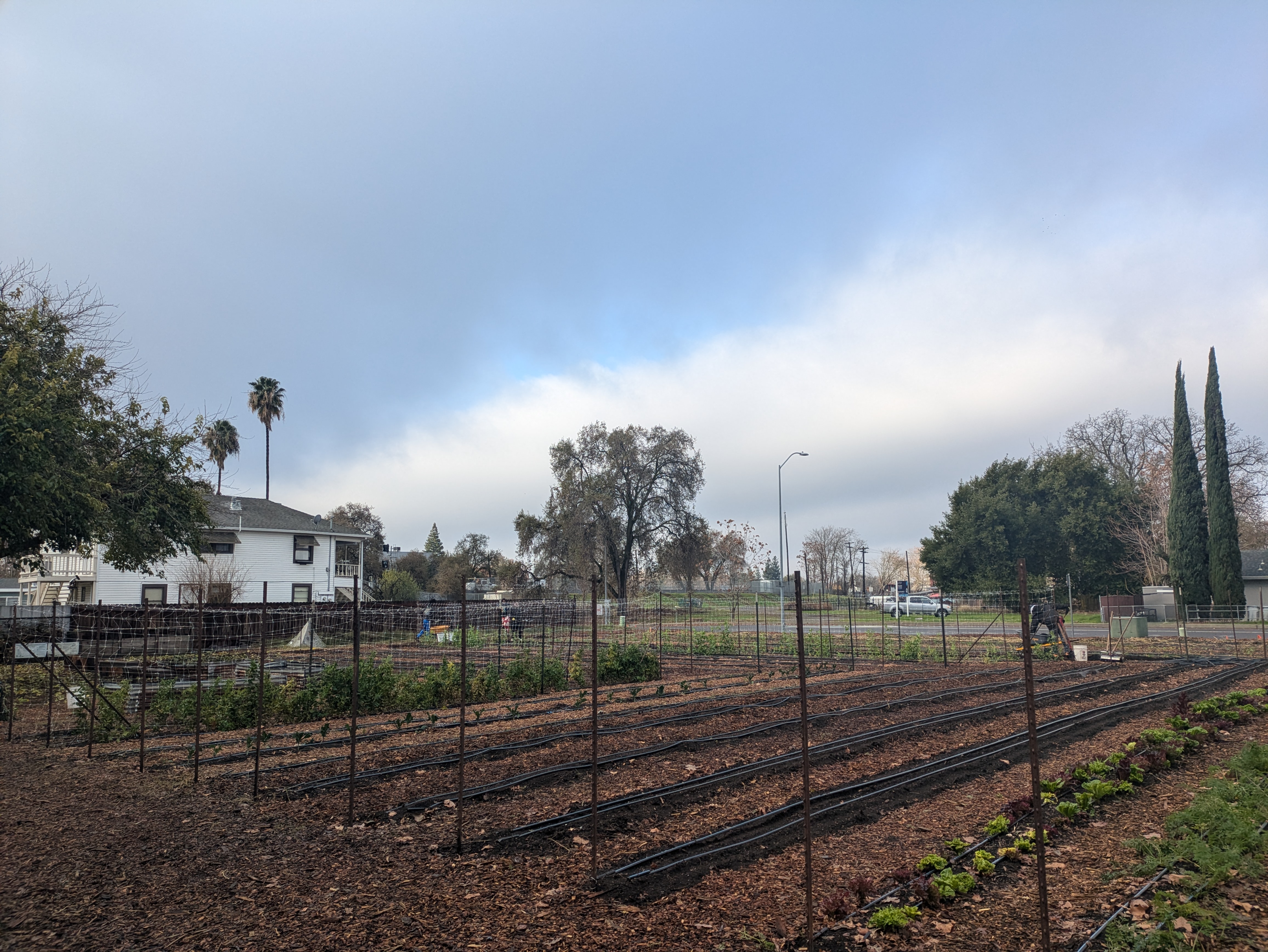
I close today’s Carrot Day 2024 Report with the words of a former student Van Harting who 21 years ago planted Carrots as a first grader and then in the fall harvested them as a second grader. He wrote me: ” Recently, a friend shared two rules I am trying to embrace: care for the things in your sphere, and grow the sphere. To this end, about a month ago I started volunteering at an urban farm in West Sacramento. ….

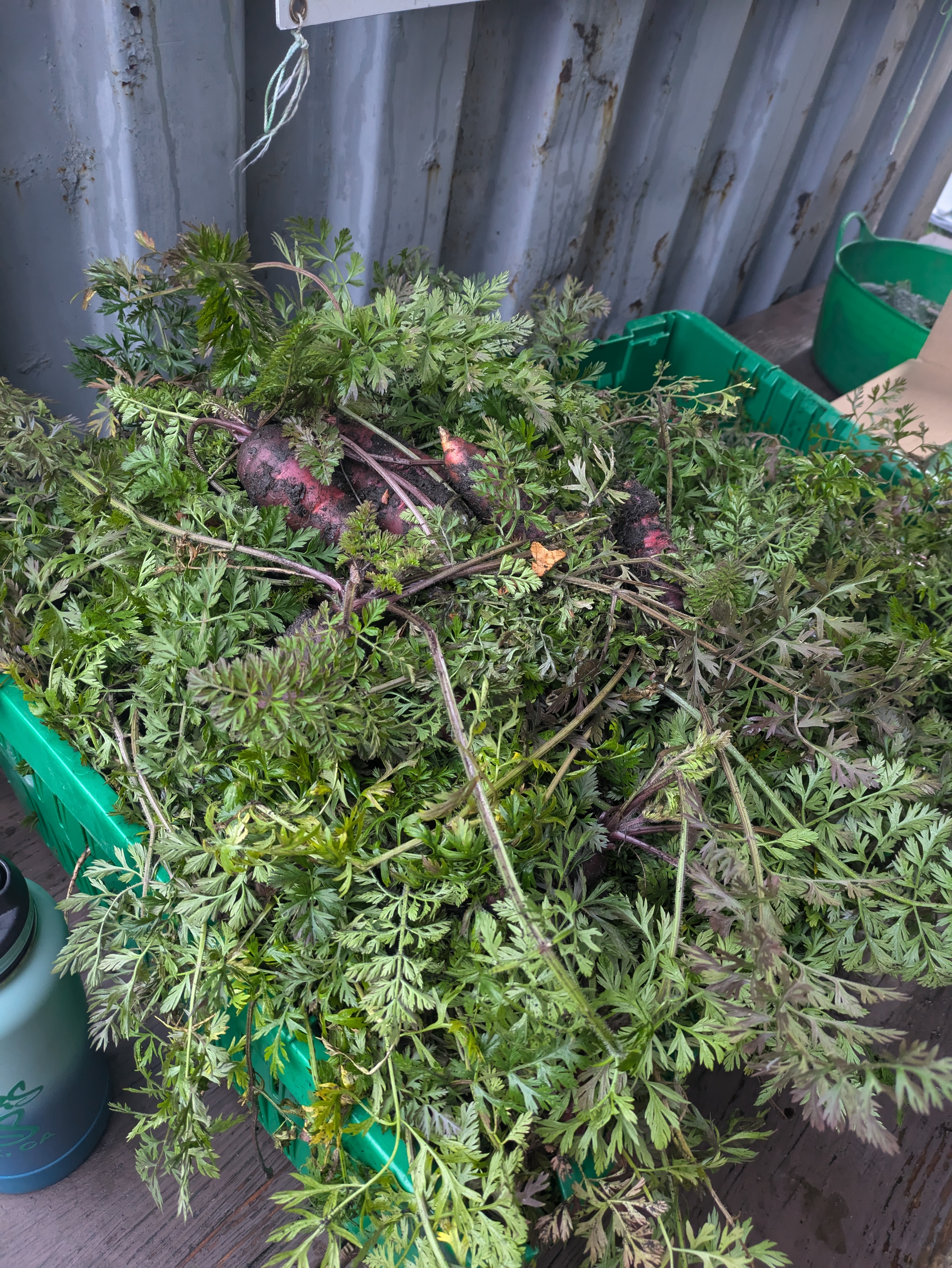
Today we harvested 2 rows of purple carrots and began preparing the beds for a new crop. The carrots are beautiful and delicious, although they are not frost kissed, as that doesn’t really happen in Sacramento, and none of them are as big as Connor’s king carrot from Holly Hill farm. 
In some sense it does not feel like I am celebrating carrot day today. I did not help sow these particular seeds. I do not know many of the other workers or volunteers that well yet, and none of them know about carrot day (yet). But also it feels obvious that ultimately that is not what carrot day is really about. It is about being excited to learn about where your food is coming from and doing something to be a part of it, for the sake of you and your community, and that is always worth celebrating.

Van is right and I want to thank him and Jonny, Kendra, Tom, Maddie, Henry, Jane, June, Kate, Jenny, Lam and Ning and the neighborhood kids and all of you who grew carrots or tried to grow carrots and joined in Carrot Day in 2024.

May 2025 be a good year for you. I take this moment to honor Jimmy Carter — my favorite President and a hero of mine. May we all try to be a little bit like him.

Here’s to the New Year and growing carrots. Just this weekend I reconnected with folks I worked with on a farm in Floyd County VA in 1979 and 1980 and had not heard from in four decades. The experience of working on that farm for 18 months more than 40 years ago formed me as an educator, father and gardener and it made me so happy to learn of their lives and their continued connection to the land. Here are a couple of sentences from an email they wrote to me when I told them I wrote a carrot blog: “And, as far as growing, thinning, weeding, harvesting, storing and eating carrots–we love it all. We grow Bolero carrots–since we store most of what we grow. They get sweeter and sweeter in the root cellar. We grew several hundred pounds for us this year and 1,000 pounds for Camphill. I gave a bag of carrots to my coworkers at the library for Christmas.” 

The list of “growing, thinning, weeding, harvesting, storing and eating carrots” is just the right list for a carrot blog. I can’t wait to try growing Bolero carrots and to learn more about storing carrots.

Here’s to learning new things in 2025!
End of Summer and Start of Fall

It has been two months since I last wrote and the big star in the Hull Garden during these two months has been the mint. I would spend time each day looking at the bees. There were hundreds of bees and at least five different bee species on the mint flowers for well over a month. I loved it but last weekend I cut the mint down as they had dried out. In the last few days of summer here in Hull it is getting drier and drier. We have had no rain in 25 days and only 1 inch in the last 45 days.  The mint had done its work and the pollinators had moved on.

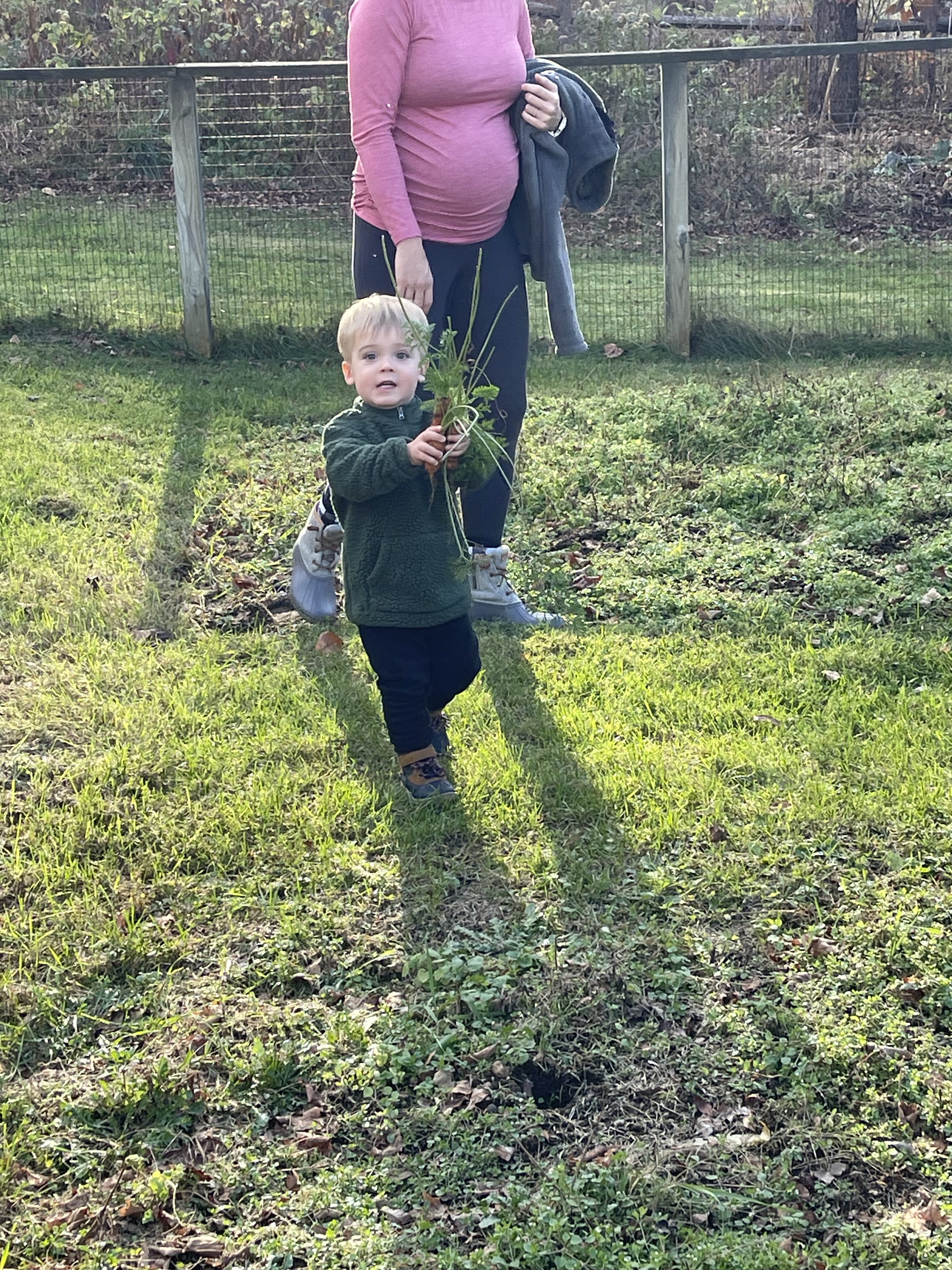
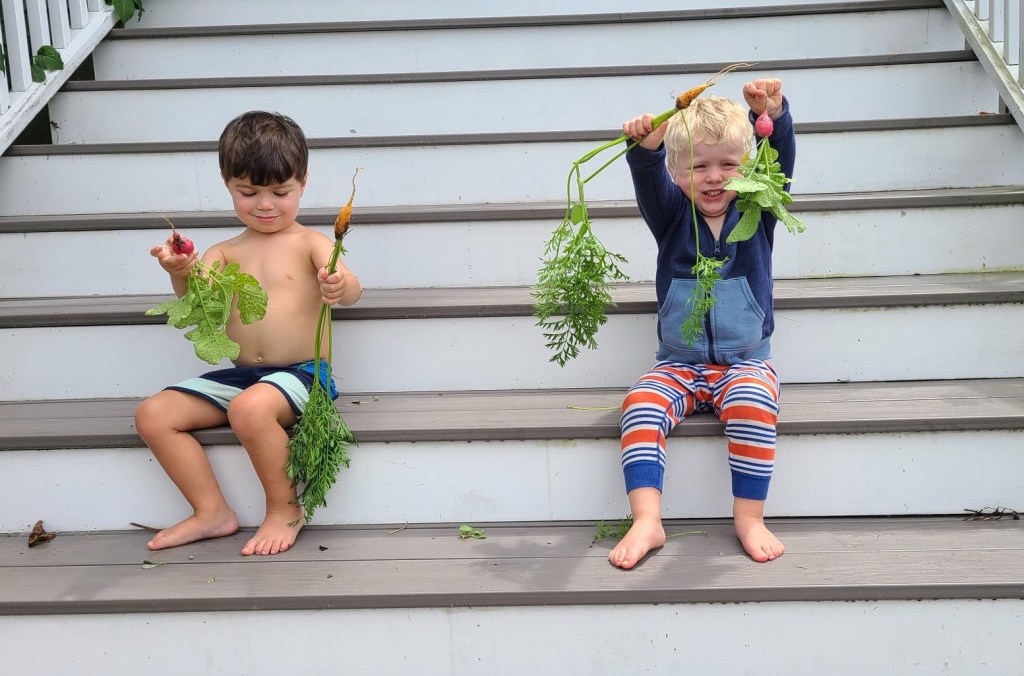
I hope that you thinned your carrots vigorously and that they are doing well in your garden. Here in Hull I planted an early crop for summer eating with the goal of pulling a few carrots when the grandchildren visited in summer (see photo above from the middle of July) and then a late crop from Carrot Day Harvests after the first frost. The visits were great and the second crop was doing exceptionally well until some animal came over the fence and ate a lot of tops. Not sure what it was but it was not a bunny as the fence was way too high.  I watered to help them recover and hope that the eater does not come back.

The photo on the right is from a Carrot Day Reader who also planted an early and a late crop and sent me the photo on the right.

For most of the past four years around this time of year we have had messages from Laney Signer. Laney is a scientist/educator who teaches about the benefits of regenerative farming and she, like me, tries to get folks to grow their own food. In general Laney teaches us a bit more about how to think about gardening and eating.  Today she discusses the negative practices that can occur in large scale agriculture and in this case some carrot farms. Without any more introduction here is Laney’s post.

September 2024
What makes a climate friendly carrot?

I was shocked to open an email one morning over the winter with the subject line:
BOYCOTT CARROTS. I run a farm-based educational program designed to teach
adults about regenerative agriculture and soil health (Climate Farm School), and as a
regular contributor to the Carrot Day blog, I am a lover of these multi-colored root crops.
Especially when pulled out of the ground on the day of the first frost, which is maybe no
more than a month or so away.
The email was from farmer-educator mentors of mine, who run a dry-farmed wine
and olive production ranch in one of the driest locations in California: the Cuyama
Valley. Steve and Robbie of Condor’s Hope ranch are legendary agroecologists,
farmers and activists, and incredibly knowledgeable about sustainable water
management practices when it comes to growing food in drought-prone climates. They
joined forces with community organizers and smaller scale landholders (they farm on
about 5 acres, surrounded by 1000+ acre operations of wine grapes and carrots) in
opposition to a ‘water grab’ by corporate food giants Bolthouse and Grimmway Farms.
The Carrot Boycott became their way of resisting the totally unsustainable water
withrdrawals from groundwater pumping on the large scale farms supplying Bolthouse
and Grimmway with millions of dollars of carrots annually (comprising 80% of the total
US carrot market). The inhumane working conditions for farmworkers in their fields is
also increasingly under scrutiny, after a woman died in the fields last year and others
were told to work around her dead body.
Tragically, extractive environmental practices
are likely to coincide with exploitative labor practices on large scale US farming
operations.
I read up on the issue on the “Stand with Cuyama” website: the Carrot Boycott
protests the excessive water usage (over 28,000 acre-feet per year, or enough to supply
3 cities the size of Santa Barbara with their water needs for a year) of the two largest
carrot growers in the area. It seeks to keep water rights in the hands of the community
rather than corporations, with the implicit understanding that the more locally rooted
farmers and land stewards are not pumping groundwater at such unsustainable rates.
Should this pumping continue, groundwater basins like the Cuyama Valley in California,
increasingly threatened by climate change impacts like worsening drought conditions
and heat waves, will suffer further degradation and potential collapse. It begs the
question, how much longer could we even continue growing carrots here with
groundwater basins facing collapse, and annual rainfall totals dwindling? This is not
climate resilience, it’s the opposite.

So, what makes a climate friendly carrot? Something like what we’re growing in
our home, community, and school gardens. On regenerative and diversified farms,
where carrots co-exist with weeds and worms and other biodiverse life in and above the
soil. I planted my Carrot Day seeds from Ted in my parent’s garden in Rhode Island on
Memorial Day weekend, and they are now popping out of the ground with great vigor.
We’ve harvested most to make salads and soups already, but a few remain to be
harvested for Carrot Day 2024. As we harvest our carrots this fall, from Massachusetts
to California, let’s be happy to be in the 20%… or should I say, probably less than 1% of
the US carrot market that is truly climate-friendly and home garden grown.

Laney Signer

It is hard to know what to do. Carrots are good, and in general the more plants we eat the more friendly to the earth our eating is.  Maybe a thing to do is to not just eat those you grow yourself but perhaps get carrots grown in Canada. I see carrots in my local store are often from Canada and those tend to taste better too. Perhaps I will find out the disadvantage of the Canadian carrot but it might be a good thing to do.  And yes do as much as you can to grow your own and to get to know your farmers.

Ted

Carrot Day

Well the Northern Hemisphere is now tipped away from the sun and fall is nearly over and the frost has come to Massachusetts– even to Hull.

Early in November I got a message from Windsor, Vermont that they had frost. Then came news that there had been frost in West Cornwall, Connecticut, and then Norwell, Massachusetts. Reports were coming in that Carrot Days were being celebrated and that the carrots were good.

Here in Hull surrounded by water, frost did not come until November 17th, but Carrot Day is not only about good tasting carrots, it is about patience. It is tricky to choose the right day to celebrate Carrot Day. Do you want to celebrate Carrot Day as the marker of the first frost or do you want your carrots to sweeten with repeated frosts? I see that choice as part of Carrot Day’s value. You can’t choose when your birthday is but you can choose when to celebrate. Many a Friendsgiving is not held on the fourth Thursday of November. Is the weather lousy today, is there a hockey game, does the sixth grade schedule have a science class today? If the first day after the first frost is not the right day, well then let’s let the carrots get a bit more cold and celebrate the carrots on another day. The best tasting carrots have nights with repeated frost but the ground will not yet be frozen and the carrots’ cell wall structures will not have frozen.

Below is a chart of the first five frost in places where carrots were celebrated by Carrot Day readers.

LocationFirst FrostSecond FrostThird FrostFourth FrostFifth Frost
Windsor, VT10/31 29℉11/01 31℉11/02 26℉11/03 31℉11/05 31℉
Cornwall, CT11/01 29℉11/01 24℉11/11 31℉11/12 26℉11/13 21℉
Norwell, MA11/02 30℉11/03 28℉11/08 32℉11/11 28℉11/12 25℉
Plymouth, MA11/02 28℉11/03 28℉11/11 30℉11/14 31℉11/18 30℉
Chatham, MA11/03 31℉11/12 31℉11/13 32℉11/19 31℉11/21 31℉
Cambridge, MA11/11 27℉11/12 23℉11/14 29℉11/21 27℉11/24 23℉
Hull, MA11/19 31℉11/20 28℉11/27 28℉11/30 27℉12/01 30℉
Dates of the first five frost in Carrot Day locations. Temps were reconrded temperatures by weather services not carrot growers

Carrots from two gardens in Hull and carrots from a garden in Chatham.

Photographs from carrot harvesting for Carrot Days in Cambridge, Hull, and Plymouth. The photo on the left is from Carrot Day at the Community Charter School of Cambridge, where I now work. The middle photo is my garden in Hull. The photo on the right is from the amazing school garden at Manomet Elementary tended by Anne-Marie Ross.

There is something magical about picking a carrot. There is a prize hidden under the soil. I have been pulling carrots with students for over twenty years and each year and in each group there is excitement. There are always cries of joy and surprise and almost as much excitement about an extremely small carrot as a great big one.

Carrot Day can also be multi-generational as it was this year in Chatham, MA and West Cornwall, CT. These photographs show grandfathers and grandsons and the joy of pulling carrots together. As a grandfather, who pulled a carrot almost every day for two weeks this summer with a grandson, I can personally attest to the magic. The tender gaze of the mother as she watches the celebration of discovery and sharing is worth remembering as the days grow shorter and the nights longer and colder.

I am proud to say that the tradition of Carrot Day persists at South Shore Charter. We began celebrating the pulling of carrots about twenty years ago in the Garden Project. There was magic in planting carrots seeds with students in the spring and then harvesting carrots with them in the fall. I loved tending and caring for the carrots when the students were away in the summer and then we had the long wait with students for frost in the fall. It was at South Shore that the idea began, and June Fontaine continued that tradition there again this year. Here is some of what June wrote for the school’s newsletter to families:

This past spring, carrots were planted by first grade co-teachers Nikiesha Whitman and June Fontaine’s first grade students in the Garden Project. The first crop didn’t fare too well, due to all the rain, so a second crop was planted in early summer, along with tomatoes, cucumbers, eggplant and peppers. Students delighted in harvesting these crops when they came back to school in late August. They knew the rule of the carrots though; they were not to be harvested until after the first frost, as the cold converts the starches to sugar, making them sweet and delicious. Last week we got that first frost and so on Friday, the second grade students in Nikiesha’s pod who had planted the carrots, helped the first grade “neighbors” to pull these orange jewels. Watching the students work together was truly gratifying. After scrubbing them on Monday, the students enjoyed the carrots during snack time today. A good 95% of the class ate them! And several had more at lunch time.
Here’s hoping that the delicious sweetness of these “frost-kissed” carrots will give them a taste and desire to enjoy this nutritious vegetable in the future. Next year, we plan to plant many more carrot seeds so that a larger community can enjoy Carrot Day together. The garden offers a peaceful place to sit and relax, eat your lunch, or merely take a few moments to breathe in the heady aroma of mint or wild arugula.

Pictures of June and the students harvesting carrots at South Shore Charter. I agree with June that the garden does offer a peaceful place and a place of wonder and I also agree that 95% of the students eating carrots is good enough.

The Carrot Crew in Hull in early December and the first frost on carrots in Windsor VT a month earlier. I know that not everyone succeeded with carrots this year but lets hope you grow good ones next year.

Soon I will be ordering seeds and I hope you join us in planting, weeding, thinning, tending, protecting and waiting for the frost and cold for a truly delicious carrot. Only a few days until the solstice and then the days will begin to lengthen.