End of Summer and Start of Fall

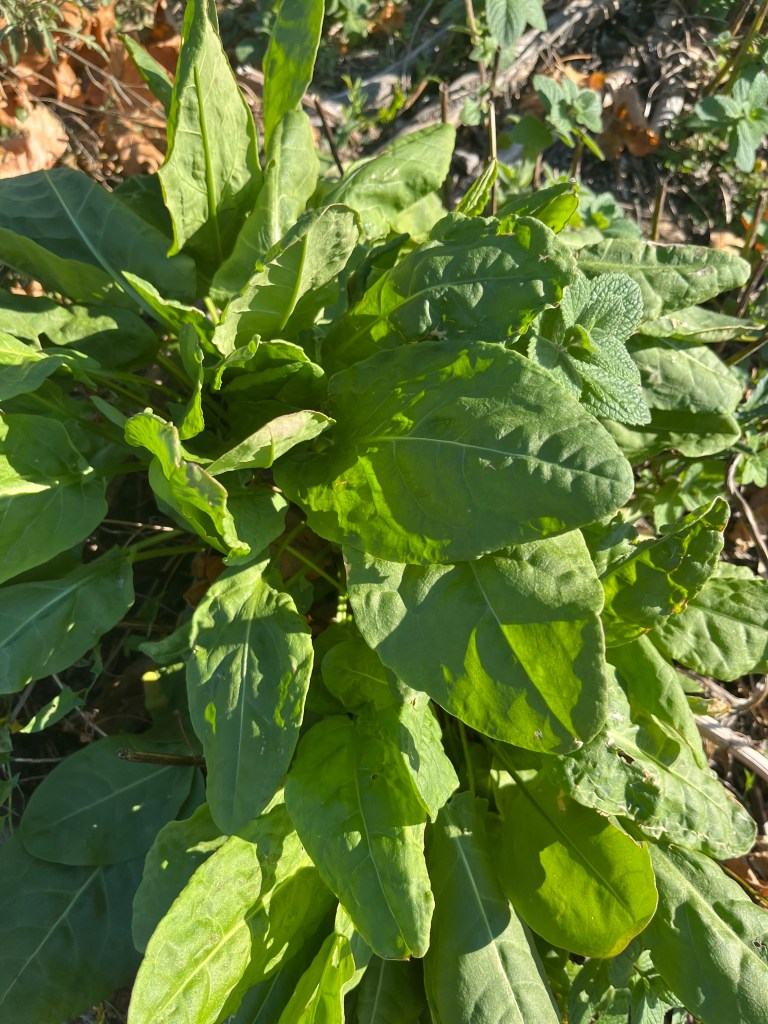
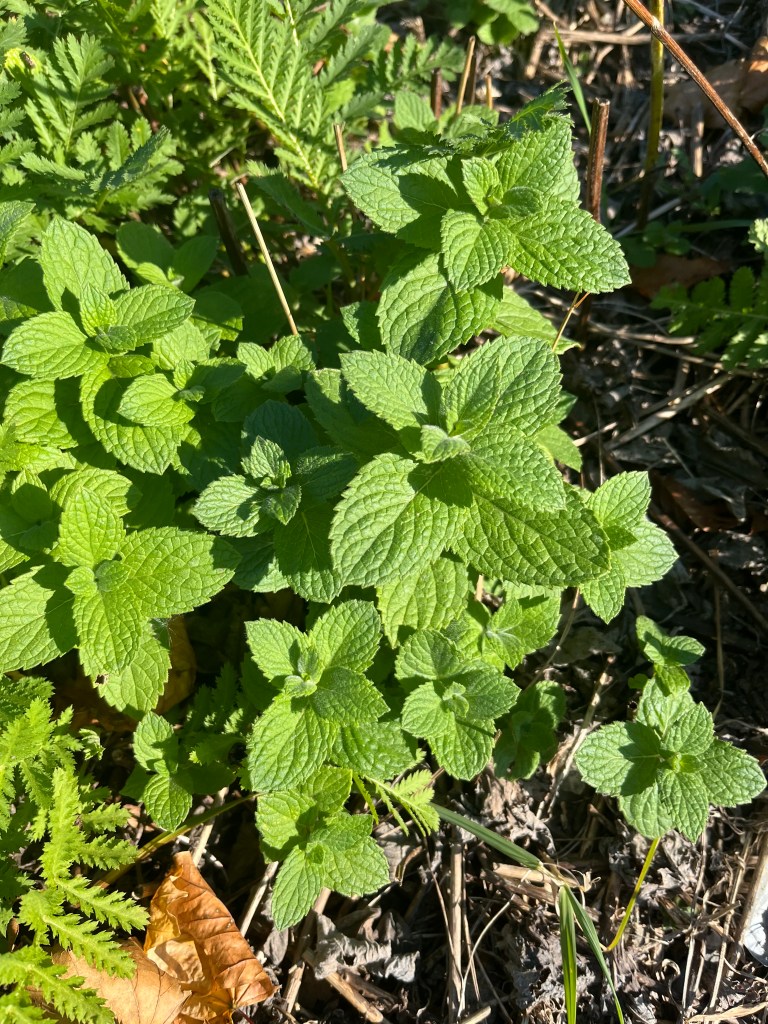
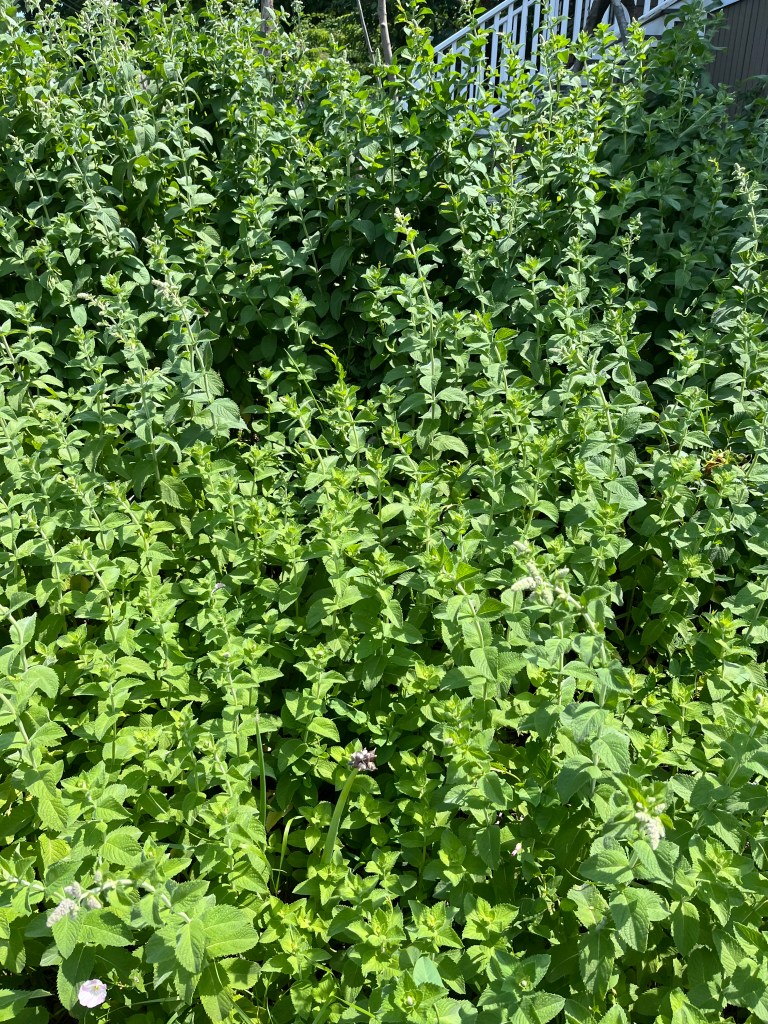
It has been two months since I last wrote and the big star in the Hull Garden during these two months has been the mint. I would spend time each day looking at the bees. There were hundreds of bees and at least five different bee species on the mint flowers for well over a month. I loved it but last weekend I cut the mint down as they had dried out. In the last few days of summer here in Hull it is getting drier and drier. We have had no rain in 25 days and only 1 inch in the last 45 days.  The mint had done its work and the pollinators had moved on.

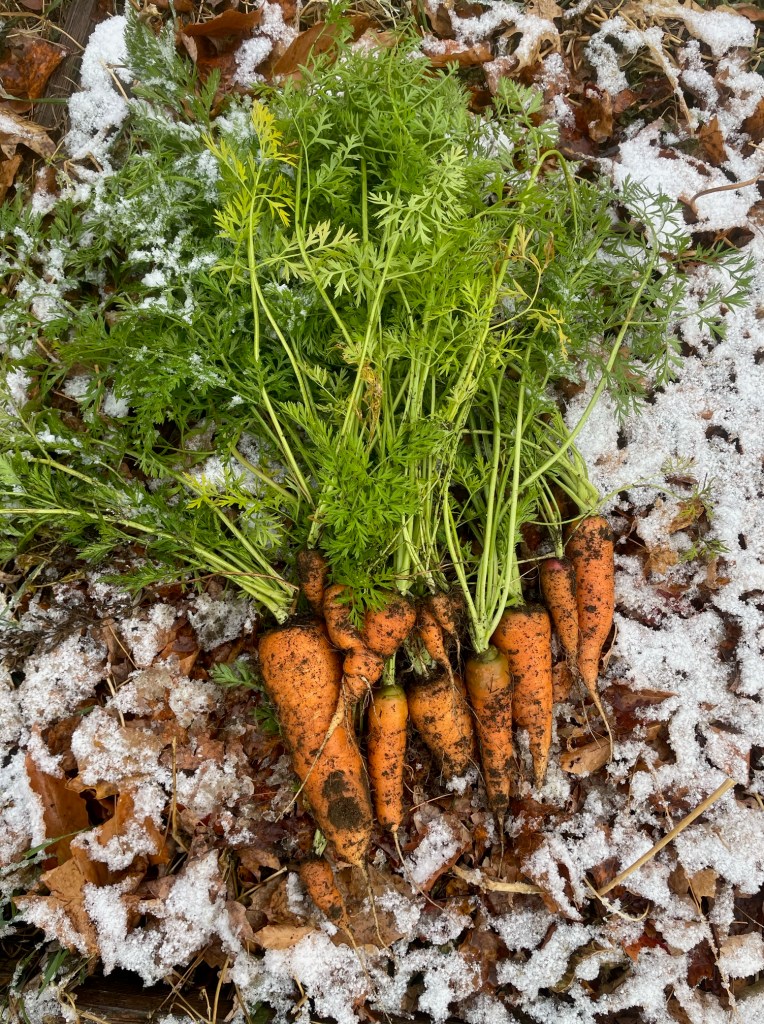
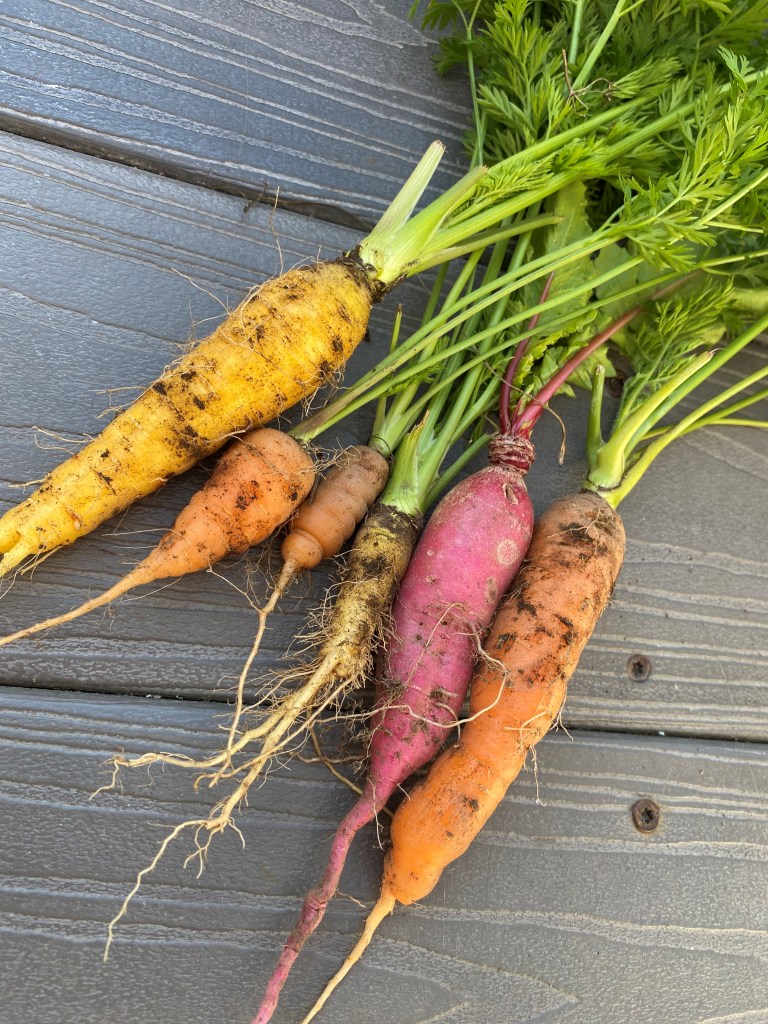
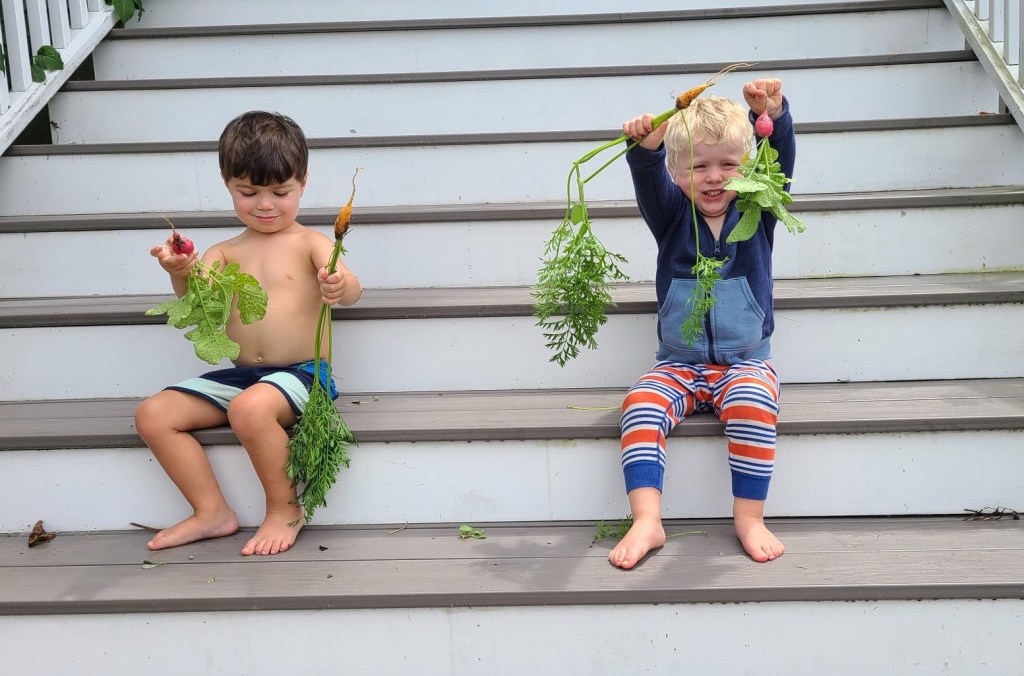
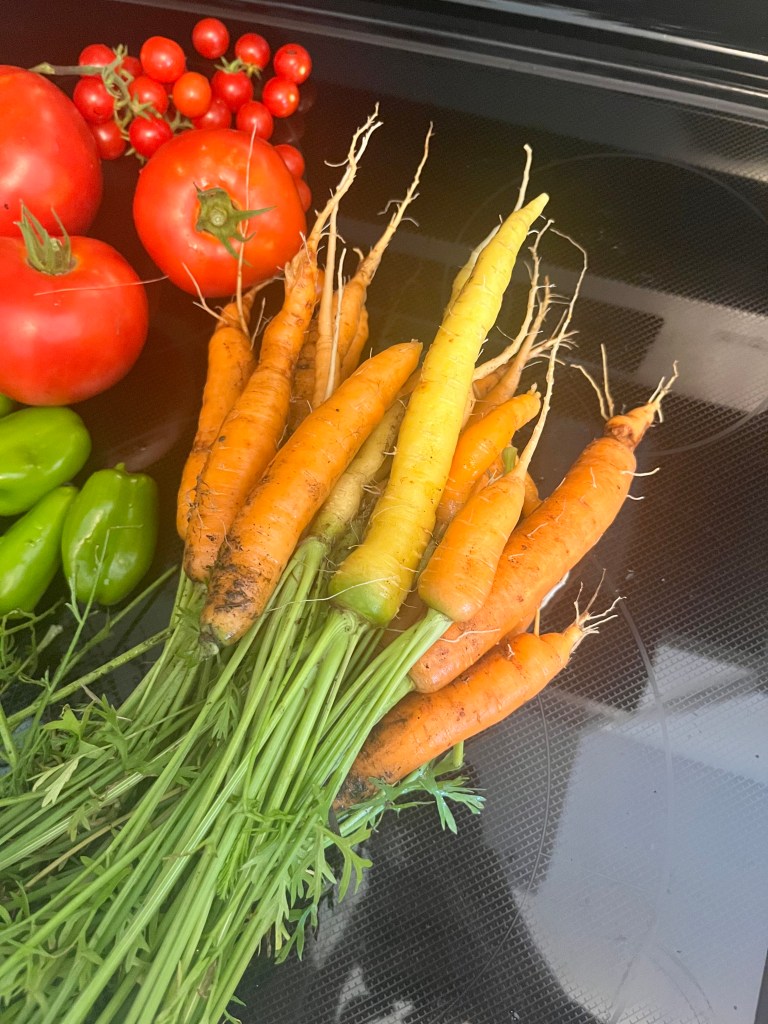
I hope that you thinned your carrots vigorously and that they are doing well in your garden. Here in Hull I planted an early crop for summer eating with the goal of pulling a few carrots when the grandchildren visited in summer (see photo above from the middle of July) and then a late crop from Carrot Day Harvests after the first frost. The visits were great and the second crop was doing exceptionally well until some animal came over the fence and ate a lot of tops. Not sure what it was but it was not a bunny as the fence was way too high.  I watered to help them recover and hope that the eater does not come back.

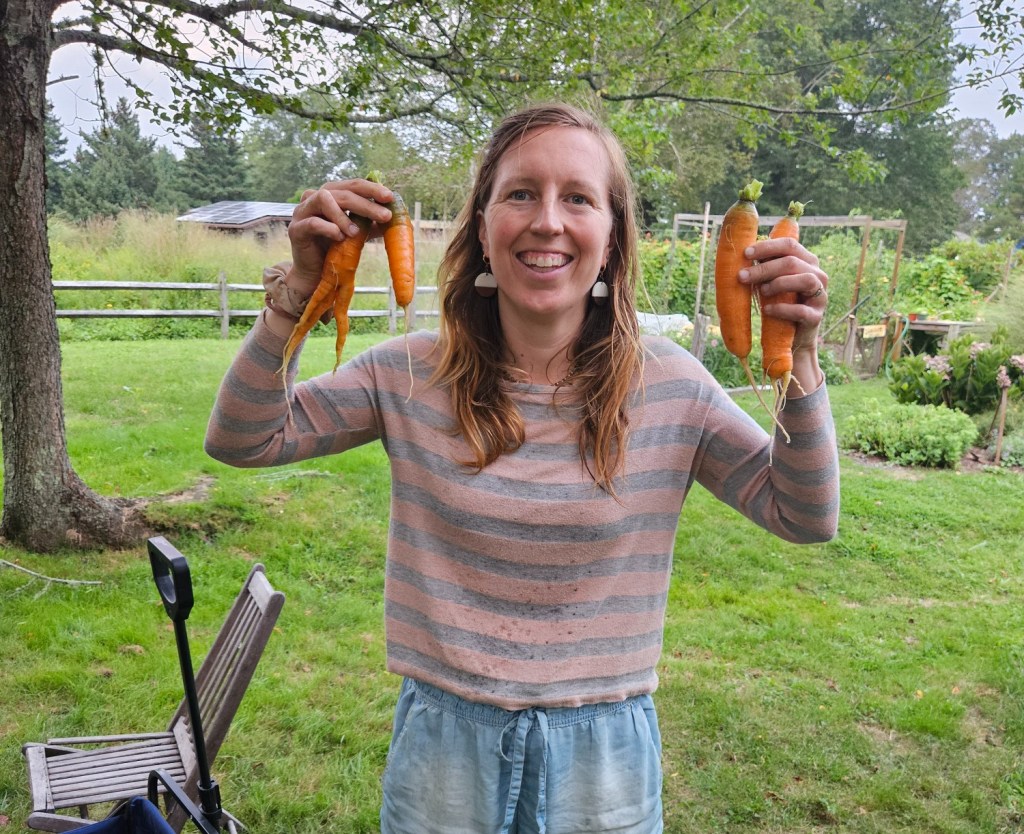
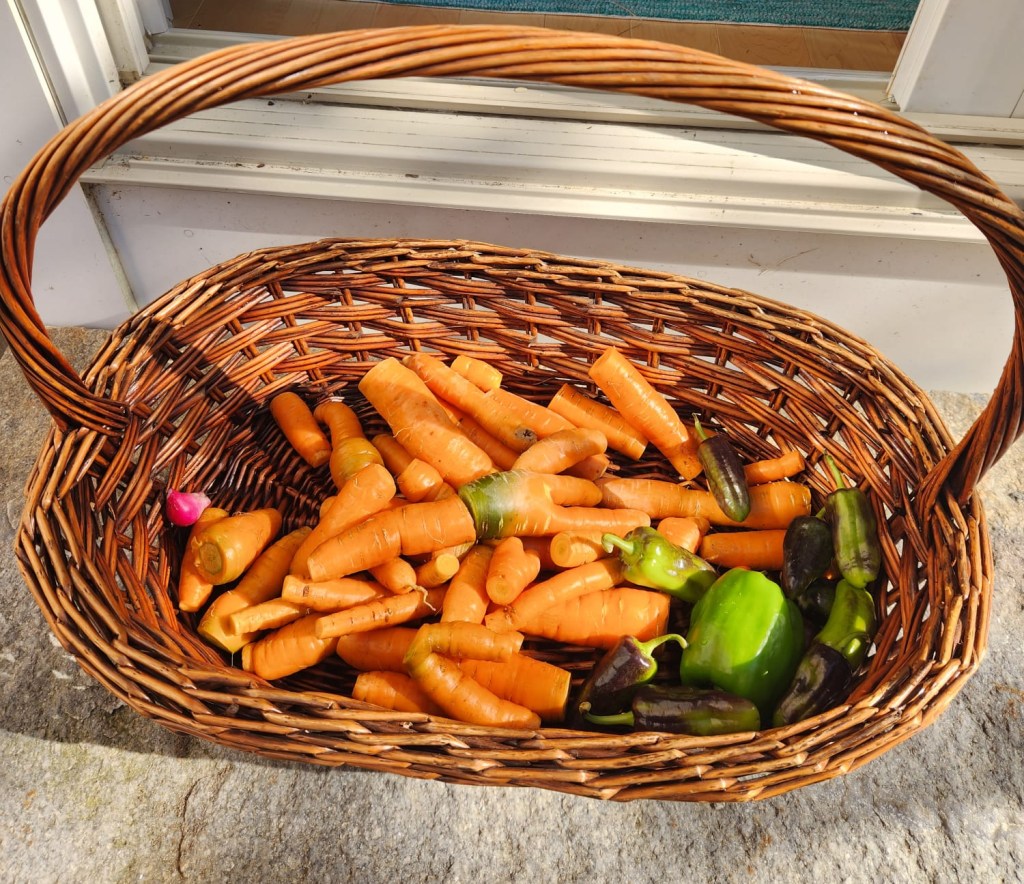
The photo on the right is from a Carrot Day Reader who also planted an early and a late crop and sent me the photo on the right.

For most of the past four years around this time of year we have had messages from Laney Signer. Laney is a scientist/educator who teaches about the benefits of regenerative farming and she, like me, tries to get folks to grow their own food. In general Laney teaches us a bit more about how to think about gardening and eating.  Today she discusses the negative practices that can occur in large scale agriculture and in this case some carrot farms. Without any more introduction here is Laney’s post.

September 2024
What makes a climate friendly carrot?

I was shocked to open an email one morning over the winter with the subject line:
BOYCOTT CARROTS. I run a farm-based educational program designed to teach
adults about regenerative agriculture and soil health (Climate Farm School), and as a
regular contributor to the Carrot Day blog, I am a lover of these multi-colored root crops.
Especially when pulled out of the ground on the day of the first frost, which is maybe no
more than a month or so away.
The email was from farmer-educator mentors of mine, who run a dry-farmed wine
and olive production ranch in one of the driest locations in California: the Cuyama
Valley. Steve and Robbie of Condor’s Hope ranch are legendary agroecologists,
farmers and activists, and incredibly knowledgeable about sustainable water
management practices when it comes to growing food in drought-prone climates. They
joined forces with community organizers and smaller scale landholders (they farm on
about 5 acres, surrounded by 1000+ acre operations of wine grapes and carrots) in
opposition to a ‘water grab’ by corporate food giants Bolthouse and Grimmway Farms.
The Carrot Boycott became their way of resisting the totally unsustainable water
withrdrawals from groundwater pumping on the large scale farms supplying Bolthouse
and Grimmway with millions of dollars of carrots annually (comprising 80% of the total
US carrot market). The inhumane working conditions for farmworkers in their fields is
also increasingly under scrutiny, after a woman died in the fields last year and others
were told to work around her dead body.
Tragically, extractive environmental practices
are likely to coincide with exploitative labor practices on large scale US farming
operations.
I read up on the issue on the “Stand with Cuyama” website: the Carrot Boycott
protests the excessive water usage (over 28,000 acre-feet per year, or enough to supply
3 cities the size of Santa Barbara with their water needs for a year) of the two largest
carrot growers in the area. It seeks to keep water rights in the hands of the community
rather than corporations, with the implicit understanding that the more locally rooted
farmers and land stewards are not pumping groundwater at such unsustainable rates.
Should this pumping continue, groundwater basins like the Cuyama Valley in California,
increasingly threatened by climate change impacts like worsening drought conditions
and heat waves, will suffer further degradation and potential collapse. It begs the
question, how much longer could we even continue growing carrots here with
groundwater basins facing collapse, and annual rainfall totals dwindling? This is not
climate resilience, it’s the opposite.

So, what makes a climate friendly carrot? Something like what we’re growing in
our home, community, and school gardens. On regenerative and diversified farms,
where carrots co-exist with weeds and worms and other biodiverse life in and above the
soil. I planted my Carrot Day seeds from Ted in my parent’s garden in Rhode Island on
Memorial Day weekend, and they are now popping out of the ground with great vigor.
We’ve harvested most to make salads and soups already, but a few remain to be
harvested for Carrot Day 2024. As we harvest our carrots this fall, from Massachusetts
to California, let’s be happy to be in the 20%… or should I say, probably less than 1% of
the US carrot market that is truly climate-friendly and home garden grown.

Laney Signer

It is hard to know what to do. Carrots are good, and in general the more plants we eat the more friendly to the earth our eating is.  Maybe a thing to do is to not just eat those you grow yourself but perhaps get carrots grown in Canada. I see carrots in my local store are often from Canada and those tend to taste better too. Perhaps I will find out the disadvantage of the Canadian carrot but it might be a good thing to do.  And yes do as much as you can to grow your own and to get to know your farmers.

Ted

Juneteenth — July 4th and Carrots

On Juneteenth, as I have for the past few years, I planted the “Carrot Day” carrot crop. Back in March I had planted an earlier sowing of carrots with hopes of again this summer picking carrots with grandchildren when they visited Hull. The photo on the left below shows the Juneteenth “Carrot Day” carrots and the photo on the right shows the March sown carrots. Maybe by the end of Izzy’s stay in mid July we might be able to pick a tiny carrot, but I have high hopes that at the end of July, before Reggie goes home to Texas, he will be able to pick a small but decent sized carrot.  Later in this blog post I write about the planting error I made with the Juneteenth sowing and while the purslane is more obvious than the carrots, in the end the carrots germinated well.

There are many things that I am good at in the garden. Some of them include: crop location with good strategies for moving them from place to place year on year, adding seaweed to the soil every winter, digging as little as possible, weeding, succession planting and vertical gardening to make the most of a small space, and my greatest skill — harvesting. What I am okay at is thinning, I should thin more than I do but at least I know that and try my best. What I am not good at is sowing seeds. I have been gardening for 50+ years and still I have not developed the right set of skills for planting seeds. When I garden with children they often do a better job of putting seeds in the ground than I do.  The Juneteenth planting of carrots was no different.

On Juneteenth I was barefoot in the garden as I prepared the carrot bed. For carrot plantings I do dig the soil with a shovel to prepare for the seeds but this year I did so in bare feet.  I did not wear shoes this year because I hoped that bare feet would help me not to overdig. The less you dig in a garden, the more the ecosystem that lives in the soil can develop. I almost never use a shovel, instead I usually use a small hand held garden trowel or my hands and leave most of the garden undug. By using minimal digging and by adding adequate organic material to the top of the soil the soil ecosystem will deepen and the soil will be enriched year after year. A great example of the impact of healthy soil is our peppermint. Between the street and the garden is mostly mint. These pictures of the mint tell the story of how differently the peppermint grows in the enriched soil near the garden and the unaugmented soil closer to the street.

As you can see from the photographs the mint near the road is pretty small. A typical stem is less than two feet.  The mint near the garden is more than twice as big.  The mint on the left in the photograph, which grew near the street, is far smaller and a paler shade of green compared to the mint on the right, which grew right next to the garden. The one from near the road measures 22″ while the one from right next to the garden is 52″. While we grow more mint than I can make into tea to drink or give away, the health of the soil makes a huge difference. I probably don’t need such healthy mint but these mint plants tell me just how much soil matters.

The photographs above are of the mint hanging to dry and bowls of the mint leaves stripped of their stems before I put the mint away for the winter in quart baggies. I made 18 quarts of mint tea and i am drinking a cup as I finish editing this blog. It is really really good.

As I mentioned earlier in this piece I am not good at sowing seeds. Let me tell you more about the error I made in planting the “Carrot Day” carrots.

On Juneteenth I had fun digging in the soil and building a level bed to create a shallow well to conserve water if I needed to water the late planted carrots. Then I made little troughs and put in the seeds. I then watered the bed without covering the seeds. Well my level bed was not as level as I thought and I imagined all the seeds floating down hill. So I made some more troughs and put replanted the bed with some more seeds. From looking at the germination pattern on the higher side of the carrot bed I think that the second planting of carrots done on Juneteenth are the ones that germinated. Even after 50 years I am still making mistakes. As Van’s song, which I shared in the previous post tells us, “Sometimes it goes like that.”

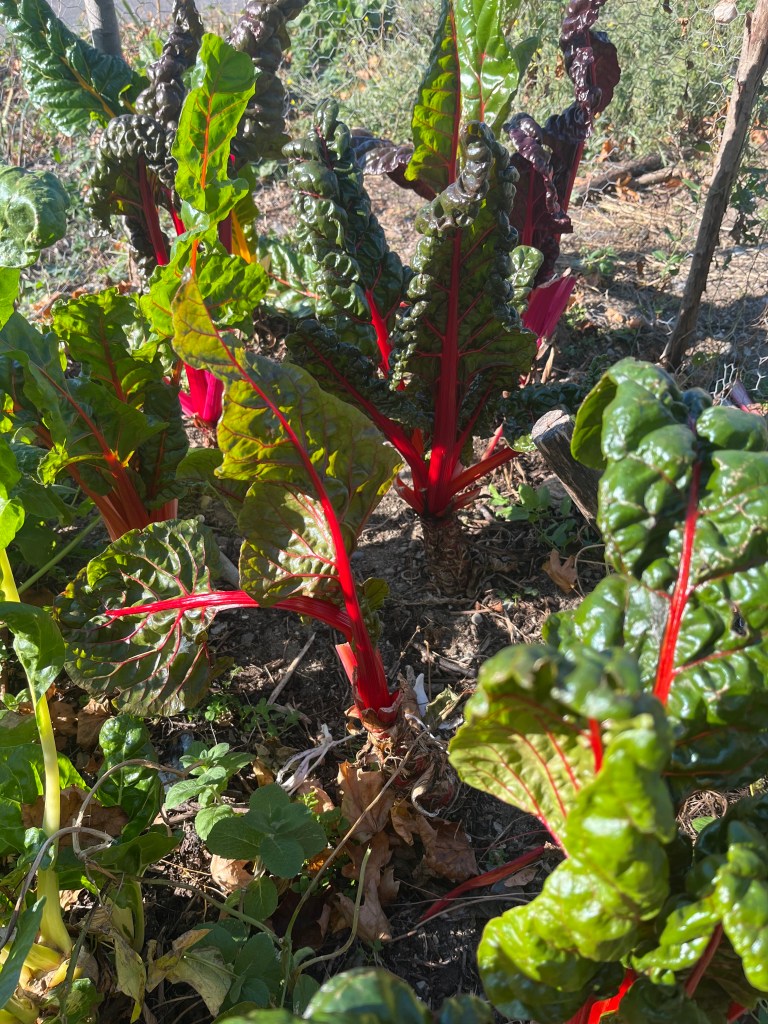
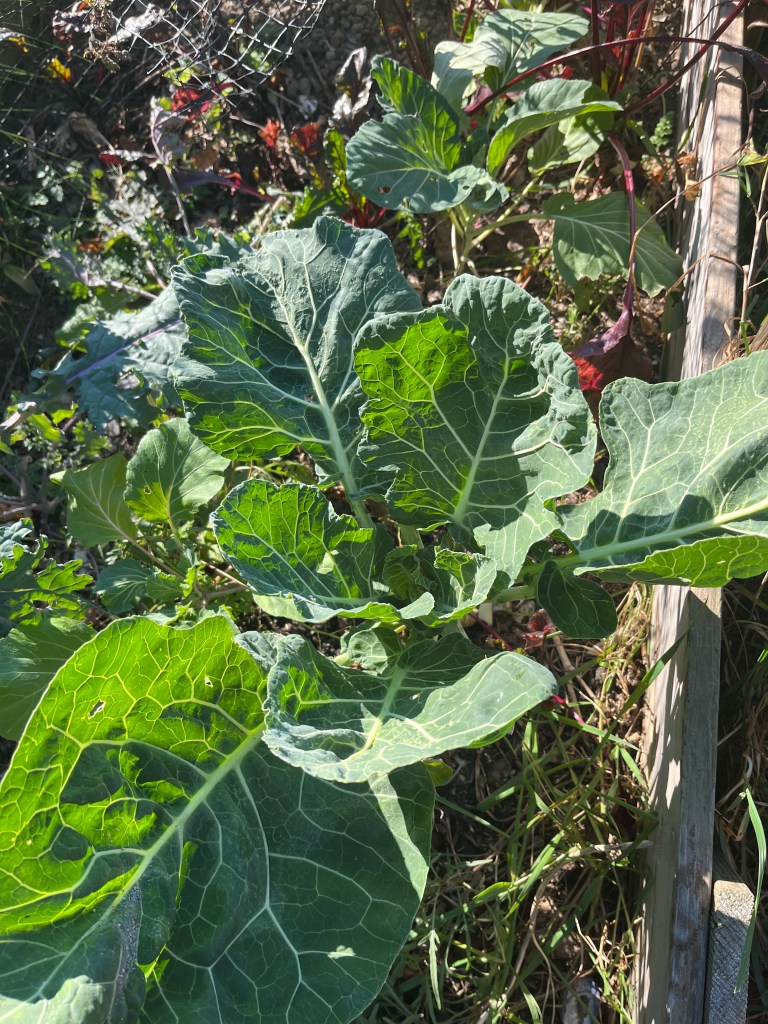
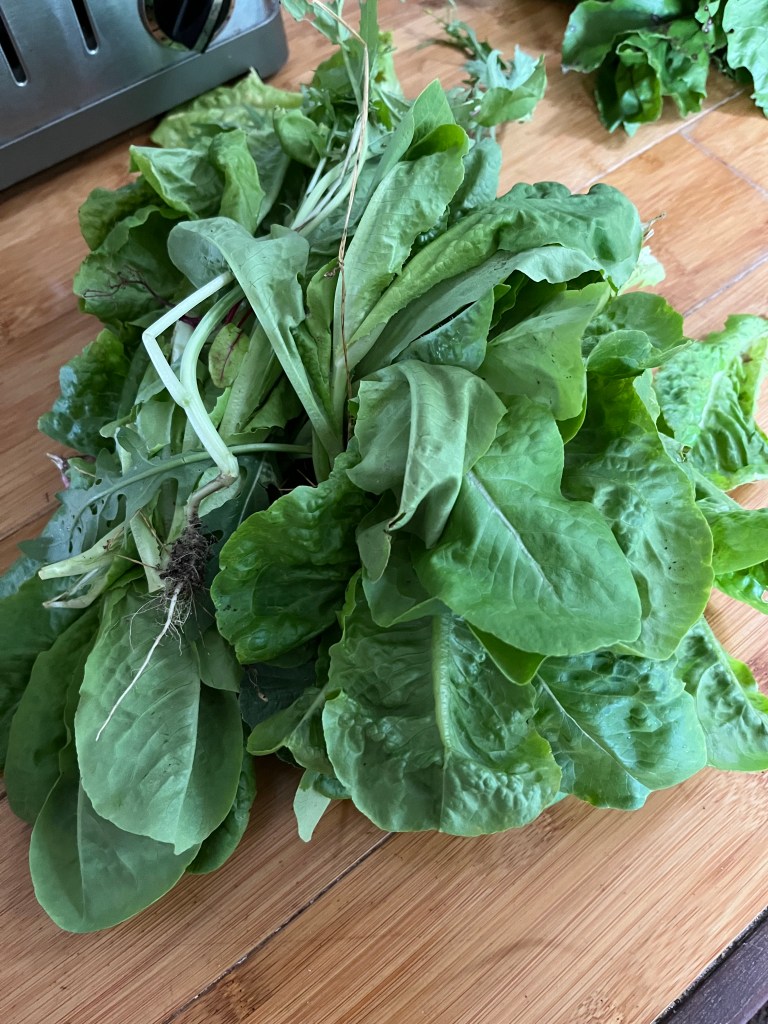
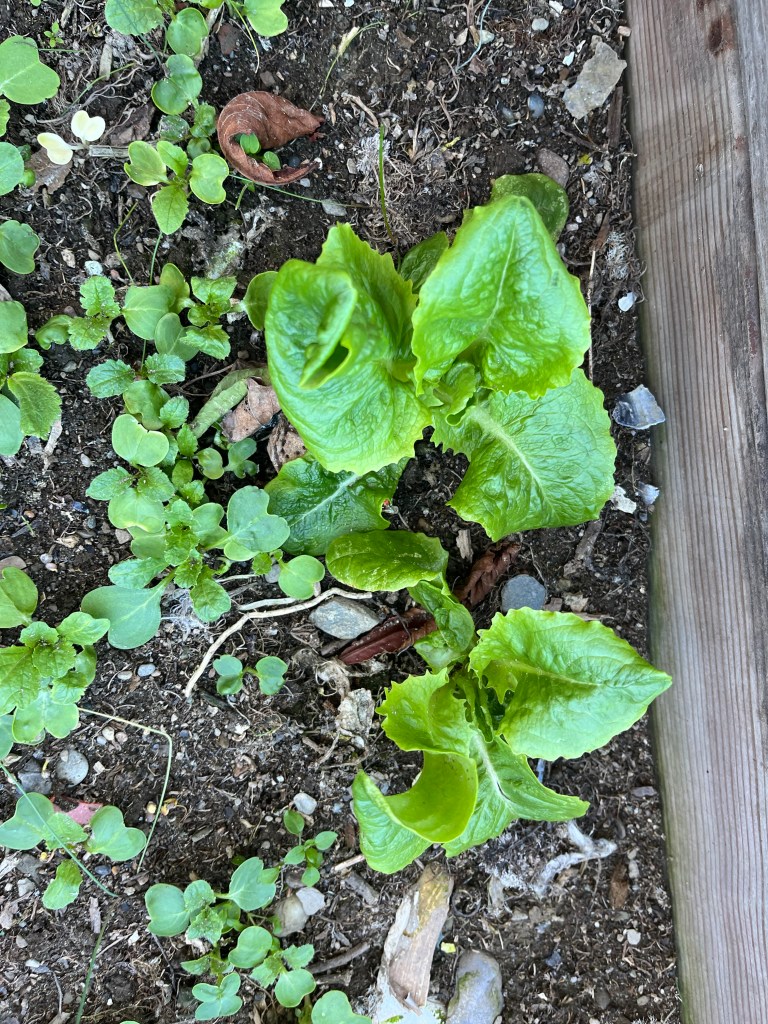
Below are some photographs of other late spring/early summer crops. One of the photos of the last of the lettuce — I did make another planting of lettuce but only one lettuce plant came up. I did not prepare the soil well enough as I relied just on my hands and did not even use a garden trowel. “Sometimes it goes like that” and the lettuce does not germinate. The arugula keeps going, this year as it has for the past twenty.  And beets – well Katy loves beets and so do I. And not photographed is the chard, but it is a banner year for chard. Katy asked me for more chard and less kale and collards. Soon it will be high summer with cucumbers, tomatoes, beans, and zucchini will be pouring in — or so I hope.

Happy gardening. The next time I write to you I expect I will be urging you to thin your carrots.

Hard to Wait: Feelings and Facts

It has been a little over five weeks since I last wrote and in that time not much has changed in the garden. Much less than I had hoped. As I sat down Saturday morning March 30th in a sunny room in a warm house I expected to be writing to you to encourage you to order your free carrot seeds and to tell you the facts about how March was colder than February. I went to the internet and wrote down 116 numbers — the high and low temperatures for the 29 days of February in Hull and the first 29 days of March. I had all kinds of ideas on how I could compare the two month to show that February was warmer than March.

Facts being facts though I need to tell you my impressions were wrong. In Hull, in absolute terms, the month of February was colder than March. In February there were twenty days when the low temperature was below 30°F as compared to four in March. In February there were only four days where the high temperature was over 50°F while there were eleven in March. But feelings come from somewhere and in Hull the official high temperature did not reach 60°F during the first 29 days of March but it did in February and in March there were seven straight days where the lows were lower and the highs lower than the historical average for that day. While I could not find official records for wind speed in Hull, there is a weather station at Logan Airport. Logan Airport like Hull is also on the water, somewhat more protected than Hull as it sits on Boston Harbor not the Atlantic Ocean but still exposed to wind. At Logan airport the number of days in February with wind speeds over 20 mph were 7, for March it was 17. It was not the temperature that was getting to me, it was the wind.

I accept that March was warmer than February but I have been hoping for more warmth and growing, and a lot less wind.

I got an email this month from Jessica Tay who has a website about growing and Jessica found us somehow and has linked her site to Carrot Day Massachusetts and I would encourage you to explore her site www.littlegreenyard.com. One of her articles is about carrots and carrot seeds, it is fun and I recommend it. As always, it’s good to know we are not alone and that there are many people out there hoping to encourage us all to grow our own food.

Don’t forget to order you Free Carrot Seeds with this form.

I wrote the first draft of this post on the morning of Saturday March 30th, by the afternoon that day the wind had lessened and in Hull we had the kind of day I had been waiting for all month. May the days also turn your way and please order your free carrot seeds.

Spring, Cold Frames, Seed Order and of Course —– Hope!

It was about ten weeks ago that I last wrote to you all. In that time Katy and I ate all of the cold frame lettuce, turnips and radishes, and the hearty collards and kale. We ate regularly from the garden until the second week of January when we had our last salad and fresh greens. Katy and I have been eating home grown food since then but it has all been frozen or canned. That is about to change again with the coming of SPRING!

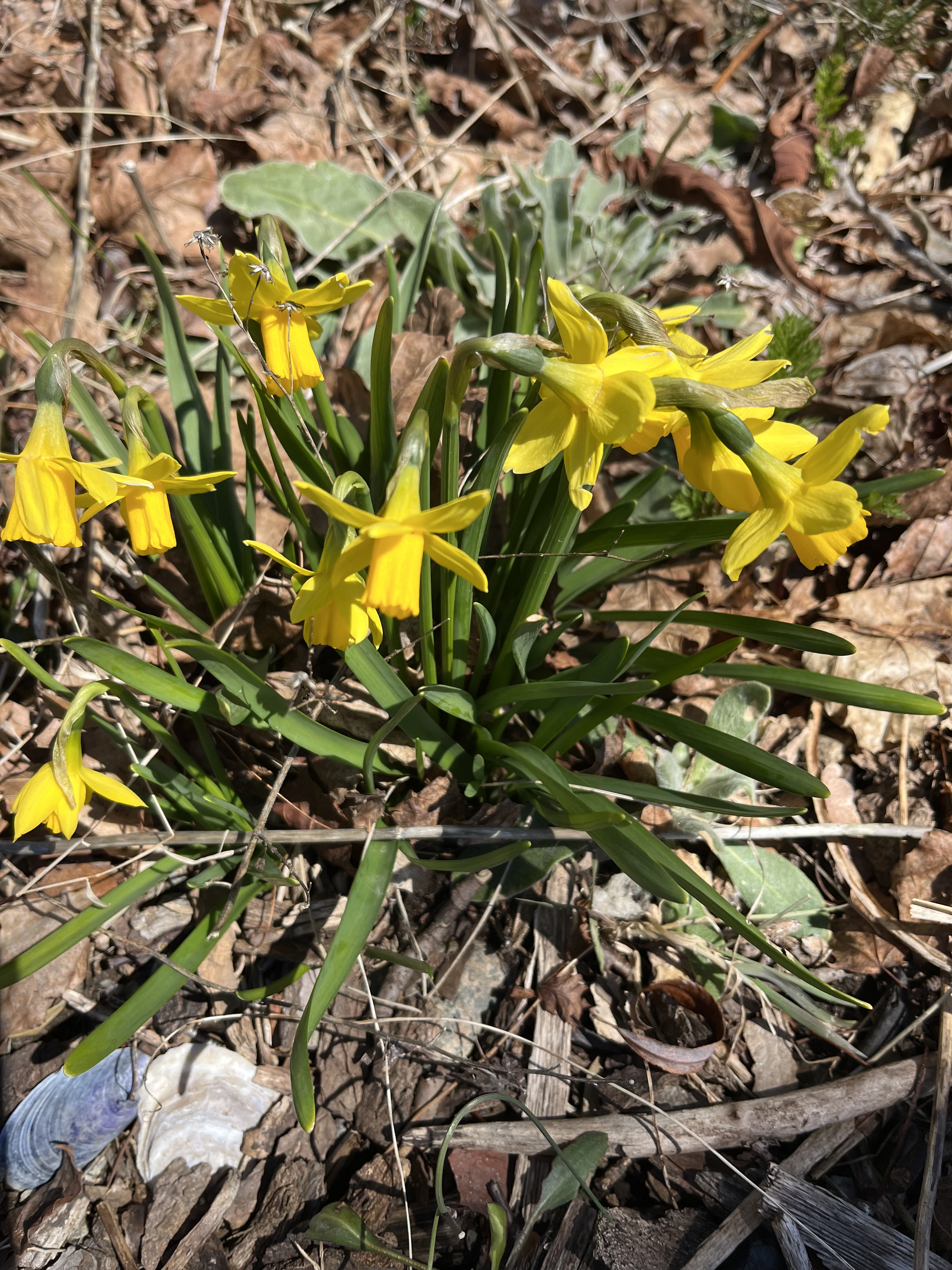
The darkest quarter of the year is over and spring is right around the corner and the early harvest season of eating tiny plants is about to come. Under the cold frames there are some turnips, radishes, kale and collards that have overwintered and they are beginning to grow again in our returning light. There are also the new crops of arugula and lettuce that germinated and grew under the cold frames. 

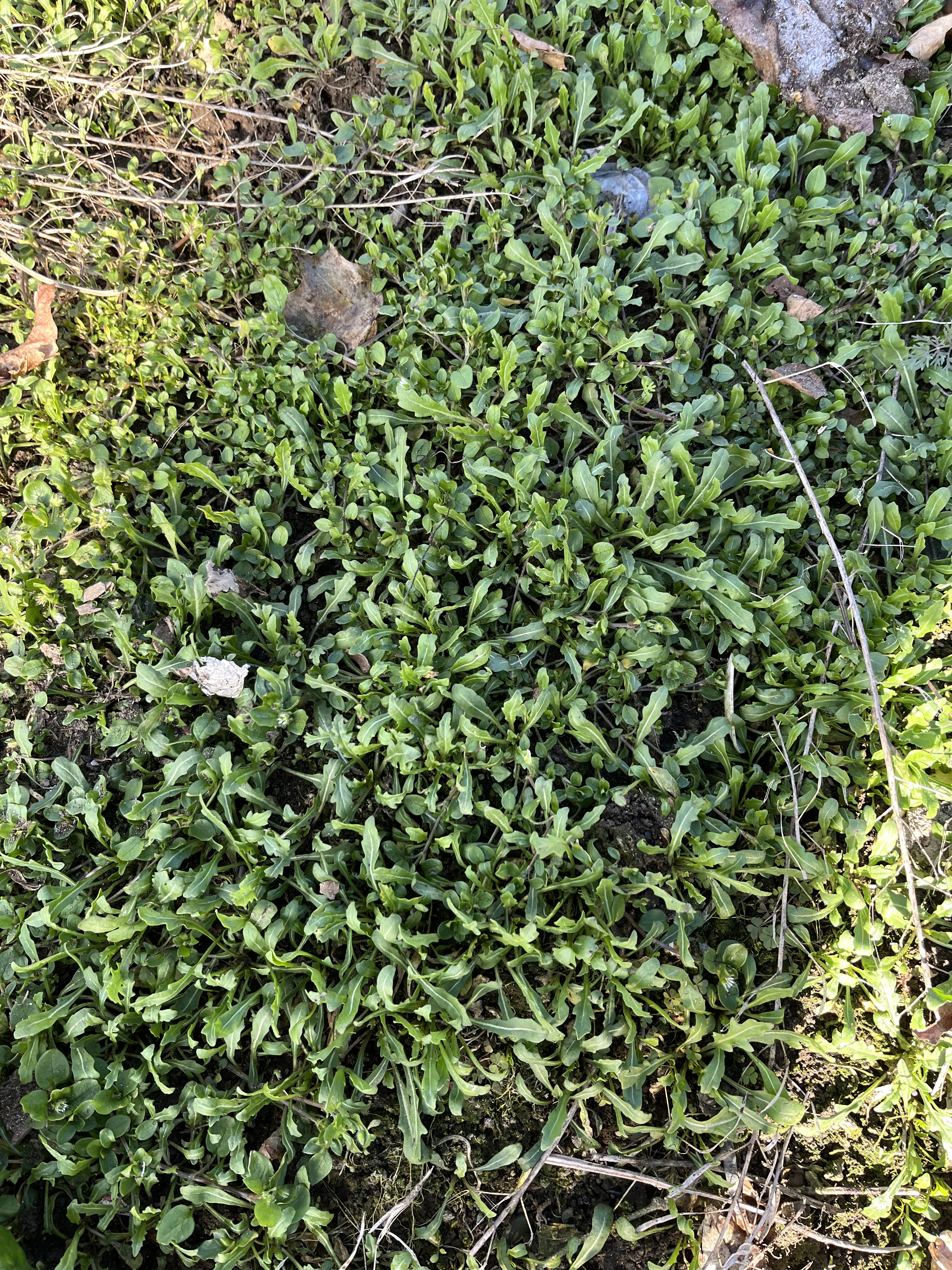
It takes time to turn those tiny plants into a salad. I have written before that I have the patience for the hours of labor to pick the greens to make a single tiny salad. I can sit there doing that task because I know if I put in the work now, later it will take only ten minutes to pick the greens for ten salads. I do need to thin the fresh crop of arugula soon or the individual plants will over-compete and produce less.

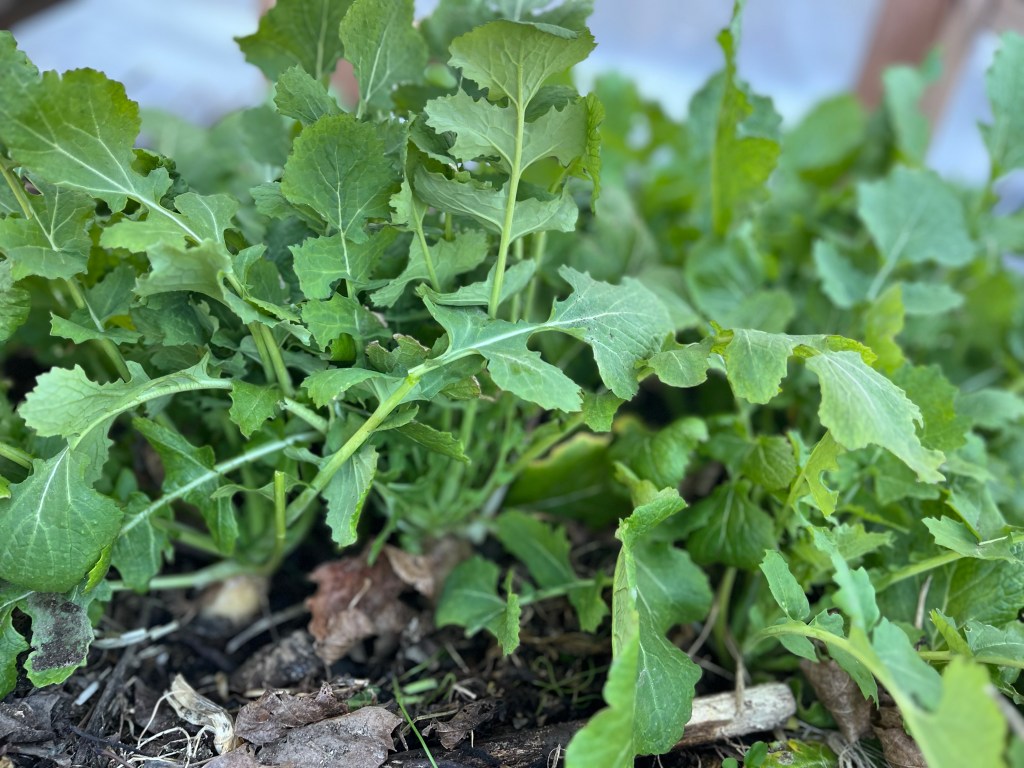
In the pictures above there are thousands of arugula plants and one kale plant and one spinach plant. Back in November when I planted this bed I probably planted about 100 spinach seeds and I am unsure how the kale got there. I wish more spinach survived the winter but grateful for the one that did and as you can see too many arugula plants survived. There is some serious thinning of arugula to do as this variety grows best when there is a single plant on six inch centers. My guess is that there are at least a hundred to be pulled for every plant that I allow to grow to maturity.

About four years ago I was standing on our porch overlooking the Hull garden alongside my son in law Josh Modell. Josh asked me what I was most proud of in the garden and I looked out and said the arugula plot. I told him that it was the most unusual part of the garden and I explained the process by which I grow the arugula plot. That plot of greens that year like this year comes from a November spreading of the arugula stalks full of seed pods and then covering it with a cold frame, no digging at all.

This week as I lifted the cold frame for the first time since putting it down in November to see what was under there I was reminded of a story my Uncle Henry told me. My Uncle Henry taught me how to make pottery and how to live a life. I went to spend the summer with him and Mary in 1976 when I was fifteen. In a Carrot Day post soon after his death I wrote about him. That post, among other things, was about shallow wells to water beds of vegetables. My brother John on reading the post proclaimed, “The post was about how I learned of shallow wells from a ‘deep well.’ ” The “deep well” is my mentor Henry Pope.  

Back to the story Henry told me, a big part of the joy of ceramics is the mystery of what happens in the kiln. Henry told me a story of a potter. The potter was an old man and a renowned potter, so renowned that the government of Japan had made him a “National Treasure.” Despite his age, experience and skill he would peek into the kiln as it was cooling. He could not wait to see what had happened in there. I felt that same way when I uncovered the arugula plot from its cold frame. I know it can be unwise to look under the plastic too soon just as it can be unwise to peek in a kiln when it has not cooled down enough. I was like the old potter who could not wait and I took the risk and as I took that risk I thought of Henry. The green carpet under that cold frame was magic just as is remembering Henry was magic.

Turnips on the left and radishes on the right. They are both members of the brassica family and they sure do look a lot alike.

So spring is coming — I force it early with the cold frames. The carrot seeds have been ordered and I hope I can send them to you. I hope that I can send seeds to 10 schools and 100 individuals.

They are free. Click this link to order your seeds. I can’t wait to hear from you.