

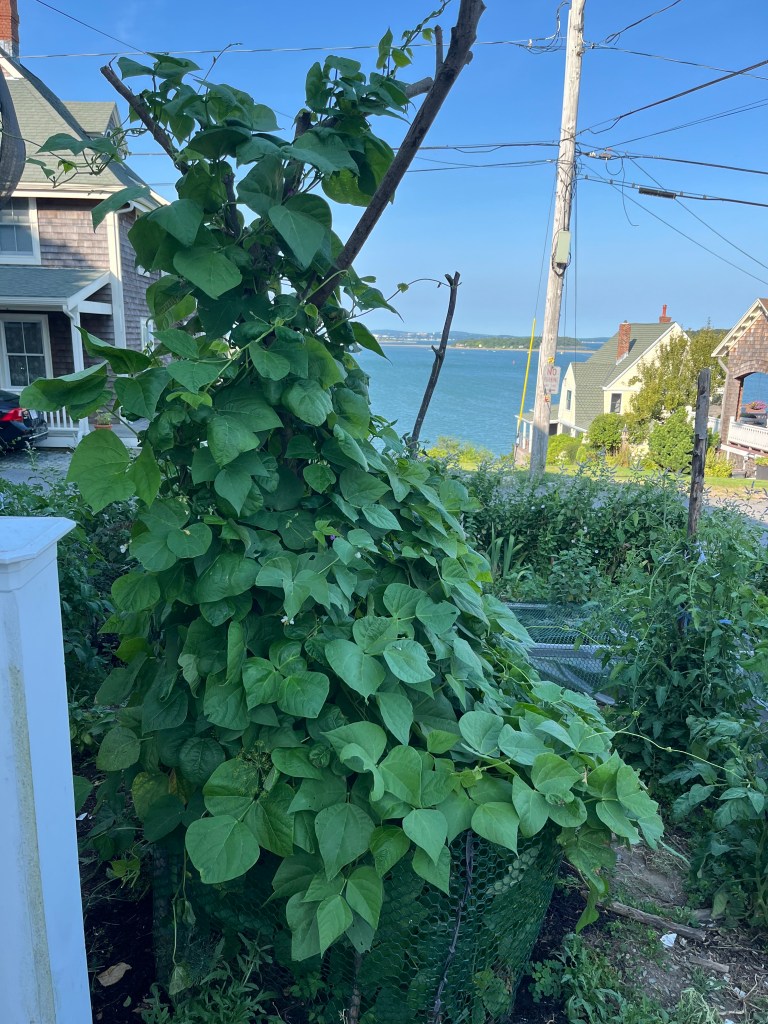
Well it is just about high summer here in Hull. The lettuce has been plentiful but is now almost over until fall. The beets are glorious and the Rattlesnake pole beans are high and about to be ready. The cucumbers are growing up their trellis and about to explode in production. And then there is the ever present arugula. I have written before about how I try to disturb the soil as little as possible and most of the garden is made up of the areas between what is planted or transplanted. In those spaces I am harvesting arugula nine months a year. I spend more time on the arugula than any of the other crops even though the arugula doesn’t have its own space. Several days a week as I harvest the arugula I am selecting arugula plants to cut or pull for that harvest. On the edges of the garden, which are filled with mint, tansy and other flowers I allow some of the arugula to mature and go to seed. It is those seeds that replenish the soil with arugula seeds and all summer there are new arugula plants emerging between and under the other crops. As with all plants arugula does best in great soil with plenty of room but its seeds germinate so well I am constantly selecting out the plants I want to thrive and then pulling those as they get bigger for younger plants to take their space. That way all summer there is beautiful arugula to eat.
Around twenty-five years ago, I bought one packet of perennial arugula from Johnny’s Seeds, and from that planting, the arugula keeps coming back. June and July are arugula’s most prosperous months, and the picture of the harvest below with beets, radishes, and arugula shows a fairly typical harvest. In June and July, we get two or three of these a week.

On July 15th, I received this email from an old friend and the author of a recent Carrot Day Blog. “HI Ted! Our last planting of carrots just got scuffle hoed and hoping for a nice rain later today. Hope you are well and keeping the rabbits out! Love–Nancy“
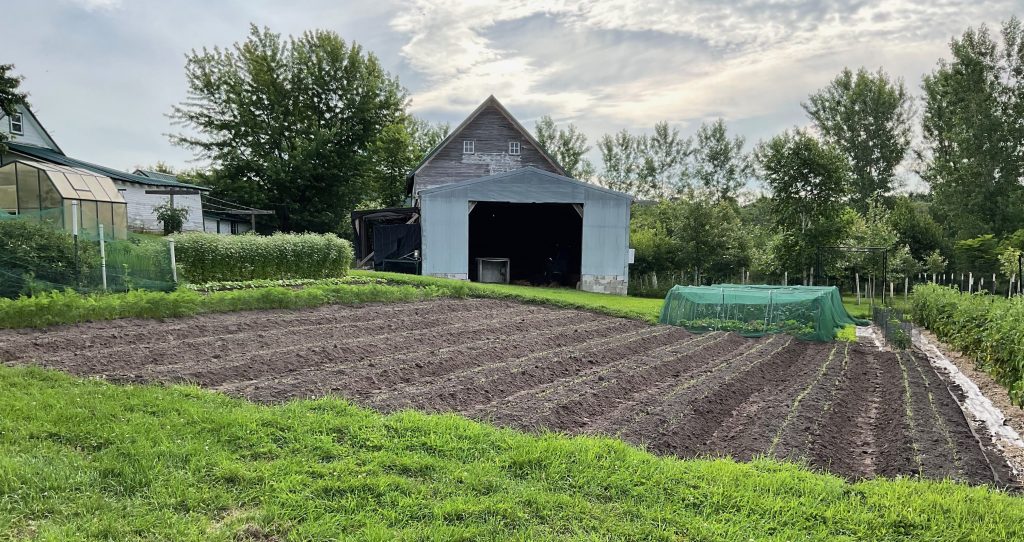
When Nancy Potter sent this message with an amazing picture of her farm and one of its carrot plots, I felt pretty smug because my carrots planted on Juneteenth were thriving and bunny-safe. But that success didn’t last long. A few days later, I looked into the garden and saw a bunny in the middle of the carrot patch. I ran out to scare it and saw the bunny jump over the nearly three-foot chicken wire fence. It only took me five minutes to go to the basement and enclose the bed with a taller four foot fence, which for now at least has since done the job, and the carrots are now recovering.
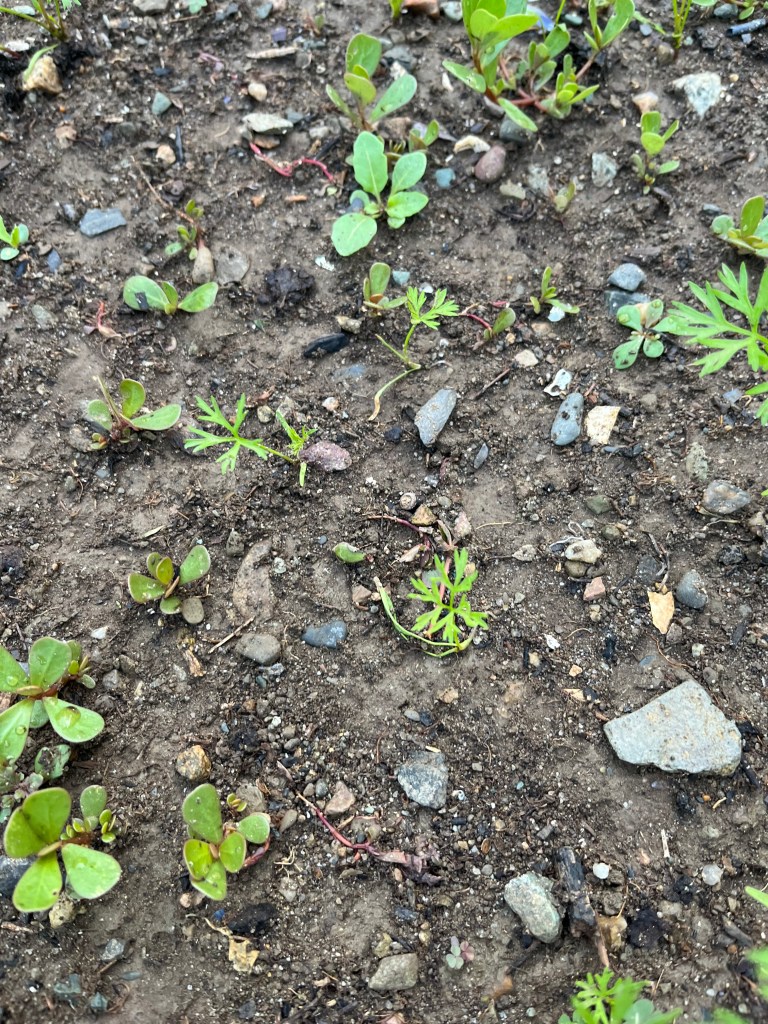
The series of photos below shows the bed as a whole as well as details of the section that the bunny or bunnies ate and of the un-bunny-eaten section. Perhaps in time, the extra thinning the bunnies did will give me super big carrots — only time will tell. In the middle picture, you can see the purslane and arugula baby plants. While purslane is also a tasty green that, like arugula, bunnies don’t prefer, its season is much shorter than arugula’s, and I only see it showing up in the garden at the end of June or July.


This past week, I visited the Victory Gardens on Olmsted’s Emerald Necklace. This famed site, started during World War Two, was one of the 20 million Victory Gardens that Americans planted and tended during that war. Those gardens produced 40% of all fresh fruits and vegetables consumed in the US during that time. Now in 2025, even in the Fenway Victory Gardens, most of the gardeners focus on flowers, not vegetables. Gardening flowers does bring many of the social and physical benefits of growing food for the gardener. Right now in America, there is not the same sense of scarcity around food that drove the Victory Gardens of World War Two. That said, I do hope you do join us to grow your our own food. The benefits of developing your soil and growing your own food are so worth it, and carrots are a great entryway into gardening.
The bank of pictures below is what the Fenway Victory Gardens looked like on July 25th. Please note the wonderful composting system as well as the gardener who chose flowers and the other who chose vegetables.


Please send me pictures of your carrots and your garden.
I have one more image to leave you with, the mint around my garden, which is such a draw for the bees and other pollinators. I just love watching the bees and the butteryflys as they come and vist the mint flowers.

 Carrot Day Massachusetts 2026