Mid Fall and the Garden Is Good and Why I love Rattlesnake Beans

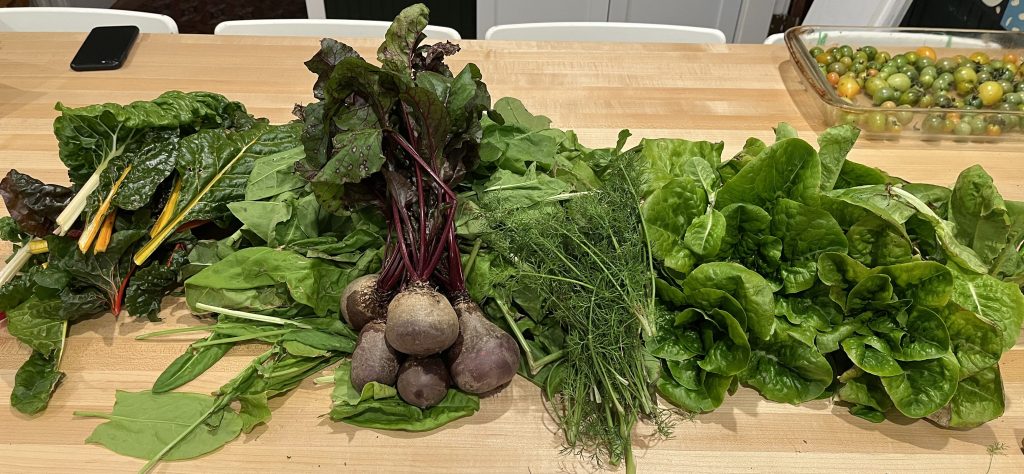
Six and a half weeks ago, I wrote to you about turning 65 and compared that stage of life to the Mid-September Garden. The Hull Garden in the weeks since has continued to grow good food: lots of tomatoes, lots of kale and chard, some arugula and lettuce, a few cucumbers and zucchini, and lots of Rattlesnake Pole Beans. I have been indulging in an occasional carrot. Perhaps I am selectively thinning the carrots to give those remaining more room to grow, or I could just be a bit impatient and eager to eat a good carrot. Anyway, for just the two of us, the garden continues to produce almost all of our vegetables. If you say a garden’s life span is 52 weeks and a person’s life span is 95 years (both well above average), then these weeks are the equivalent to about twelve years of a life. I certainly hope my next twelve years are as productive as the garden’s last six and a half weeks have been.

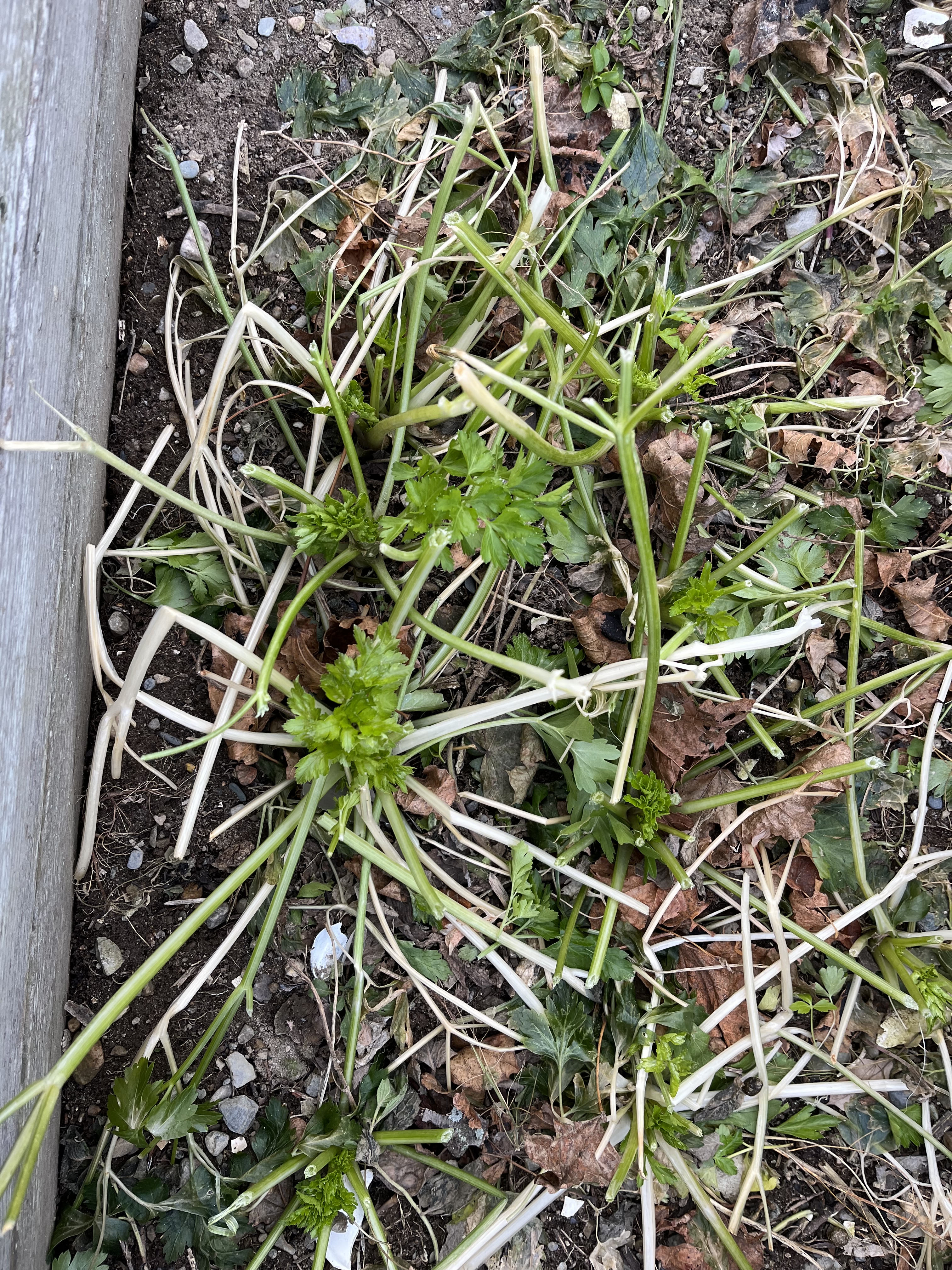
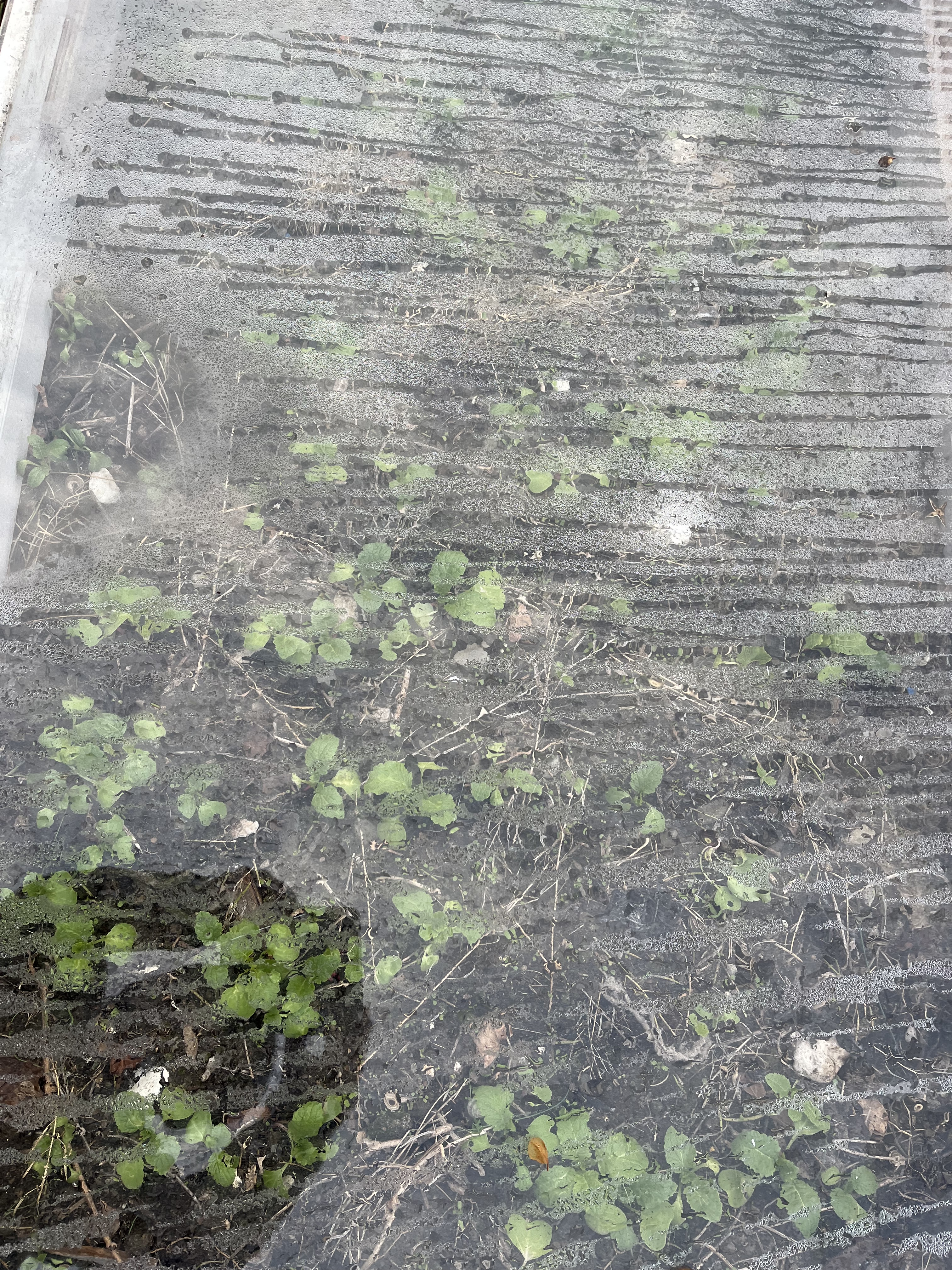
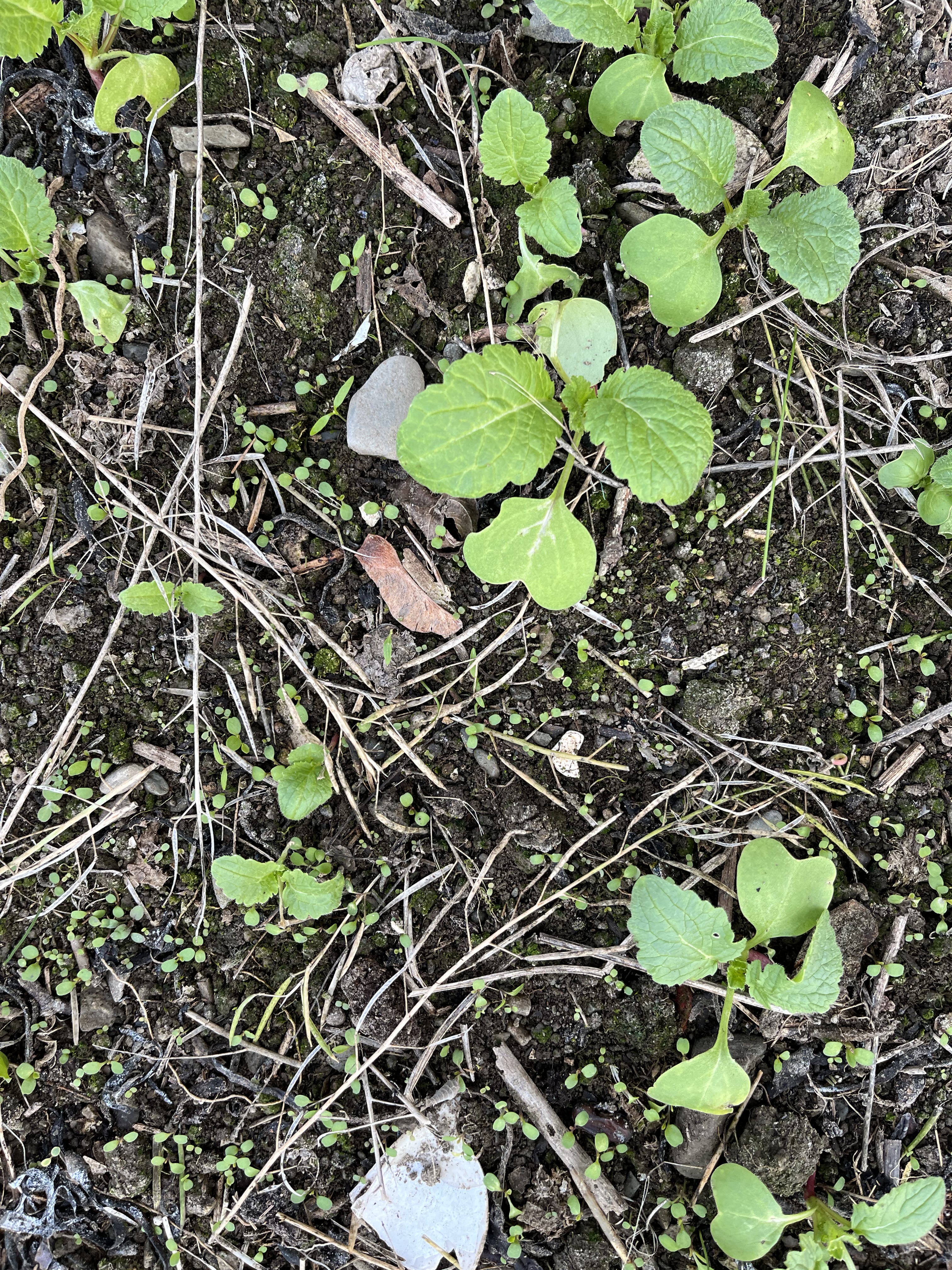
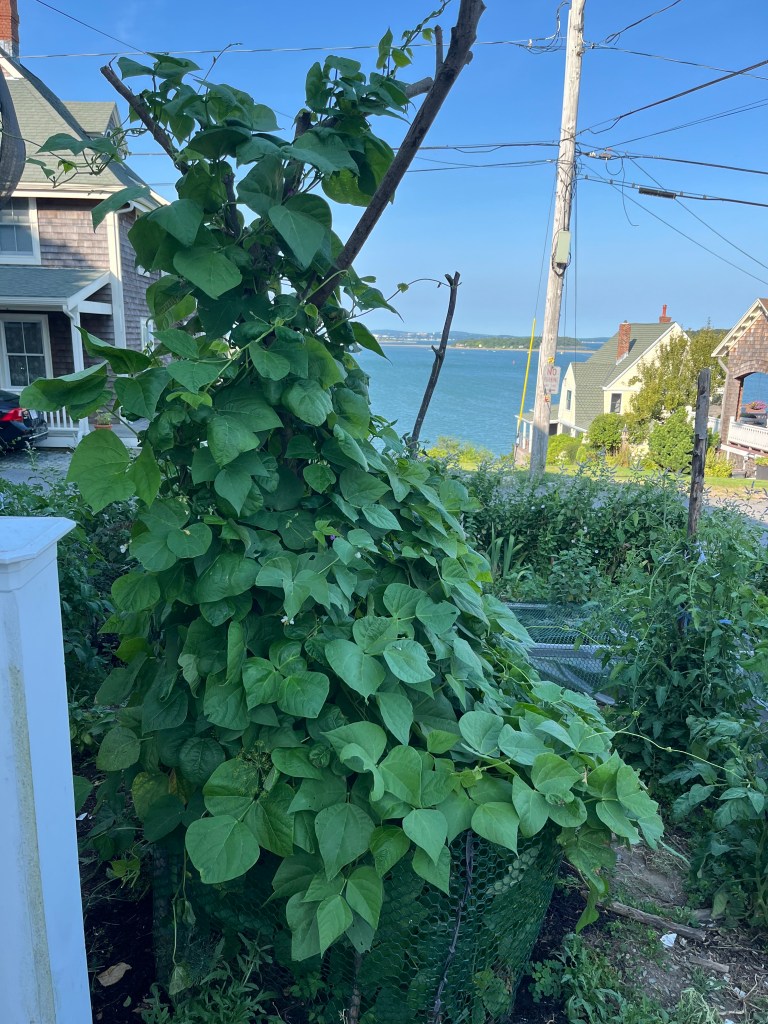
That said, each day, conditions for growth here in the Hull Garden lessen, but there are about five more weeks where plants will continue to grow. I just decided this morning to pull the Rattlesnake Beans, even though there are a few buds and some very tender young beans, but it is a matter of diminishing returns. I figure if I pull them today and put down a cold frame and plant some radish, arugula, and parsley seeds, we could be rewarded with Christmas radishes and February arugula and April parsley.

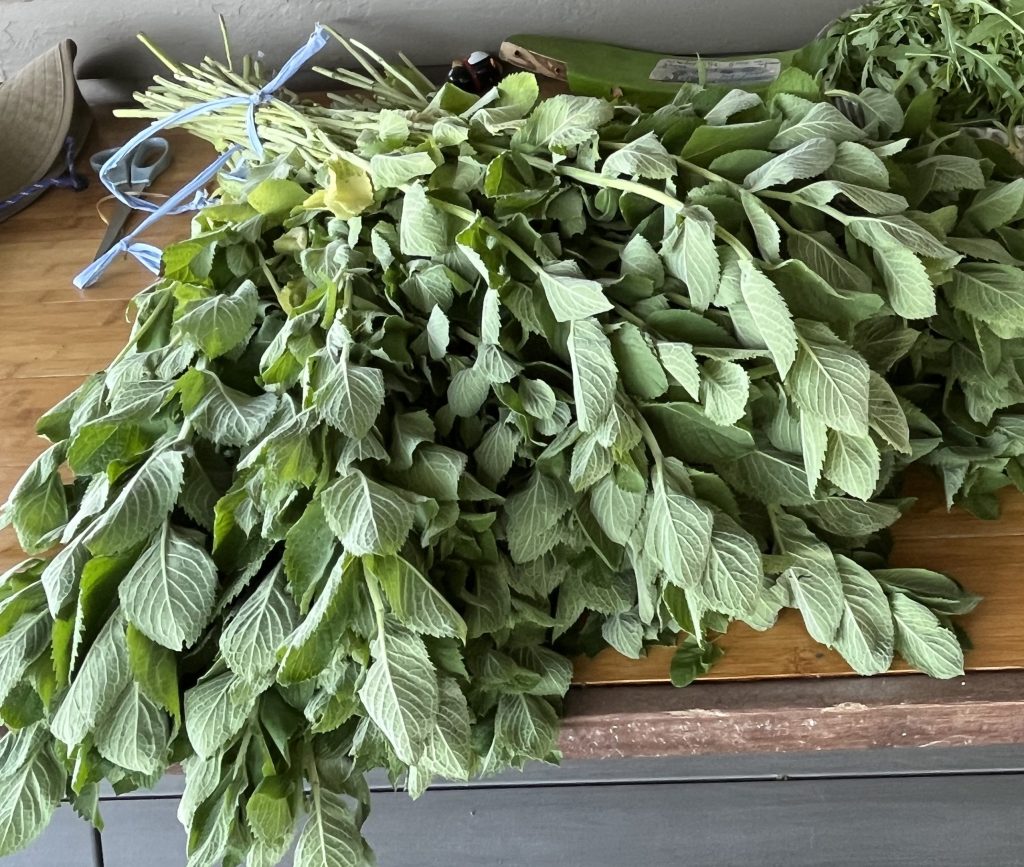
The Rattlesnake Beans have been my favorite crop this year. Not only have they been the visual anchor of the garden, growing to almost eight feet high and producing a steady crop of beans from the first week of August until this week, but they have been giving us amazing food and amazing experiences. Among those experiences were the times with our grandsons here in Hull. One week this summer, I was the lead daytime caregiver for the one-year-old Robinson. In that week, Robinson and I spent a lot of time moving together as he fearlessly improved his proto-walking skills and his stair climbing and stair descent work. We spent hours on the porch and going up and down the front porch stairs to the garden. When we got to the bottom, we often nestled in the shade of the pole beans and ate beans. Not only that, but his older brother Izzy also liked to eat beans, and when he got back to Baltimore Izzy relished telling his dad his beans were not as good as mine. There was also the party on the porch in September when Ruth said that the blanched Rattlesnake Beans were the best beans she had ever eaten, and she has lived her life eating excellent home-grown vegetables. The bean dish we had last night with Rattlesnake Beans at five stages of maturity, from dried to tender (see photo in gallery below), will have to be enough. The textures of the five stages in a rice and bean dish were amazing. It was not a dish for a parent of young children or a grandparent with company, but as someone who loves their beans all that extra time sorting, pulling strings, and making stock (from the dried and drying shells), was time happily spent.

Rattlesnake Beans are an old variety. They originate in the American Southwest, where the Hopi People grew the bean, and they are also revered by the Cherokee, who have the seed stored in their seed bank. It is hard for me to give up the handful of beans that will not come in the next few days, but the thought of Christmas radishes and late winter arugula and early spring parsley overrides that emotion, and as soon as I finish this draft, I will pull them.

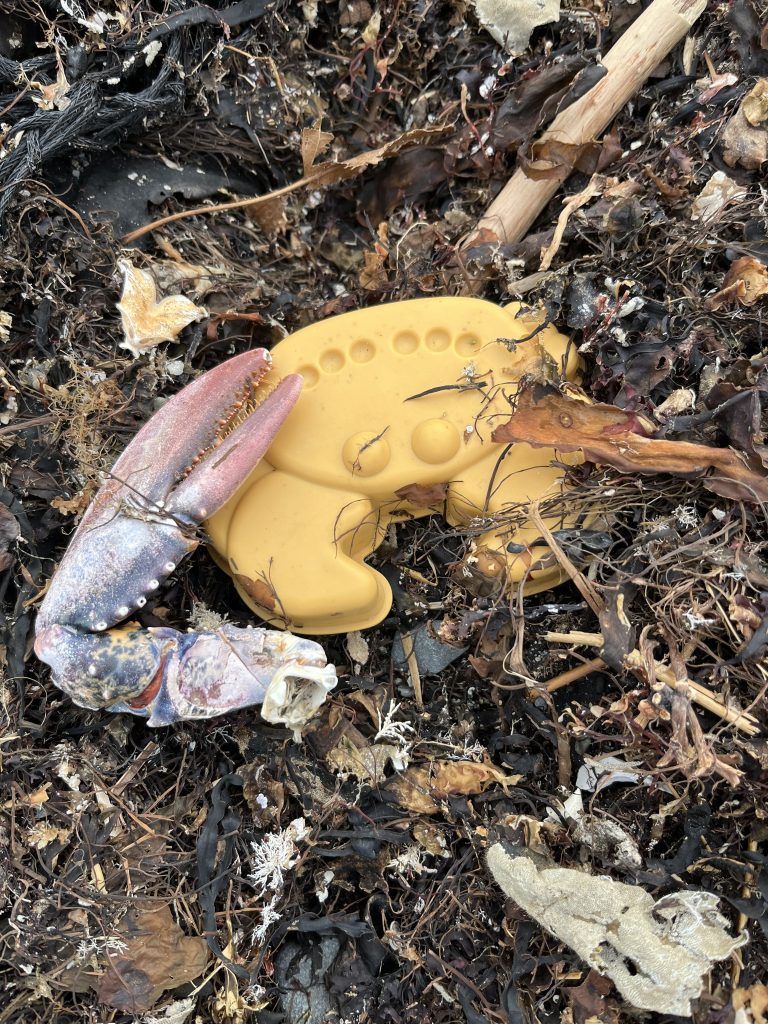
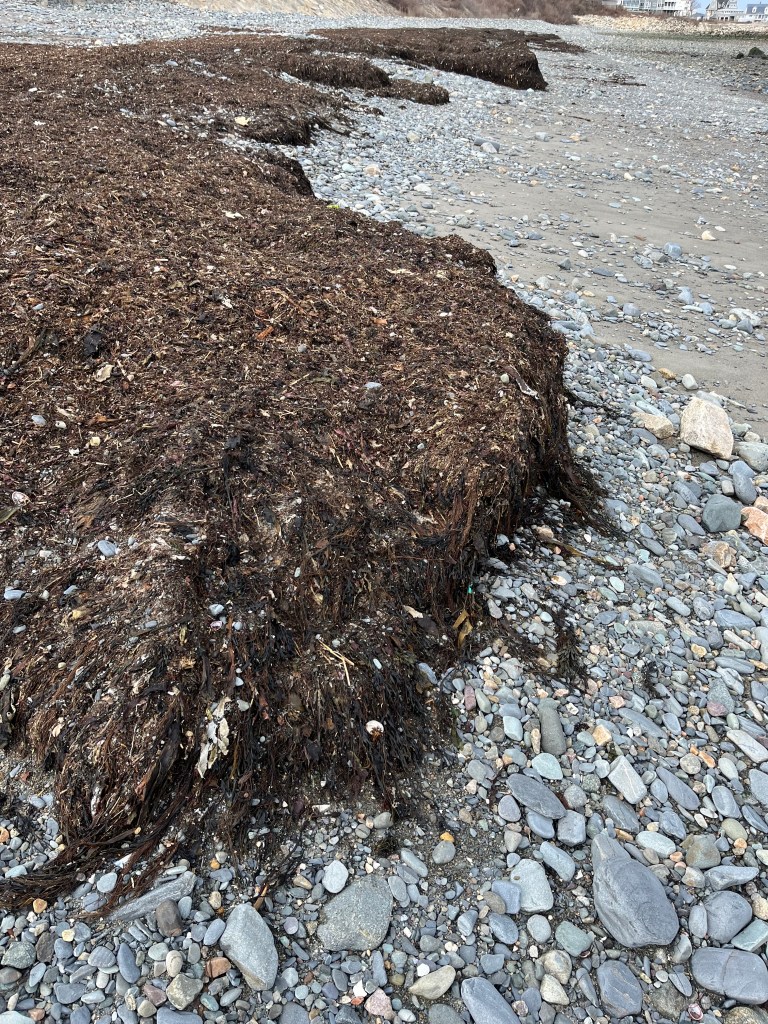
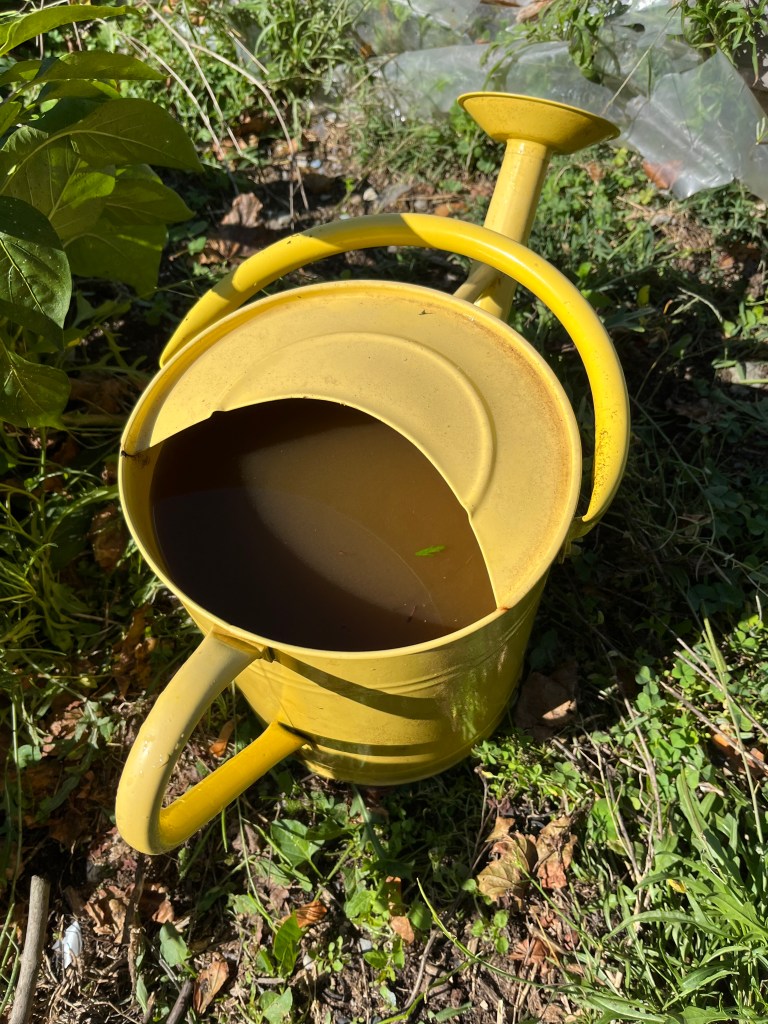
As I said, the past six and a half weeks have been good in the garden. We have had plenty of rain and plenty of sun. But some of the success has to do with the compost tea. In June, I gathered rotted seaweed from the beach and halfway filled a 32-gallon trash can with that rotting seaweed, and then topped off the barrel with water from a hose. For the last 19 weeks, I have been taking compost tea from that barrel. I carefully put the tea on the specific plants in the garden, and then later I add the water left over from washing vegetables or the grandkids’ bathing pool back into the barrel to restock the tea. It has never been empty these last four months. I think this tea has made a world of difference, especially for the beans and the greens. Early on, the tea was at times too strong, but its potency has lessened over time, and now I freely add the tea without fear of burning the plants with too much nitrogen. I plan to use compost tea next year, even though I will not neglect the garden as I did after the November 2024 Election.

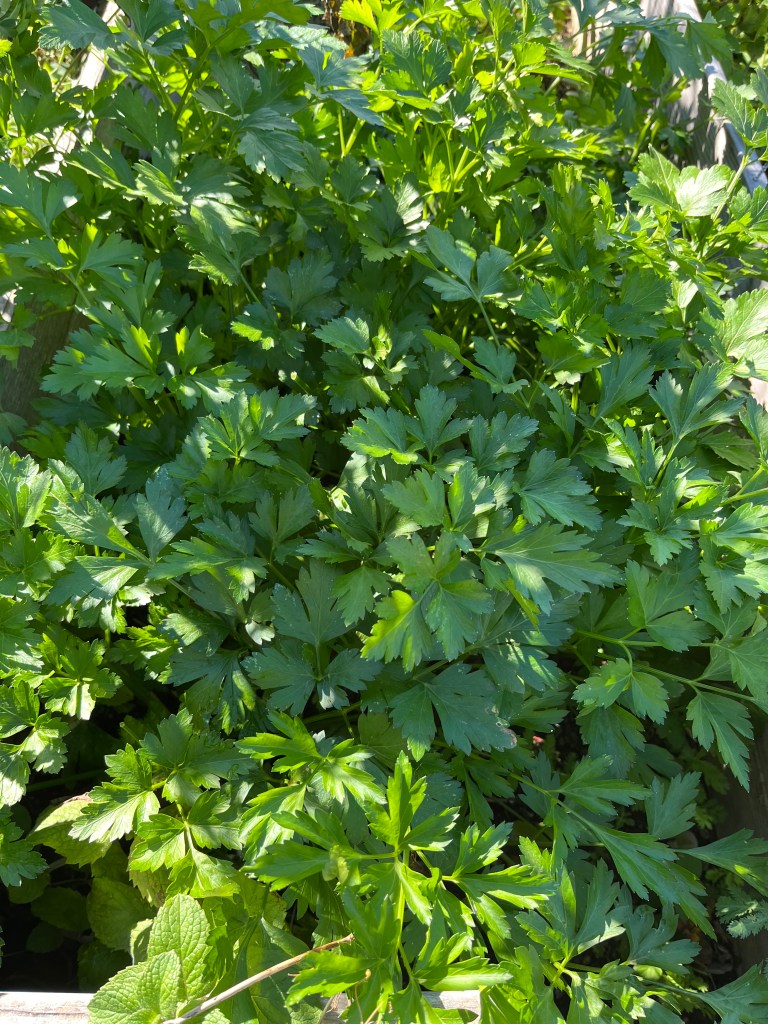
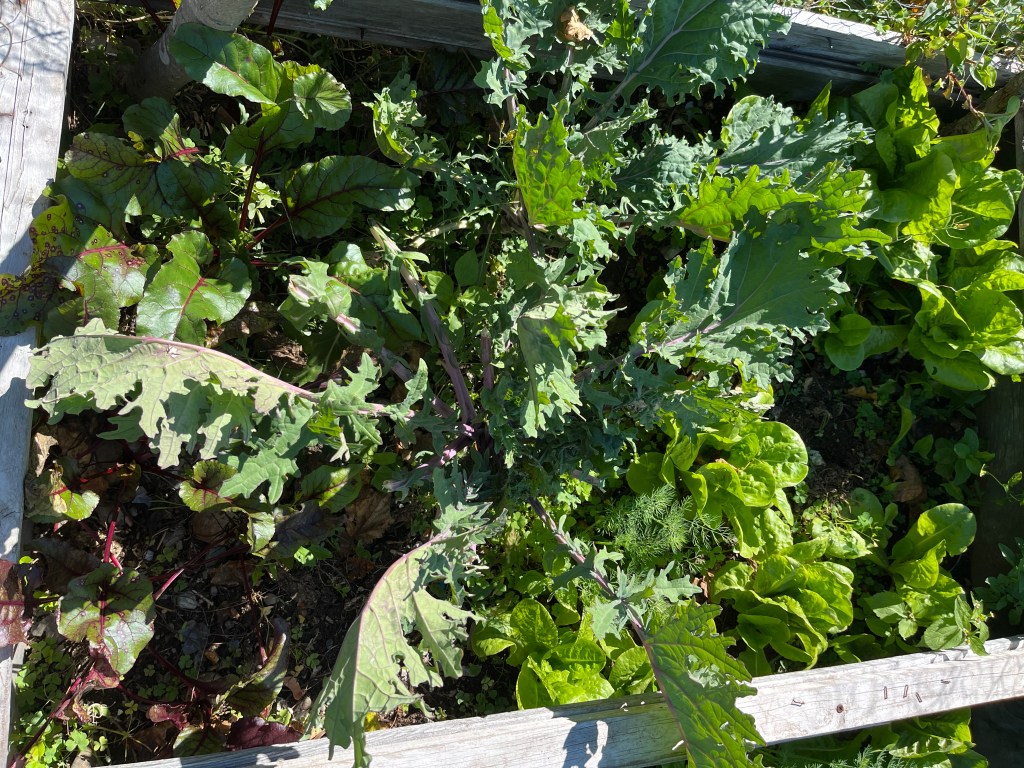
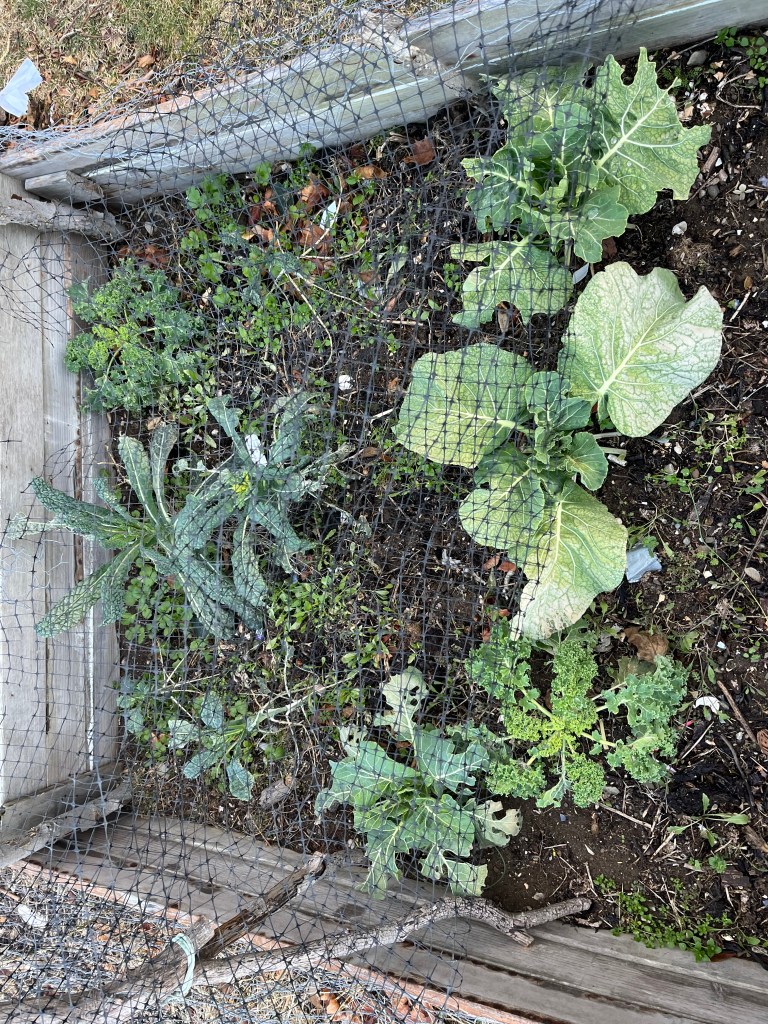
The pictures below, taken in the garden today, show the plants that love or tolerate this season. Clockwise from top left: Italian Parsley, Red Russian Kale, Rainbow Swiss Chard with Buttercrunch Lettuce, Matt’s Wild Cherry Tomatoes, Red Torch Tomatoes still hanging on, and the yellow watering can with compost tea. That tea is still a nice brown color and still has a rich smell, even with the 19 weeks of dilution.

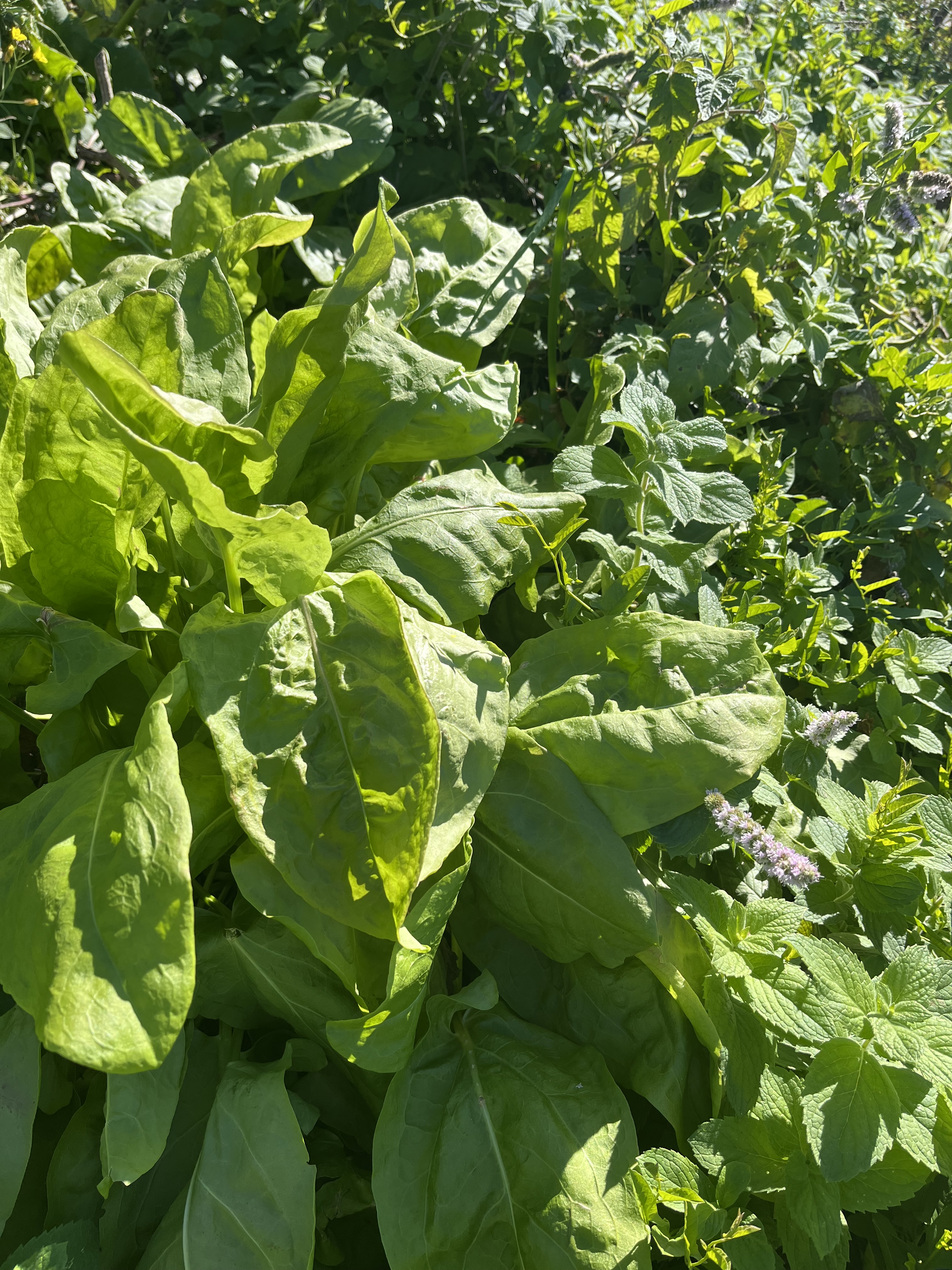
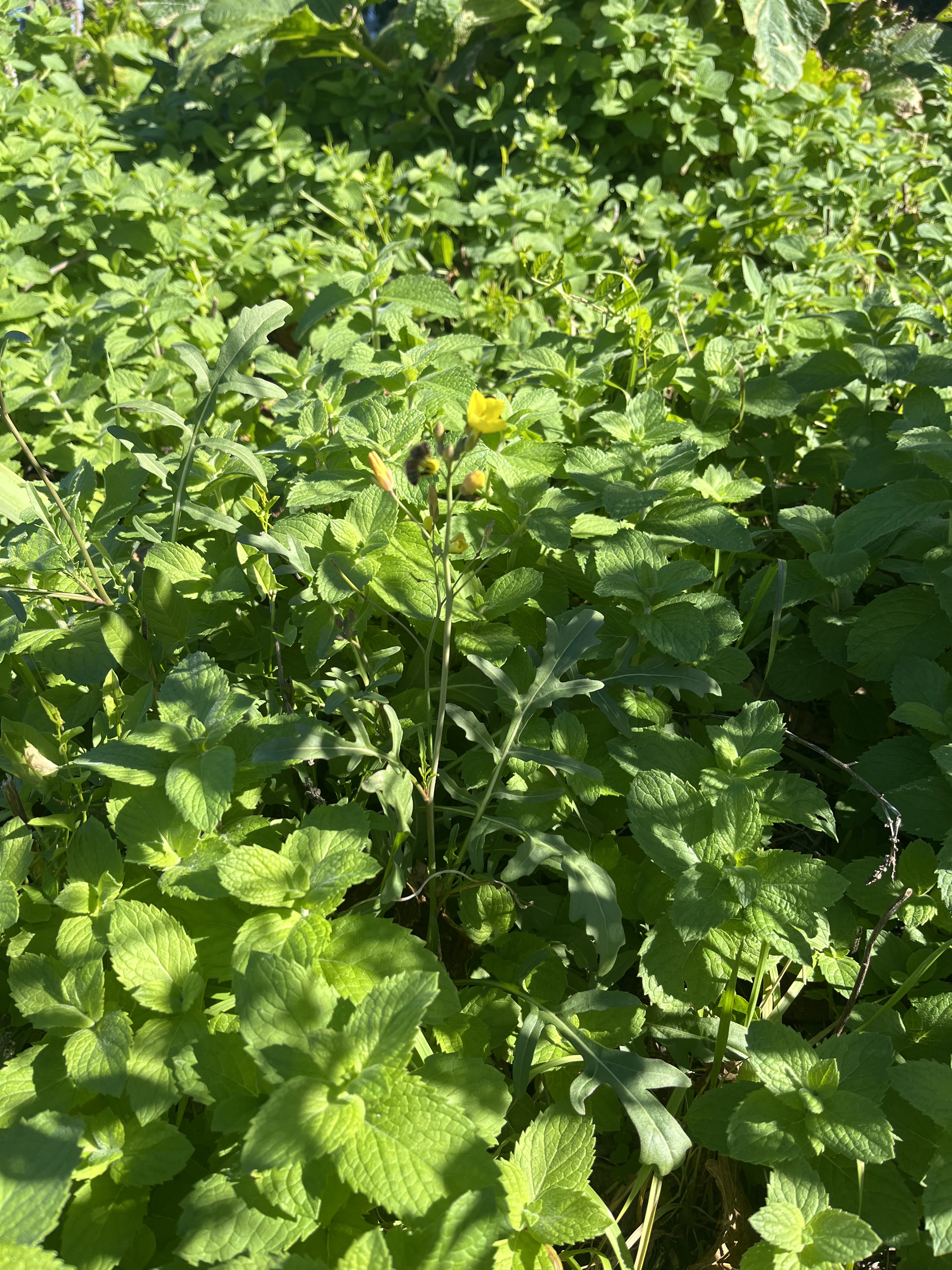
Those vegetables persist, but the sorrel and the mint are thriving as we approach November, and along with the arugula (there is a bee on the arugula flower in the photo below), are still going strong for the pollinators.

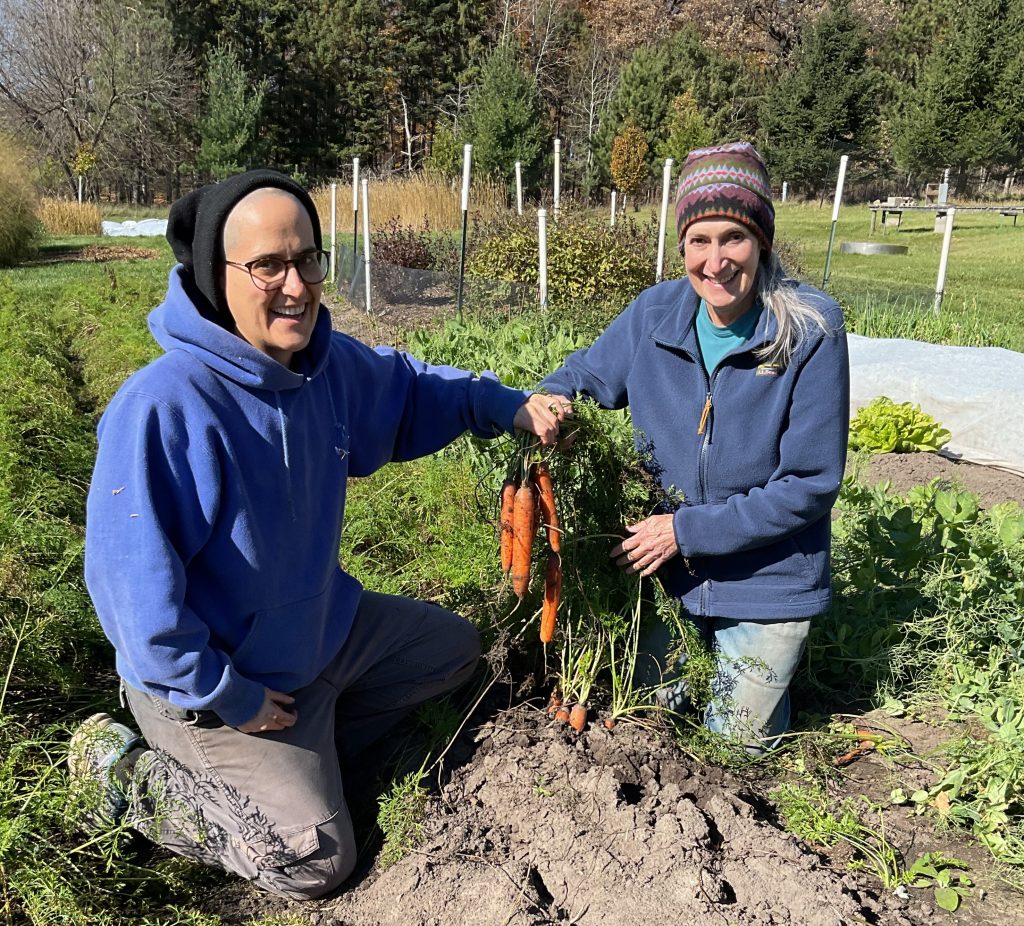
Please send me your carrot updates. I have heard that there has been frost in New Hampshire and in Minnesota. This is what Nancy Potter said about the Minnesota carrots captured in the photograph of her and Steve on October 23rd as they harvested a few of their carrots, “Our carrots have definitely been frosted–it was 27 degrees this morning. The root cellar is a long way from being cold enough, so digging all the carrots is still in the future.” In about six more weeks, I hope to be posting the year-end edition of the 2025 Carrot Day Massachusetts Blog, and I would love to include your carrot adventures in that post, so stay in touch.

Nancy and Steve Potter pulling a few of their many carrots.

The Fall Garden and Turning 65

In early August, Katy and I celebrated our 39th Anniversary. That night I said to her we would not have another 39 years together, and she laughed and agreed. This past week, I turned 65.

On Saturday morning I was working/being/hanging in the garden strategizing how to get the most out of the garden this year. Vegetable gardening is largely a question of what to do when, and there are lots of small decisions like when a crop should be removed for the next to take its place. To garden is to make many moves, some as small as harvesting kale leaves so lettuce plants nearby get more light, or deciding that it is time to pull the beets and put in the radishes, or pull the radishes to put in the beets.

One thing I decided on Saturday was to use some more of the compost tea on the cucumbers and beans. I was hoping that the compost tea would encourage the Rattlesnake Pole Beans and the Shintokiwa Long-Fruited Cucumbers to keep going. While they, like me, are past their peak, they, like me, are still productive. If I were to make the decision that their season is over, it is very unlikely that whatever I planted to take their place now in mid-September will produce much. Both beans and cukes have had amazing seasons. We have had beans for the past five weeks and cucumbers for the past six, and I hope they keep going strong. Not only for us to eat but to share. You see, I have a short term goal to eat beans and cucumbers this weekend because Ruth, the daughter of old friend and Carrot Day Massachusetts blog guest writer Nancy Potter, is coming to lunch and to see the garden. I want to be sure she gets some beans and cucumbers. 

The fact that there are still new flowers on both the cucumbers and beans, and that there are young beans and cucumbers are promising signs we will have something more to eat this weekend. The brown leaves and waning vigor of the plants are real too, and they will not last forever.

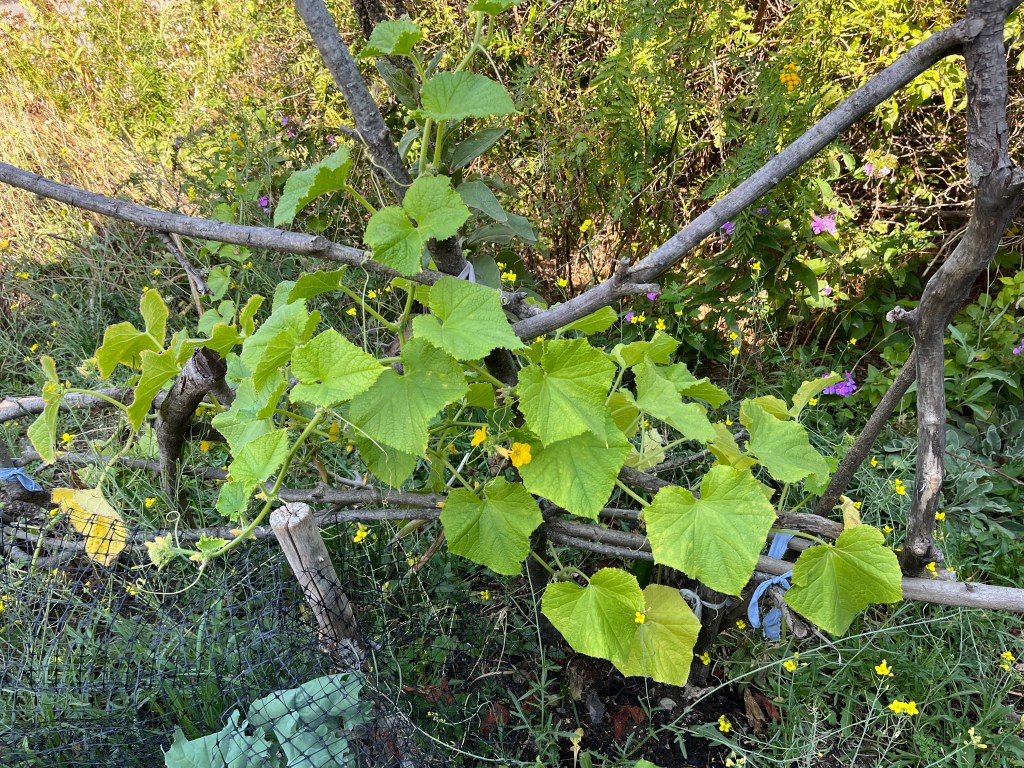
Decisions in the garden are not only about when but “where.” This year more than any I remember “where” has made a huge difference. This year I had dramatically different results from the same type of plants in different places. The Shintokiwa Long-Fruited Cucumber trellis in one spot has produced about 80 beautiful cucumbers, while the other trellis has produced two not so beautiful cucumbers. The trellises are near each other, only ten feet or so apart. But these photographs below tell the story. I know of course it is the soil; look at the different shades of green.

Not only were the cucumbers more numerous from one trellis than the other, they were longer and better. I had hoped that the less productive trellis might have a later season but it is not to be as the productive one still has more small fruit. Same is true for the tomatoes as the plants on one side of that path are out producing (my guess is by ten fold) what is happening on the other side of the path. I had thought the slow starters might have a better late season but that is not coming to pass as they are ending sooner too.

This past Saturday, while I was harvesting and thinking about the near-term harvests for the next few weeks, I was also looking forward to the fall garden. It is not all that different from thinking about being 65. Katy and my children have been born and grown up and are living their full lives on their own. I am still working in a school and teaching, and while much of what I will ever learn has been learned, there is more to learn and do. This season’s garden is at the stage I am in life right now. Like the garden I have done much of my season’s or life’s work but not all and perhaps not the most important part.

As I was doing that thinking and gardening and planning I thought about what I was good at in the garden. My first answer was harvesting. I spend more time harvesting food, than planting, weeding, watering, or tending. I think of myself as being good at harvesting but I decided on Saturday morning that what I might be even better at than harvesting is just being in the garden. Making those small decisions, chatting with neighbors as they pass my front yard garden, pulling weeds, cutting arugula and harvesting. I love just being in the garden and also writing about being in the garden.

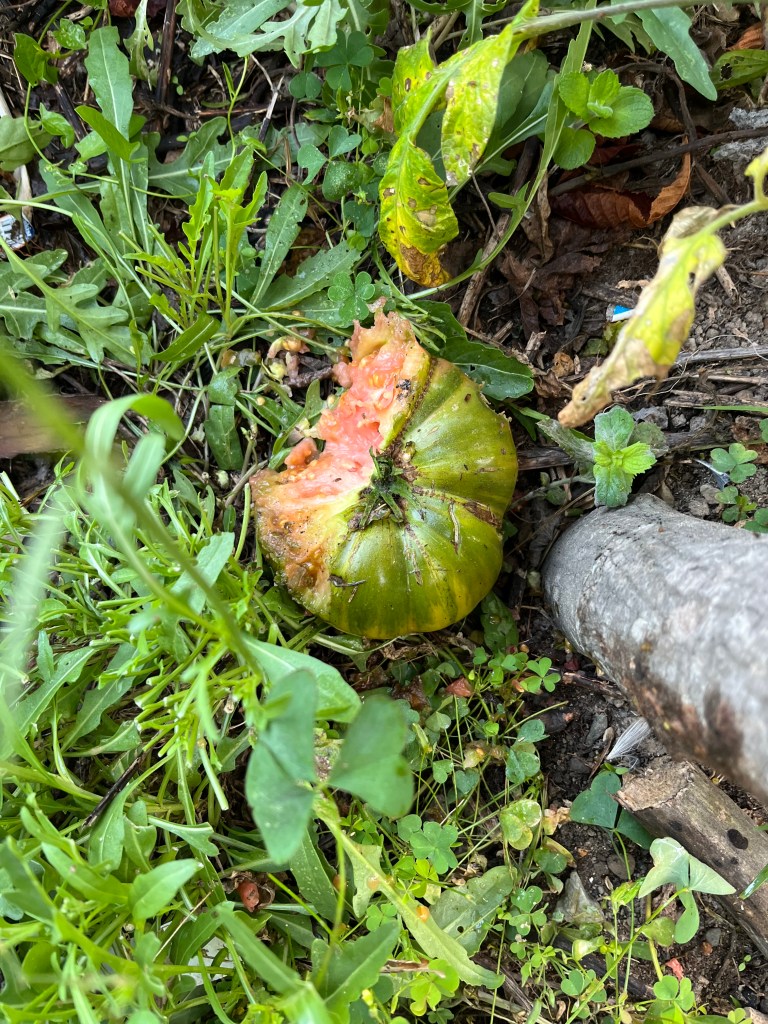
I am still learning and adjusting. Right now my biggest adjustment is when to pick the tomatoes. Yesterday I decided that a big Brandywine tomato should wait another day on the vine. In years past I would have thought it was three or four days from perfection but as so many of the tomatoes have been eaten by animals (when only barely ripe) I knew I should pick it soon. The next morning I learned that I was too late as I saw that an animal had pulled it off the plant and eaten half of it.  It had eaten the ripe half. That Saturday morning decision not to pick that tomato was the wrong decision. Because of that learning I picked the Brandywine in the photo on the right (the lower one behind the leaf with just a touch of pink) and it is ripening well under a dish towel in the kitchen. We always need to be adjusting.

May your fall garden and your carrots keep growing. After four adjustments to the fence around the carrots, I think I have it right now, and it will continue to keep the bunnies out. Looking forward to that December Day when the neighborhood kids come over and we eat carrots. Please tell me how your carrots and garden are doing.

Summer

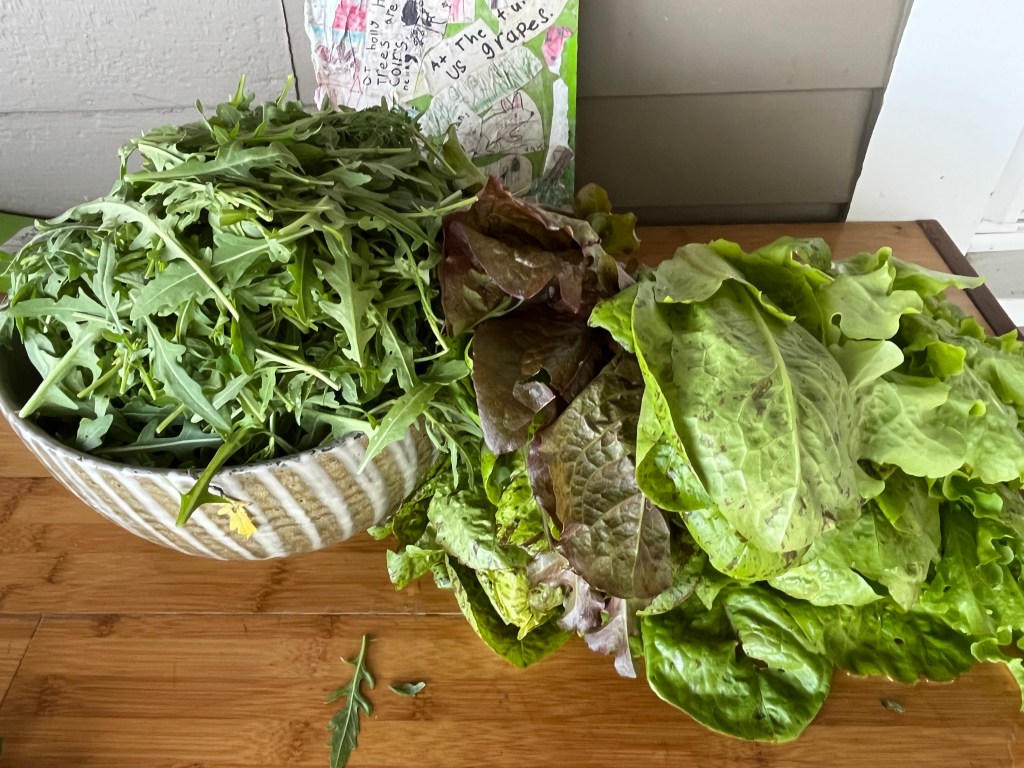
Well it is just about high summer here in Hull. The lettuce has been plentiful but is now almost over until fall. The beets are glorious and the Rattlesnake pole beans are high and about to be ready. The cucumbers are growing up their trellis and about to explode in production. And then there is the ever present arugula. I have written before about how I try to disturb the soil as little as possible and most of the garden is made up of the areas between what is planted or transplanted. In those spaces I am harvesting arugula nine months a year. I spend more time on the arugula than any of the other crops even though the arugula doesn’t have its own space. Several days a week as I harvest the arugula I am selecting arugula plants to cut or pull for that harvest. On the edges of the garden, which are filled with mint, tansy and other flowers I allow some of the arugula to mature and go to seed. It is those seeds that replenish the soil with arugula seeds and all summer there are new arugula plants emerging between and under the other crops. As with all plants arugula does best in great soil with plenty of room but its seeds germinate so well I am constantly selecting out the plants I want to thrive and then pulling those as they get bigger for younger plants to take their space. That way all summer there is beautiful arugula to eat.

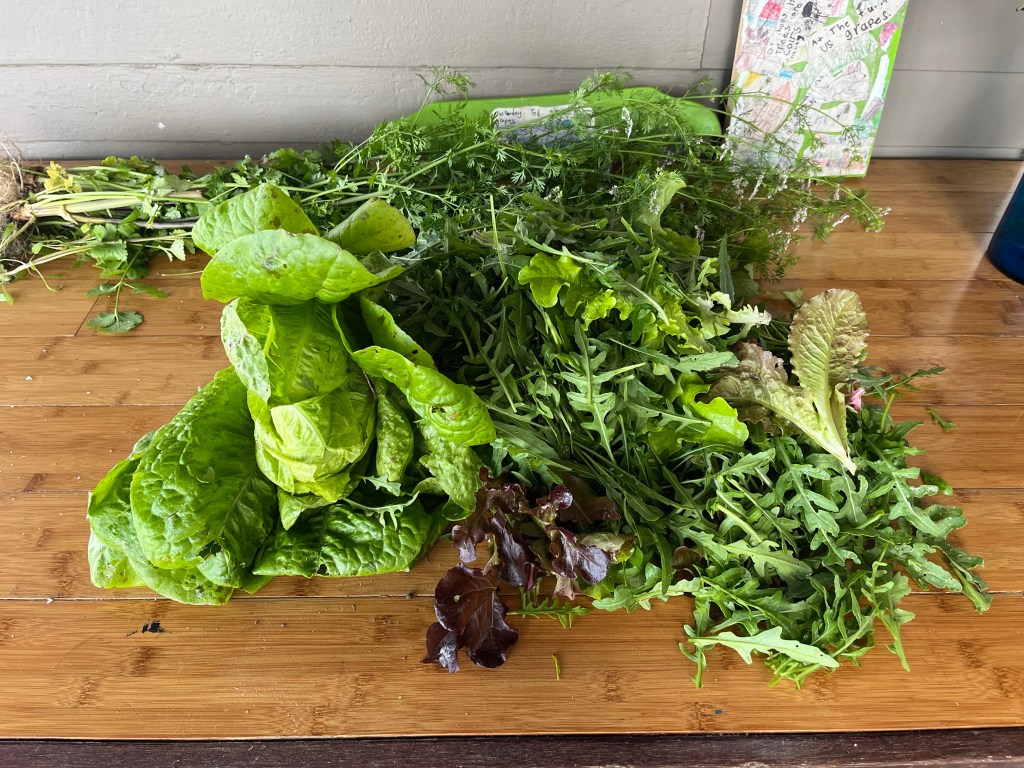
Around twenty-five years ago, I bought one packet of perennial arugula from Johnny’s Seeds, and from that planting, the arugula keeps coming back. June and July are arugula’s most prosperous months, and the picture of the harvest below with beets, radishes, and arugula shows a fairly typical harvest.  In June and July, we get two or three of these a week.

On July 15th, I received this email from an old friend and the author of a recent Carrot Day Blog. “HI Ted! Our last planting of carrots just got scuffle hoed and hoping for a nice rain later today. Hope you are well and keeping the rabbits out! Love–Nancy

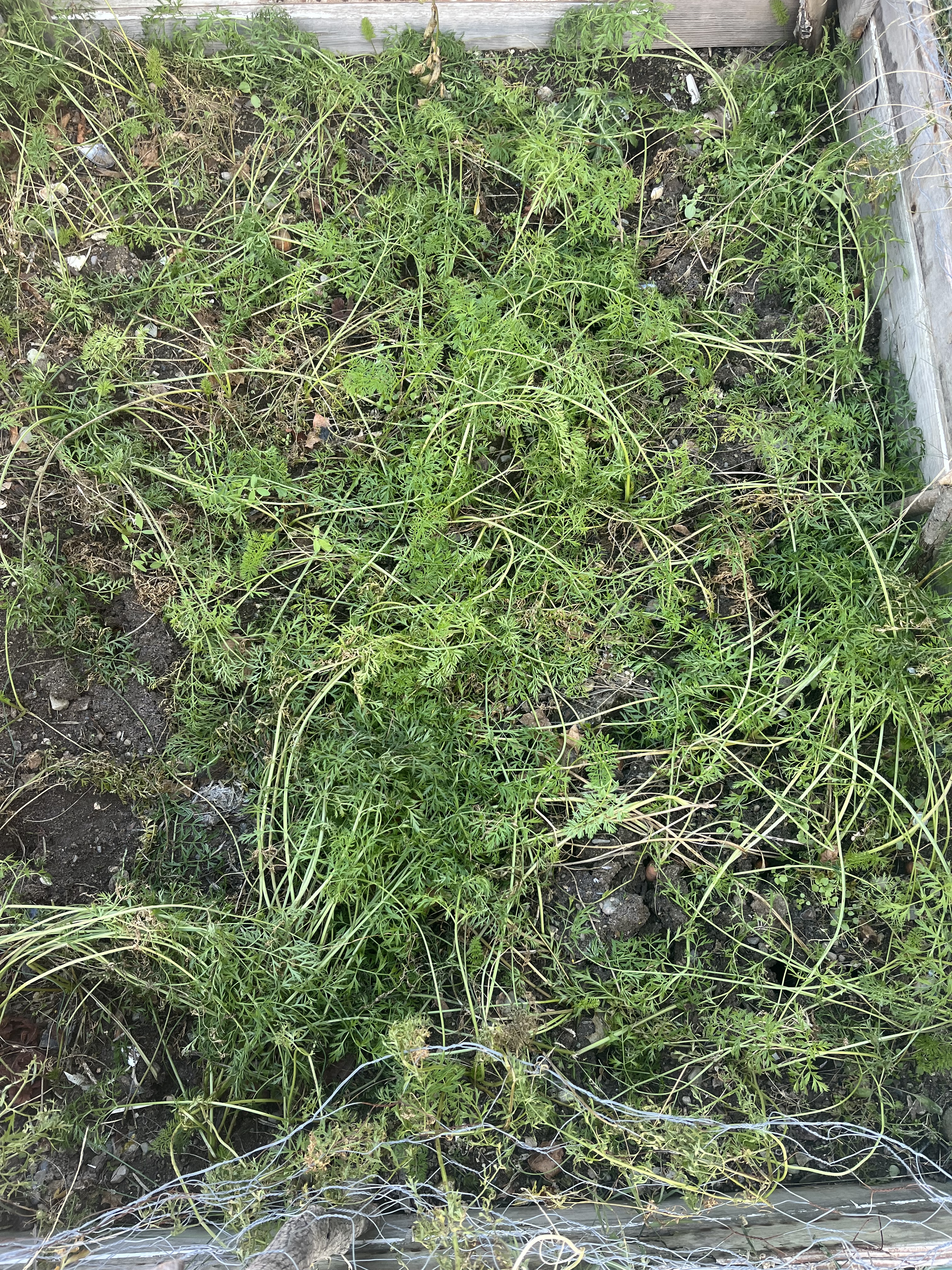
When Nancy Potter sent this message with an amazing picture of her farm and one of its carrot plots, I felt pretty smug because my carrots planted on Juneteenth were thriving and bunny-safe. But that success didn’t last long. A few days later, I looked into the garden and saw a bunny in the middle of the carrot patch. I ran out to scare it and saw the bunny jump over the nearly three-foot chicken wire fence. It only took me five minutes to go to the basement and enclose the bed with a taller four foot fence, which for now at least has since done the job, and the carrots are now recovering.

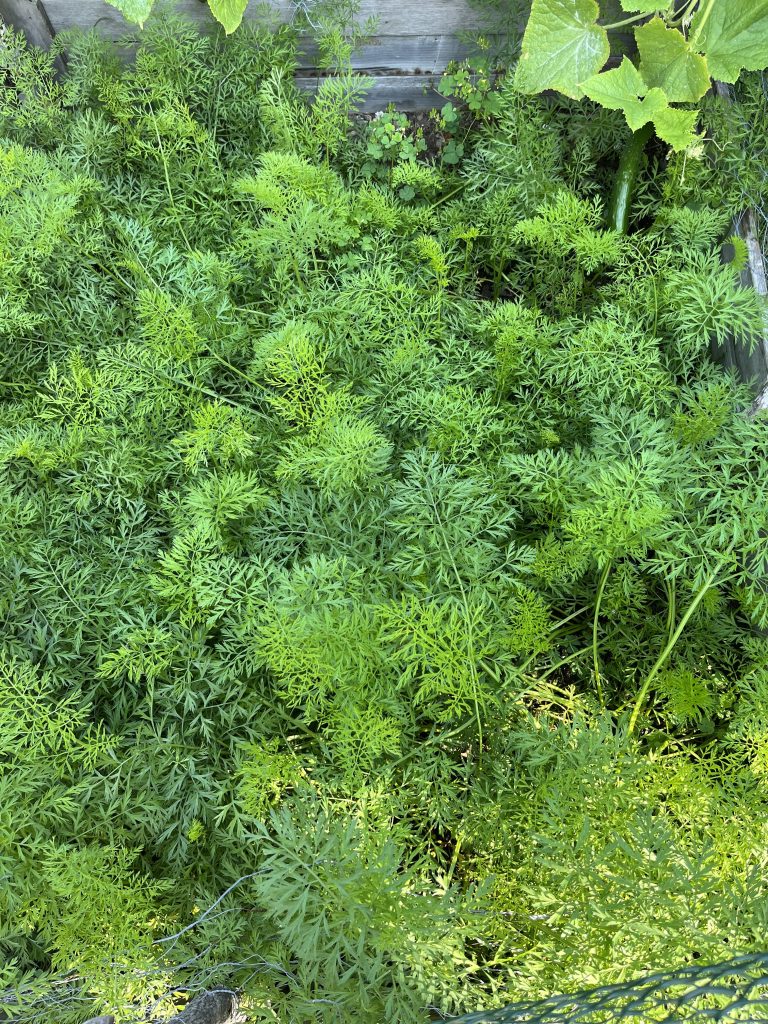
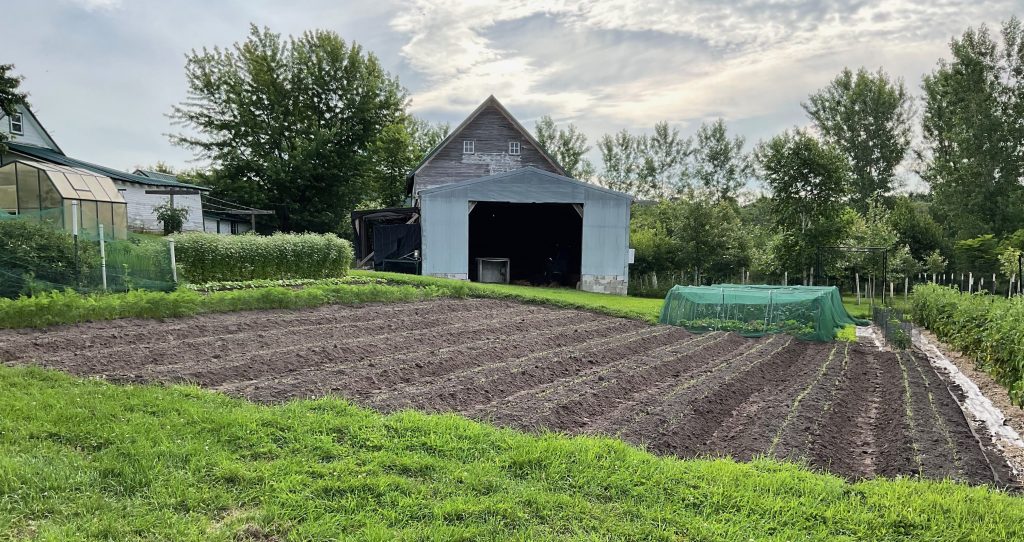
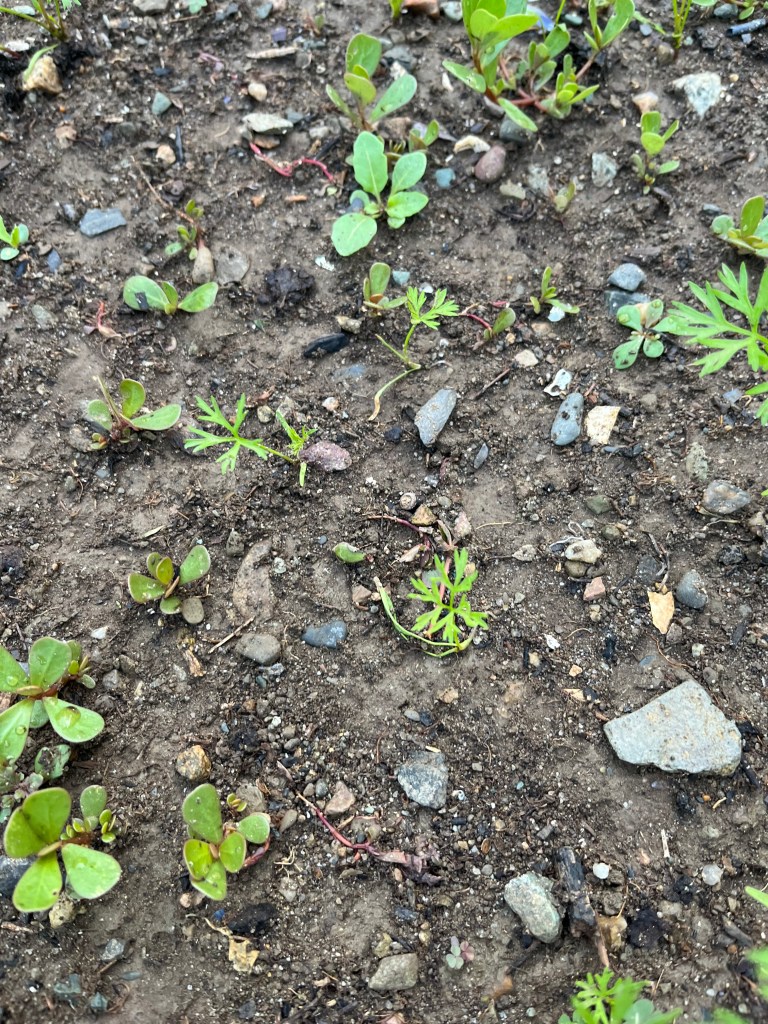
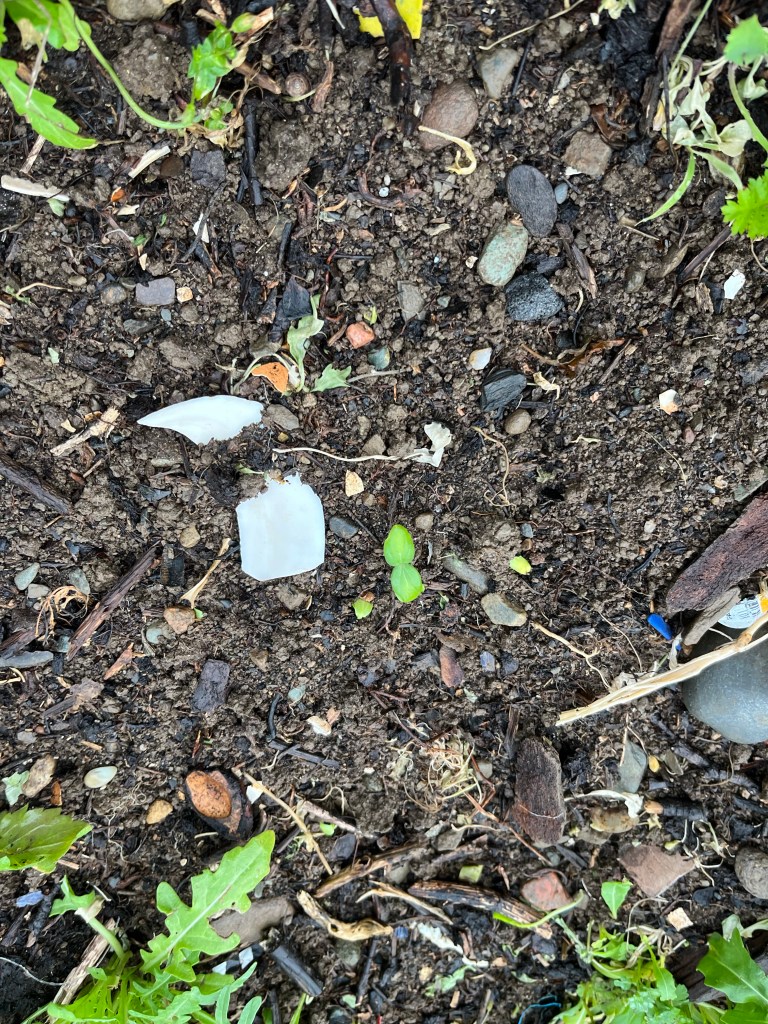
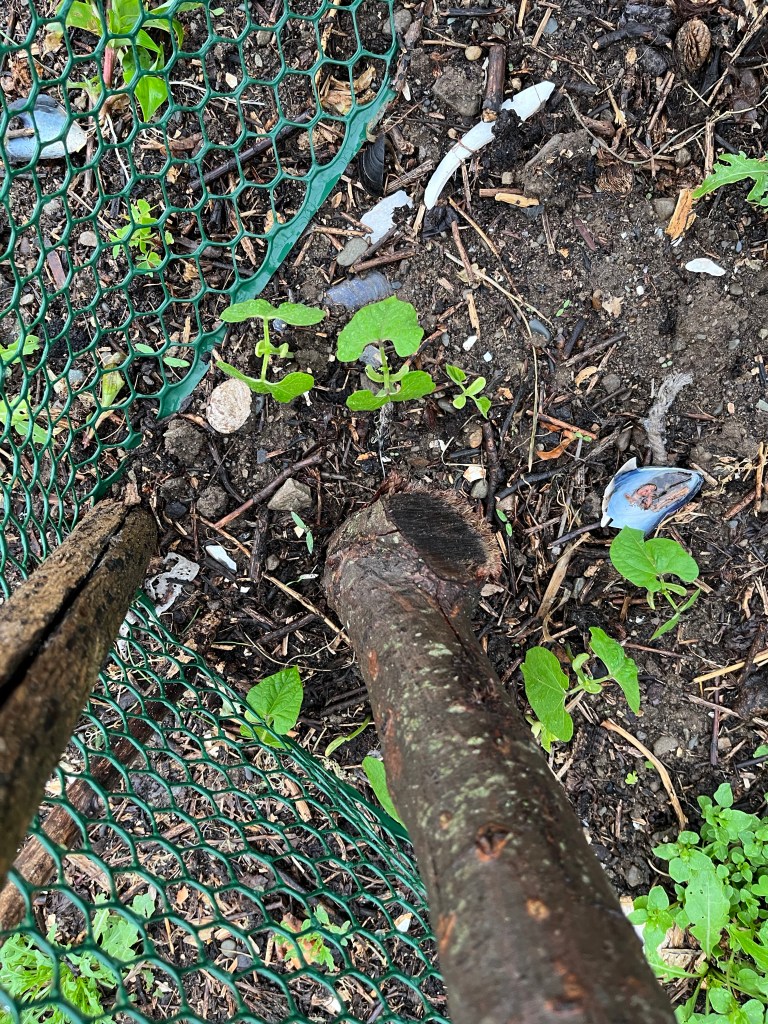
The series of photos below shows the bed as a whole as well as details of the section that the bunny or bunnies ate and of the un-bunny-eaten section. Perhaps in time, the extra thinning the bunnies did will give me super big carrots — only time will tell. In the middle picture, you can see the purslane and arugula baby plants. While purslane is also a tasty green that, like arugula, bunnies don’t prefer, its season is much shorter than arugula’s, and I only see it showing up in the garden at the end of June or July.

This past week, I visited the Victory Gardens on Olmsted’s Emerald Necklace. This famed site, started during World War Two, was one of the 20 million Victory Gardens that Americans planted and tended during that war. Those gardens produced 40% of all fresh fruits and vegetables consumed in the US during that time. Now in 2025, even in the Fenway Victory Gardens, most of the gardeners focus on flowers, not vegetables. Gardening flowers does bring many of the social and physical benefits of growing food for the gardener. Right now in America, there is not the same sense of scarcity around food that drove the Victory Gardens of World War Two. That said, I do hope you do join us to grow your our own food. The benefits of developing your soil and growing your own food are so worth it, and carrots are a great entryway into gardening.

The bank of pictures below is what the Fenway Victory Gardens looked like on July 25th. Please note the wonderful composting system as well as the gardener who chose flowers and the other who chose vegetables.

Please send me pictures of your carrots and your garden.

I have one more image to leave you with, the mint around my garden, which is such a draw for the bees and other pollinators. I just love watching the bees and the butteryflys as they come and vist the mint flowers.

Planted the Seeds

Well, I planted the carrot seeds on Juneteenth, as has been my practice the last three years. It felt good to get the seeds in the ground on such an important day. Hope that all goes well.  

As I got ready to prepare the bed, I was disappointed in the look of the cover plants. As I pulled them before putting in the carrot seeds, their color of light green with small leaves, was a sign that something was amiss with the soil.  They did not have that robust, healthy look that I like to see in the garden. There was one small section where things looked better, but overall, the plants did not look right. As I have written here before, I neglected the garden and did not put on the usual layer of seaweed in the late fall/early winter, and it showed.

There have been piles of seaweed at the beach, pushed up by storms in May, that have been there for about a month. A week before, I had gathered the top dried layer of seaweed and used it as a bunny barrier at the base of two of my fenced-off areas after I noticed that the bunnies were burrowing under the fences. On Juneteenth, I determined that I would take a fork and gather from these same piles, but get the smelly decomposing underbelly of the piles. It was too late to amend the soil by mulching the surface with seaweed and allowing the natural processes of the living organisms in the soil to bring the nutrients down from the surface to where the plants’ roots will use them. What I could do was to make some compost tea. Which I did by gathering the mucky seaweed and filling a garbage barrel with water and stirring it around, and then filling watering cans with the resulting tea.

I did notice that the poured tea had an impact on my pole beans, as there were a few leaves from the beans that got burned from too much of a good thing. Anyway, time will tell, but it felt good to be pouring brown water onto the seeded carrot bed, and next winter I will do better.

The harvest from Juneteenth includes arugula, lettuce, dill, and cilantro

The light of June is so good for growing, and the arugula and the lettuce are center stage. Where a month ago it took time and labor to pick a salad, (more time than going to the store) now, day after day, the garden makes more than Katy and I can eat, even when we have three parties in three days, with the main feature of the meals being salad. The garden is now saving us time, and it is the time of sharing the harvest with family, friends, and neighbors.

Hope you remember, as you plant, tend, and weed your garden, that the days of the easy and glorious harvest can come. While there are months of tending between now and the frost, I am hoping and working to keep the carrots safe from the rabbits, in nutritious soil and I expect I will need to water and perhaps use some more compost tea.

Spring into Summer

I planted one cold frame in late February and now it is in its full glory with lettuce, arugula and beets. There were radishes, but those have all been eaten.

Friday night, I went to the 30th graduation of the South Shore Charter Public School. Thirty years ago, as a Kindergarten/First Grade classroom teacher at the school, I went to the first graduation. I have been to about 25 others since, and I have loved every one of them. I write to you about the graduation and that community because Carrot Day comes out of South Shore Charter, and many of the readers of this blog are connected to the school.

A great deal has changed in those thirty years in that once-little school and the larger communities around it. Thirty years ago, there were about sixty people at the graduation of three or four students, and last night, there were about 1,400 at the graduation of 78. It is certainly not the same school it was thirty years ago, and yet it is the same school.

One thing I remember as being the same at all these graduations was the expressions of gratitude from the graduating seniors. At the first graduation, all of the graduates, who wanted to speak to the audience, spoke. That became a tradition and has continued in every South Shore graduation since. If a Senior had something they wanted to tell everyone, they got/get a chance to do so. The speakers were/are not chosen by school leaders, or selected because of their grades, or even by a voted of the members of their class; the speakers chose themselves. What a remarkable thing it is to have the opportunity to create one’s own opportunities. And for thirty years, that opportunity of self-determination has remained and remarkably remains despite a twentyfold growth in size of the graduating class.

The students who chose to speak on Friday night spoke about what had been their experience of “Charter.” (I loved that that was still what they called their school, as that is what we called it in the first years when we were the only charter school in this part of Massachusetts.) They spoke about how they had created a community and what it meant to them to be in that community. They spoke of their gratitude to each other, their teachers, and family members. I love expressions of gratitude, and Friday night I felt so grateful.

I am grateful I got to be a part of that community for so long and I am grateful that my friend and colleague, and faithful reader of this blog, June Fontaine, was honored as she retires after being associated with the school as a parent of a student and then as a teacher for nearly all of the school’s thirty years. The send off was moving and captured her grace and wisdom, her kindness and her skill, and even mentioned the carrots she grew with her students in what is still called the Garden Project.

You see, the Garden Project began in the second year of South Shore, and Carrot Day comes out of the Garden Project. In the Garden Project, we planted carrot seeds in the late spring and harvested them in the fall. Over time, I learned about the impact of frost on carrots’ flavor and the day expanded to beyond just the students who grew the carrots to be a celebration of the garden and of life and work in the garden.

Here is to June and June Fontaine and the people who grow carrots and celebrate the beauty of growing their own food and sharing their own food with friends and neighbors and those they don’t know.

Here is to spring turning to summer. I have sent out the carrot seeds to those who ordered this spring, but I still have thousands of Scarlet Nantes carrot seeds to send to you. If you order this week and I get them out, you can still plant on Juneteenth, a perfect day for planting carrots to harvest in late November or early December.

Here is the order form.
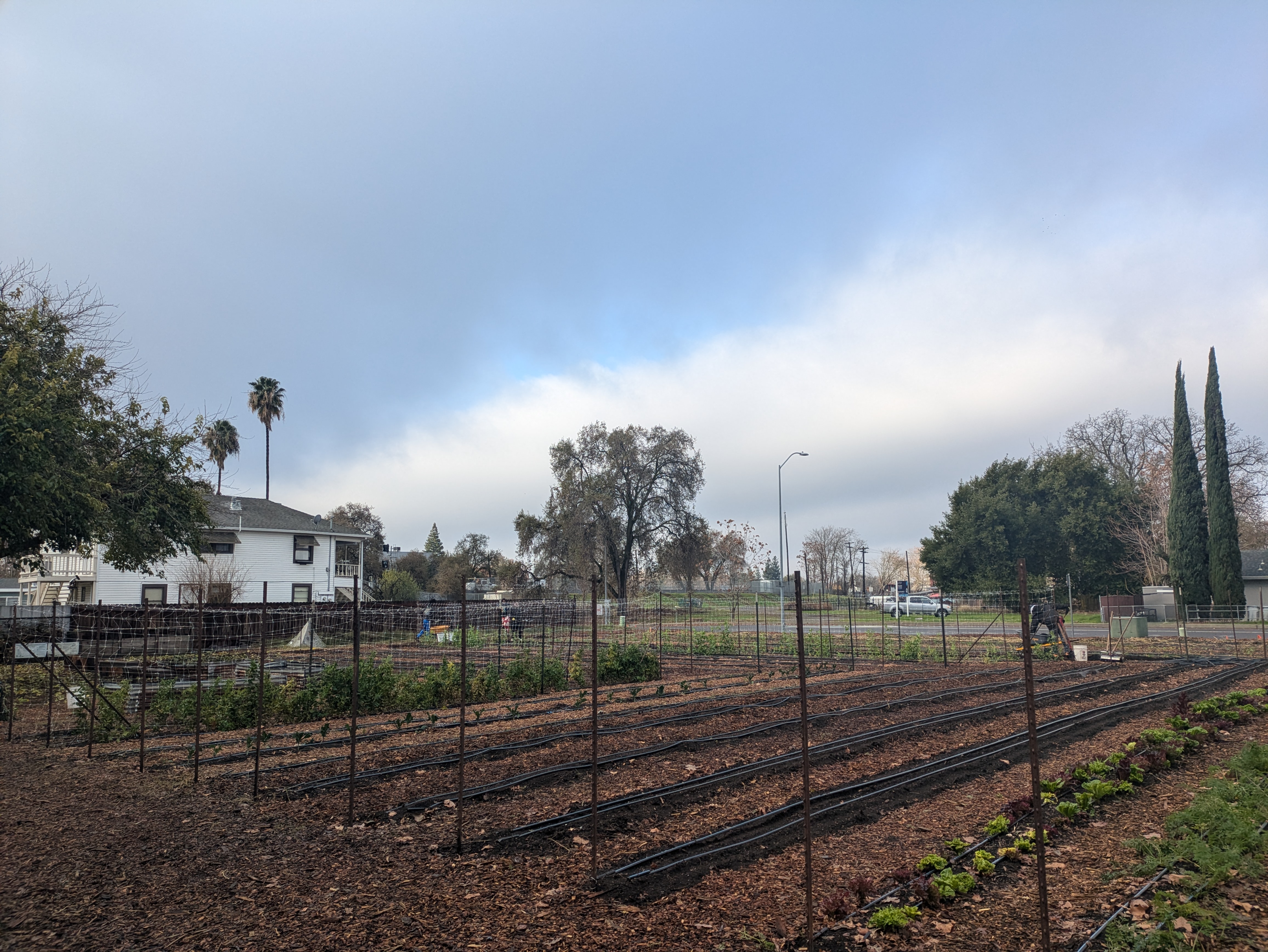
Below are more pictures of the Hull Garden at 41 Western Ave as spring turns to summer.

Gardens like schools have a flow that goes with the seasons, and the month of June, with its graduations and greens, and long days, is a beautiful part of the yearly cycle. Hope you have a great June and don’t forget to request your Scarlet Nantes carrot seeds. Hope you grow and celebrate carrots with us.

Carrot Seeds

Dear Carrot Friends it is time to order your free carrot seeds.

Over the last few weeks, as I looked at my garden and spring has arrived after a hard winter here in Hull, I have been disheartened by the lack of work I did in the garden this past fall and winter. For the first time in over twenty-five years, I did not gather seaweed and lay it on top of the soil. I can see the impact of this inaction when I look at patches of bare soil and at the street around the garden where I see eroded soil from the garden.

Uncovered Soil at 41 Western Ave Garden

I am disappointed that in my retrenchment and grief after we elected Donald Trump, I did not care for the soil as well as I usually do. While I have practiced the advised gardening methods to develop and maintain healthy soil and grow food for the past 28 years in Hull I did not do it this year. There are still plenty of living roots in undisturbed soil and most of the garden is covered by mulch from other years and not all was bad but I was not the steward of the land I usually am and work to be.

In my reaction to living in a country where a little over half of the voters choose a government which among many plans vowed to roll back actions intended to mitigate climate change, I retreated and did less when I wish I had done more. Now that it is the end of March instead of having lots of food growing under cold frames and beginning to eat food I have grown, I will need to wait to eat food I have grown this year. I have to acknowledge that and move on and begin again. In the cycle of the garden, spring is when we begin again.

Speaking about beginning again I am a huge fan of Sharon Salzberg the Buddhist meditation teacher. One of her central teachings is the idea of beginning again. She writes, “The invitation to begin again (and again and again) that meditation affords is an invitation for the practice of self-compassion — to heal through letting go rather than harming ourselves with cycles of self-doubt, judgment, and criticism. Beginning again is a powerful form of resilience training.” In this passage, she explicitly advises us on how to respond to our wandering minds within the practice of meditation, but she often brings this same concept to all of life. As she says when we begin again we strengthen our resilience and we need resilience right now.

Spring is a beginning again.

We are beginning again when we plant a garden, no matter the season. Please order your free carrot seeds here and begin again being a member of a community of growers of our own food.

While I hope I do not respond to dangerous events by again doing less and neglecting the soil in the garden, one winter of poor gardening does not undo 28 years of good practices. When I did put seeds in the ground a few weeks ago, the soil was beautiful and healthy. Rome was not built in a day, nor is it destroyed in a day.

Hope you have a great year, and if there is any way you can grow any of your own food, please do.

From Floyd County VA to Camphill Village and Long Prairie, Minnesota

Back in 1979, after two years of college, I took off to live on a farm in Floyd County Virginia. I knew about this farm, Hanatuskee, through Dave Allen, one of my teachers from high school. Dave was developing a farm using old-fashioned practices, for example we used draft mules rather than tractors. The goal was to turn the working farm into a school. In the late 70’s and early 80’s anyone could come and help out on the farm for room and board and I did that for 18 months. In 1979 when I arrived Nancy Friedman was already there and one of the many people who passed through during those 18 months was Steve Potter. Later Nancy and Steve got married and they stayed at Hanatuskee for many years and are still married today and just this winter we have become reconnected. Nancy and Steve are amazing growers of food and Nancy is the author of this blog post. Nancy and Steve grow food on a scale far larger than I have ever done and I am excited to share with you Nancy’s expertise.

The Farmhouse at Hanatuskee was build as a school in 1913. When this photo was taken in 2020 it looked almost the same as it did in 1980.

One of the reasons it has been so remarkable to get reconnected with Nancy and Steve is that those 18 months were among the most significant and consequential of my life. While I did not know it at the time those months had a profound impact on my professional life as an educator. Dave Allen had a vision that if students combined working on school work and farm work they would feel the value of their own labor. When Dave taught at the small private high school I attended he saw that missing from many of our lives as students was a sense of purpose and an understanding of our own worth. As a teacher he realized that many of the students he taught were adrift. He believed his childhood experience of growing up on a farm had created a space where he could feel the value he brought to his family every day. The school he envisioned would give all the students that sense of worth. Unfortunately the school he hoped to develop never came to being. But opening up his land and home to strangers had a huge impact on many. I know that these months at Hanatuskee and Dave’s ideas have been a backbone of my work with students these last thirty years. The years that Nancy and Steve spent in Floyd have also been central to their lives as they have made growing food a central part of their lives for the past forty plus years.

In the text that follows Nancy describes short how-to descriptions of how to grow, harvest and store eight different crops. I hope you enjoy reading these half as much as I do. Years ago I harvested green beans for hours in the River Bottom Field at Hanatuskee. I wish I had known the technique Nancy describes here.

Steve and I were lucky enough to spend 9 years being gardeners at an intentional community in the midwest. We lived at Camphill Village Minnesota and had a 4-acre garden that produced food year-round for about 50 people. There are more than 100 Camphills around the world where adults and children with developmental disabilities live and work with volunteer coworkers. Camphill was started in Scotland and is part of the larger Anthroposophic community which includes Waldorf education, Eurythmy and Biodynamic agriculture.

We grew everything you’d grow in your own garden including:

Peas: A visitor was having lunch at our house and I was shelling peas and I set her up with a bowl. She was maybe in her 50’s and said, “I’ve never shelled peas before.” I was really glad she had her chance at last! We grew shell, snow and snap peas by the bushels. Shelling peas to get ready for freezing is wonderful work and we were lucky to have a hard working crew in the Summer Kitchen. Food processing is one of the most democratic and fulfilling jobs around. You get to spend time with each other and with beautiful vegetables, and then, in the winter, you get to eat your hard work.

Green beans: We grew a lot of green beans. We did succession planting with beans–starting a new bed every few weeks. Instead of picking a few beans as they got to the right size, we’d wait until most beans were ready and then would pick the whole bed at once. We would often pull the plants out and make big piles of the plants in the shade and everyone could sit around and pick beans into buckets. We’d plant a bed or 2 of beans right away and let them dry for seed for next year’s garden. 

Peppers: Even if peppers weren’t so delicious, you’d want to grow them for their beauty. So many kinds and colors and shapes. A young volunteer was showing his family around the garden and picked a sweet pepper for them to eat as they walked around. It was hot! And that’s how we learned you can’t plant the hot peppers near the sweet peppers. 

Other lessons we learned: Cover the brassicas (broccoli, cauliflower, cabbage) to prevent flies from laying eggs that become root maggots (very bad); cover them to keep off moths and keep worms out of broccoli and worm poop off cabbage (ick); use cans or other means to protect stems from cutworms (death knell). 

Tomatoes: Of course we grew tomatoes! And canned them by the thousands! And made salsa! And ate as many as possible. We learned to choose short-season varieties–we usually started to get red tomatoes by the end of August and were in the glory days in September.

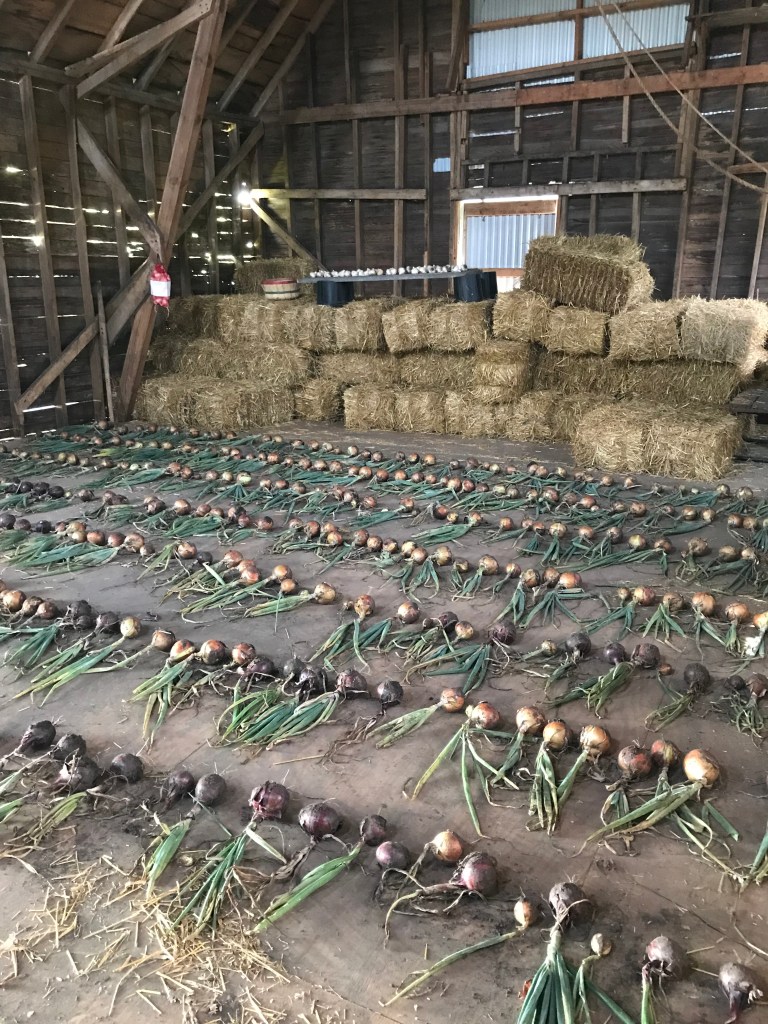
Onions and garlic: There is something about onions and garlic that has no equal. We’ve grown onions from seed and from plants (we usually get plants from Dixondale Farms in Texas) and both ways have pros and cons, but both ways produce beautiful onions. We select long-day varieties, because that’s where we live. Where to start with garlic? You plant it in the fall, after you pull the plants at the end of summer, after it comes up in the spring. You harvest the garlic when a certain number of leaves turn brown and every year you say, is it ready, or should I wait? Once it’s out of the ground, you let it cure until it’s dry then cut the tops and roots off and select the best bulbs to plant for next year. A few weeks before you plant, you “pop” the garlic (separate the cloves). In Minnesota, we plant our garlic usually the first week in October, cover the bed with straw, and then garden fabric (Reemay). And then you eat all the rest of the garlic!

Potatoes: Most people love potatoes, and almost no one likes picking potato beetles. We did learn that the job is a little better if you put the beetles in a bucket, instead of squashing each one as you go. Even the chickens turned up their noses when offered  a bucket of beetles. 

When you start digging, you never know what you’ll find–small, large, a few potatoes or a few dozen. Before we put the potatoes in the root cellar, we pick out next year’s seed potatoes. In the spring, a few weeks before we plant, we “chit” the seed potatoes. Chitting wakes the potatoes up and helps them grow sturdy sprouts. To chit potatoes, place them  in low light–not direct sunlight, and warmish temperatures–about 60 degrees.


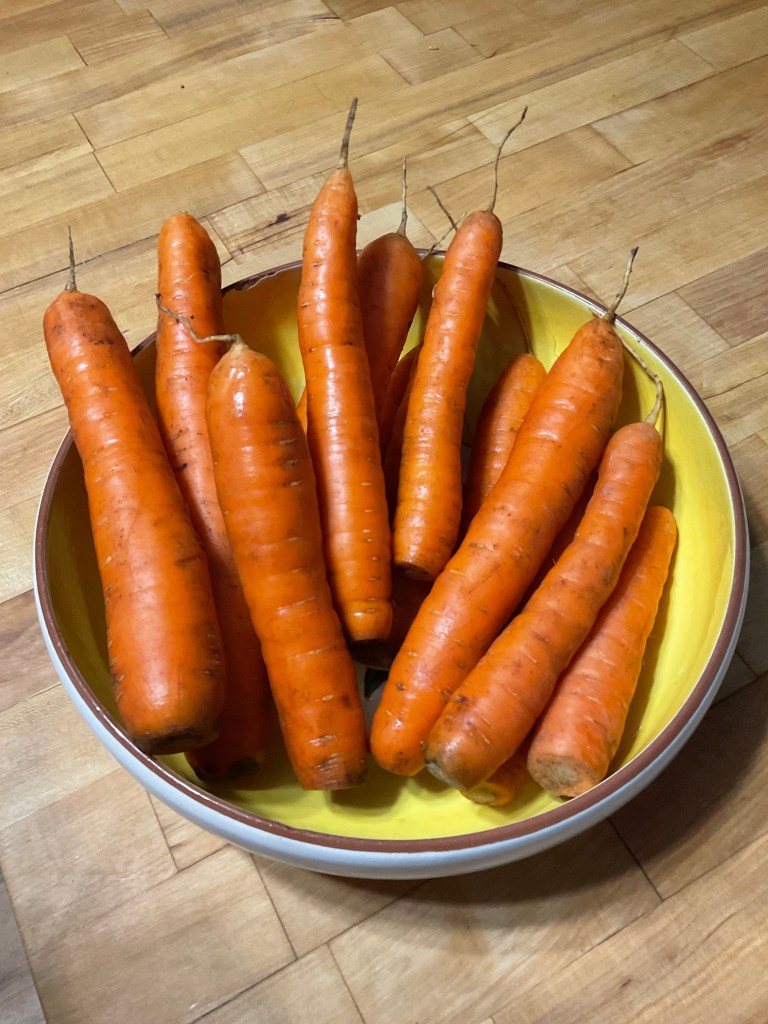
Carrots: Because we have to wait until the root cellar can stay consistently cold, carrots are always the last thing left in the ground. Sometimes, if the forecast is for really cold night temps (in the teens) but after that, there’s a few warm weeks, we’ll cover the carrots with Reemay or pull dirt over the roots. A perfect carrot digging day is in the 30’s, with no wind, and lots of sun. We grow in raised beds and plant 2 rows of carrots per bed. Once the carrots are forked loose on both sides, you start pulling out the carrots and tearing off the tops. Grabbing a handful of straight, perfect carrots is something everyone should do at least once. (So don’t forget to get your free carrot seeds from Ted!) We like to leave the carrots laying on the bed in the sun for an hour or so, then into buckets and into the root cellar. We pack the carrots in damp sand and dig them out all winter, spring, and, if you grow enough, you eat your last carrot right before you dig your new crop!

I want to learn so much more about traditional ways of storing food in a root cellar. Hope Nancy can teach us all so much more.

Thank you Nancy and Steve, for your 45+ years of expertise and passion for the land and people. I think the story of Hanatuskee shows how things many not work out as you hope and your ideas may not become fully realized but the ripples that flow from openness and opportunity are always worth it.

If you missed Nancy suggestion to order free carrot seeds above you and do it here too.

Carrot Day 2024

Jan 1, 2025

The last time I wrote, in early November, I was celebrating the tenacity of some vegetables and the continued productivity of 41 Western Ave. garden. I closed the pre-election blog with this sentence, “May the valiant zucchini and hearty poblano pepper, and the optimistic bean be our guide.”

Well, the election did not turn out the way I had hoped but at least Trump did win the popular vote. I am 64 now and I am trying to take advantage of my previous experiences with elections and how I respond to them. Today I am calmer in my reaction, maybe not reaching equanimity but accepting.  The most difficult election for me was 2000 and in retrospect the most consequential 1980 but I carry on. I am not saying that I have been able to reach the level of equanimity I had hoped for in the pre-election post but I am okay and I hope you are too. 

As I wrote then “Well here is what I tell myself. Equanimity. If the election goes as I hope, remember there is still much to do and I should do my best. If the election goes as I fear, remember there is still much to do and I should do my best.” Well there is still much to do and even more now and I know that there are many who are happy with the election. For those, like me, who are not, may the valiant zucchini and hearty poblano pepper, and the optimistic bean be our guide as we attempt equanimity and commit ourselves to service for others, for our earth and for those who will outlive us.

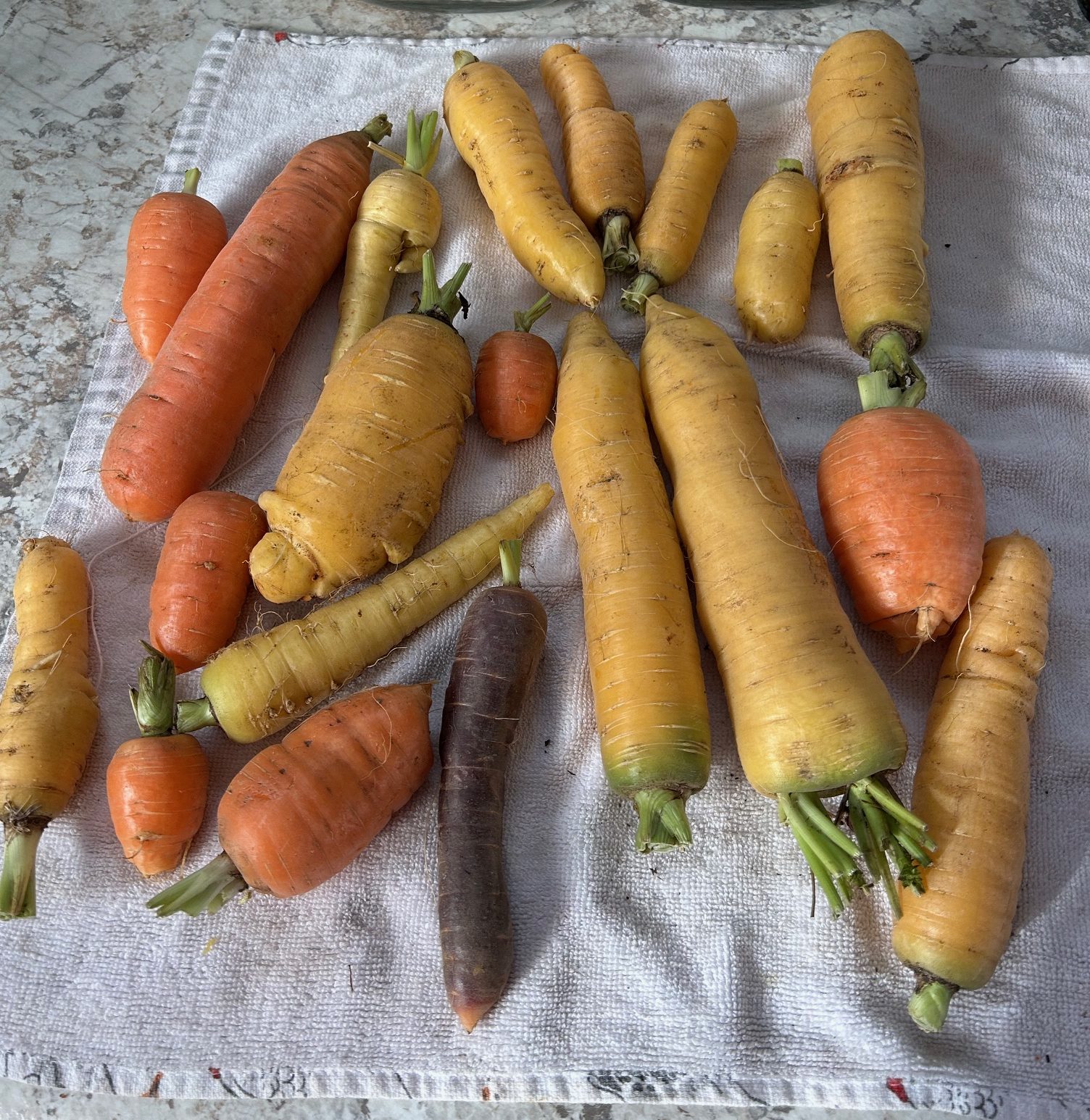
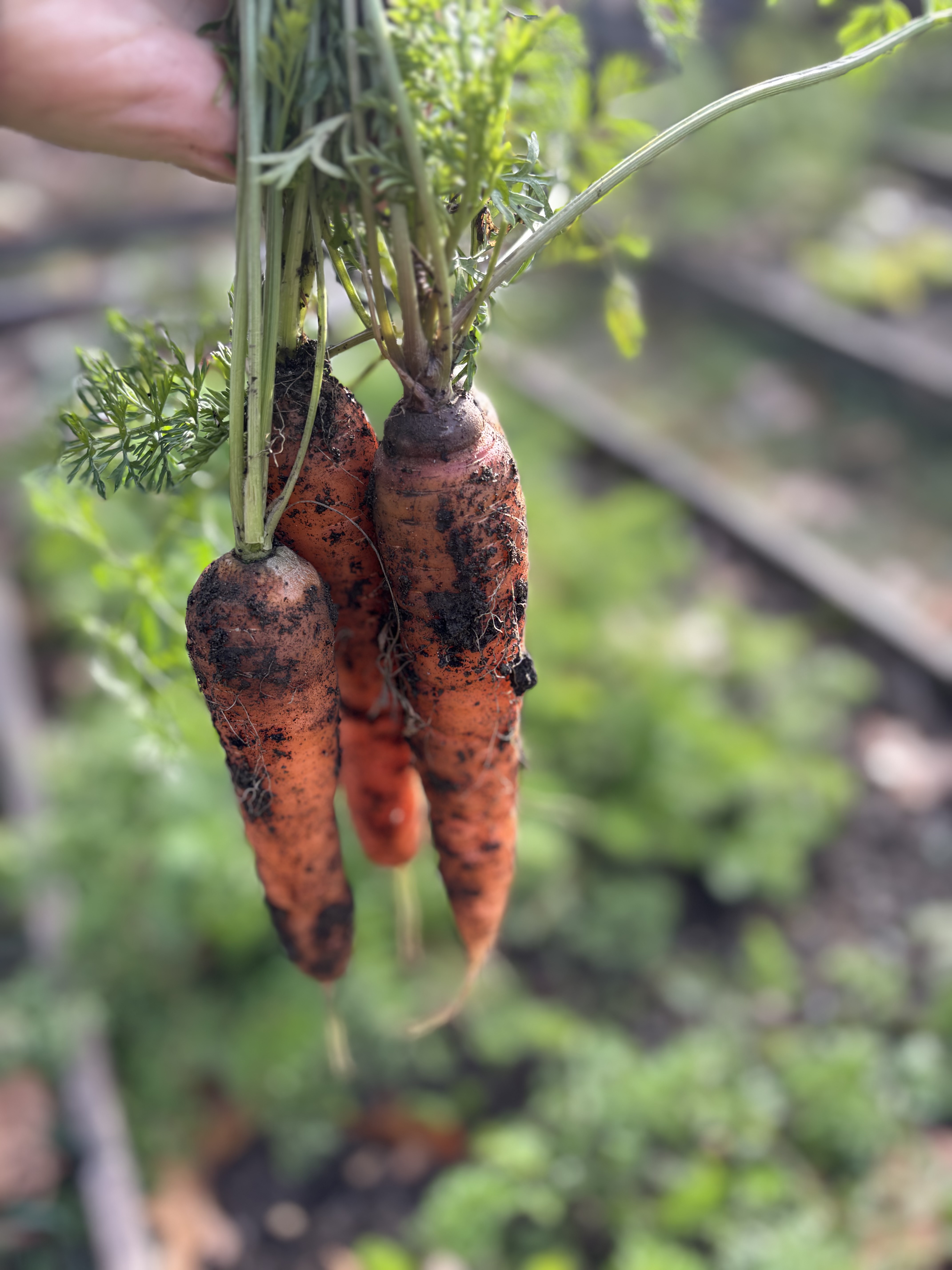
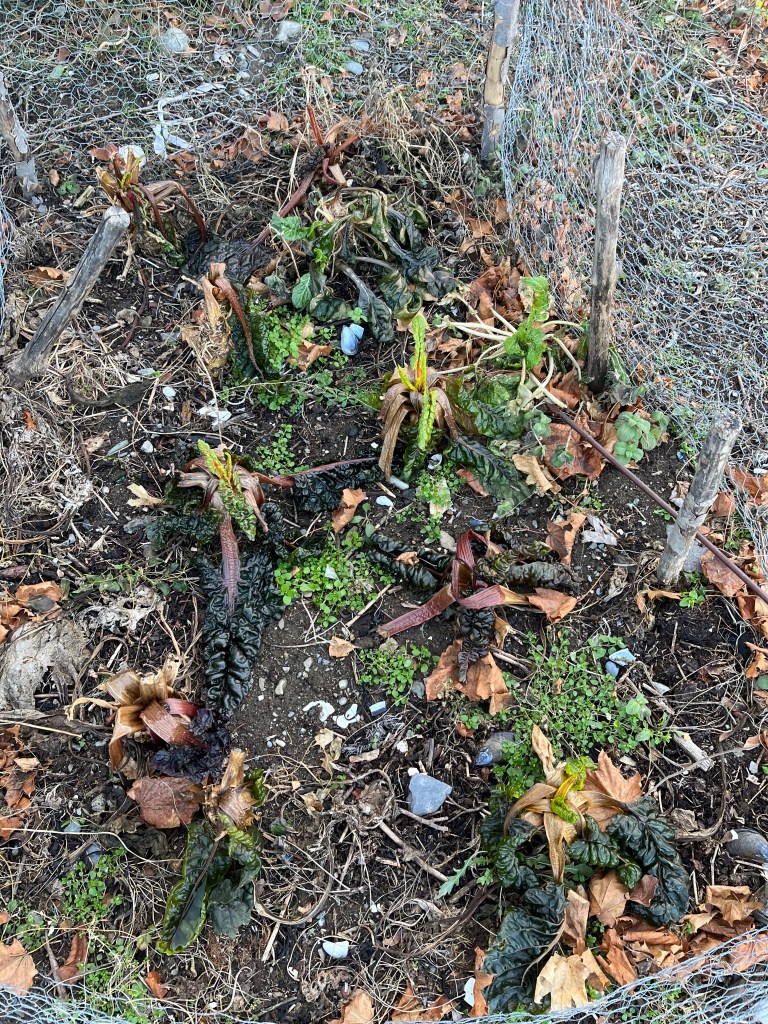
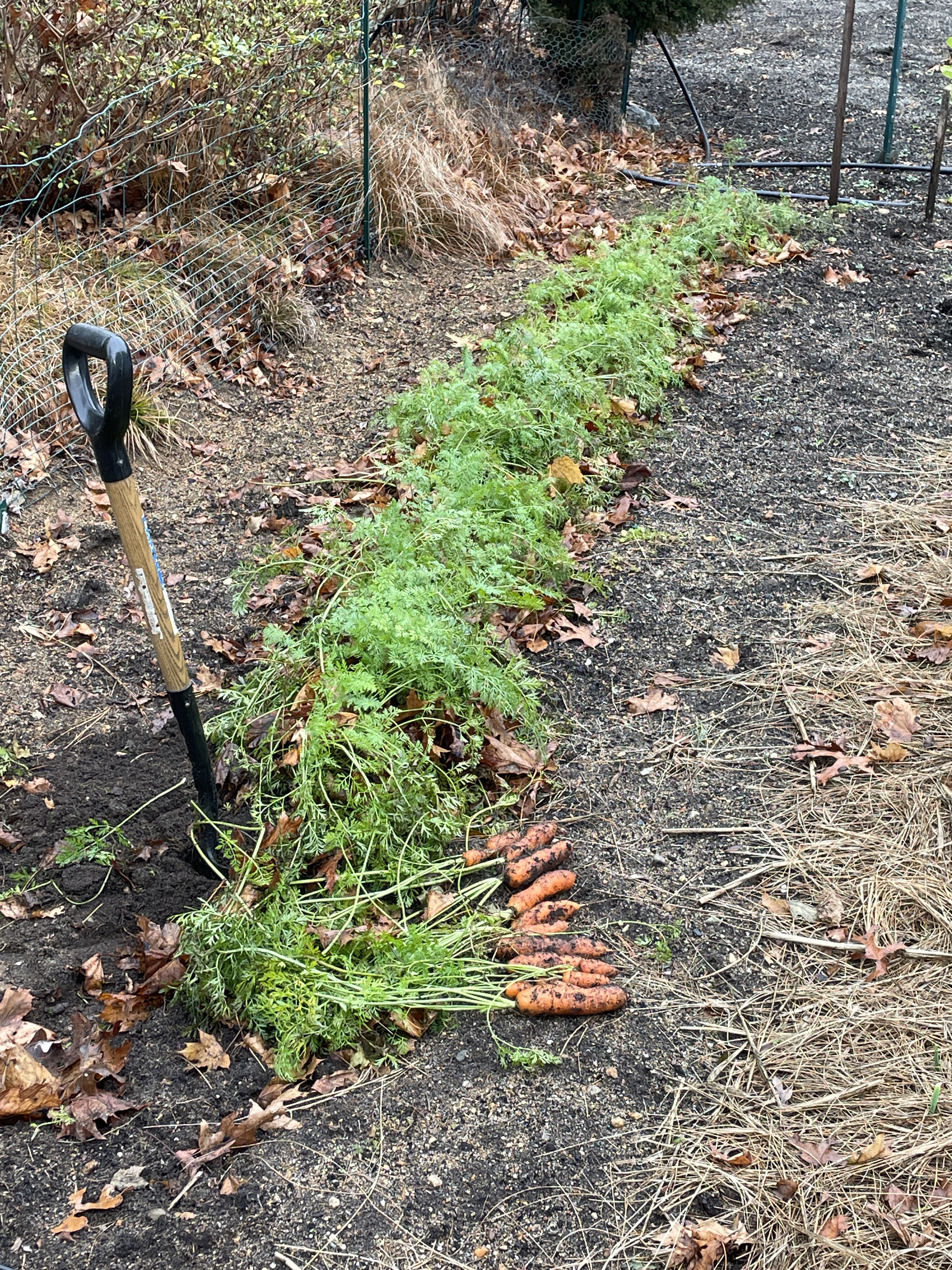
Winter has truly arrived here in Hull and unlike most years I do not have cold frames out. I am letting the garden go fallow this winter. Most years on January 1 about a quarter of the garden is under cold frames but I will leave the cold frames in the basement until early February. Then I will get them out and start the spring garden. Perhaps the collards and kale will make it through and I will pile leaves on the chard plants to give them a chance. Having nothing under cold frames will allow me to spread seaweed on every inch of the garden. In preparing to write today’s post it shocked me to see what the garden looked like eight weeks ago and how sad and forlorn it looks now. There was a bright spot in the garden and that was the early planted carrot bed which on Carrot Day I neglected. On December 31st I pulled the carrots and while the texture of the top two inches was not good the bottoms of the carrots were frost kissed and beautiful.

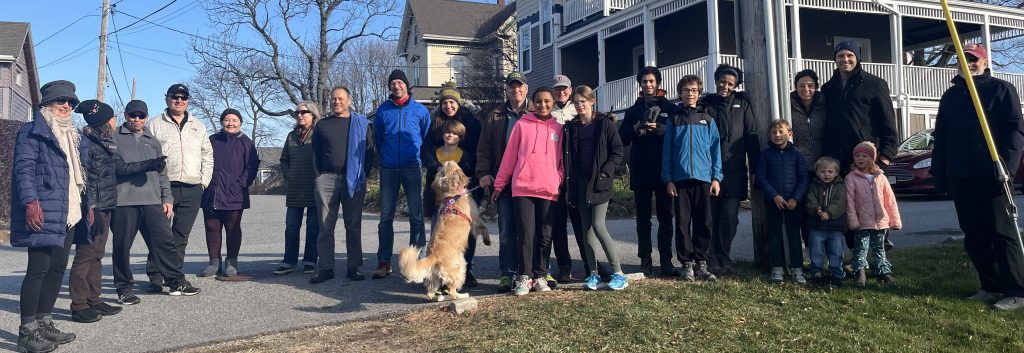
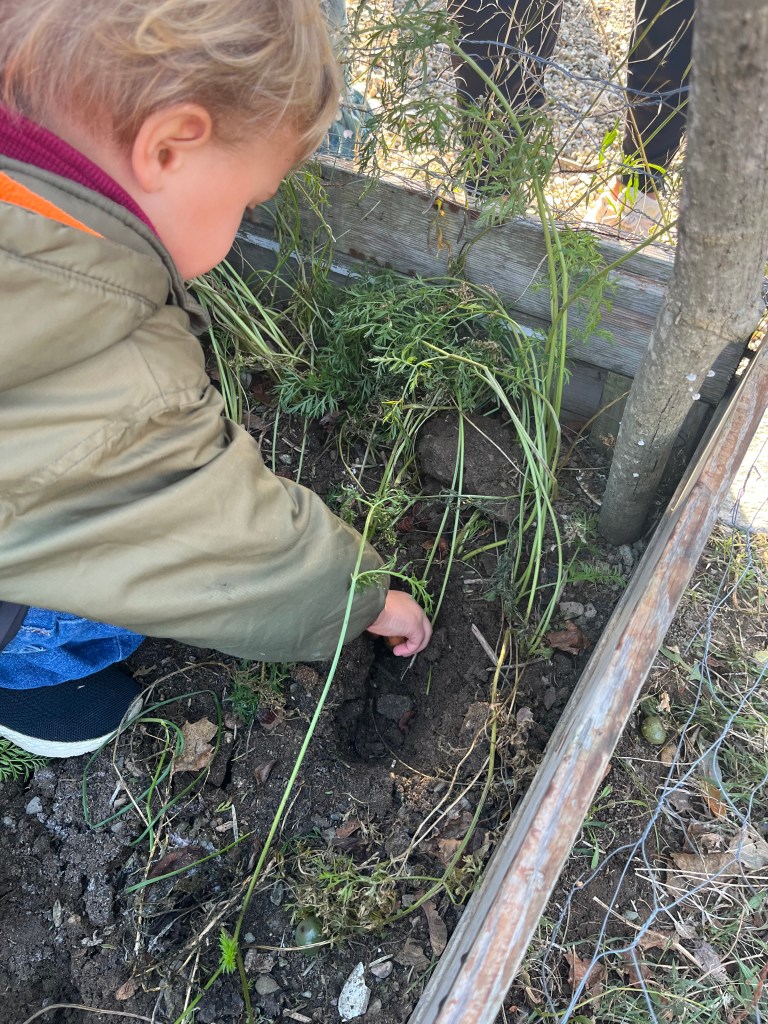
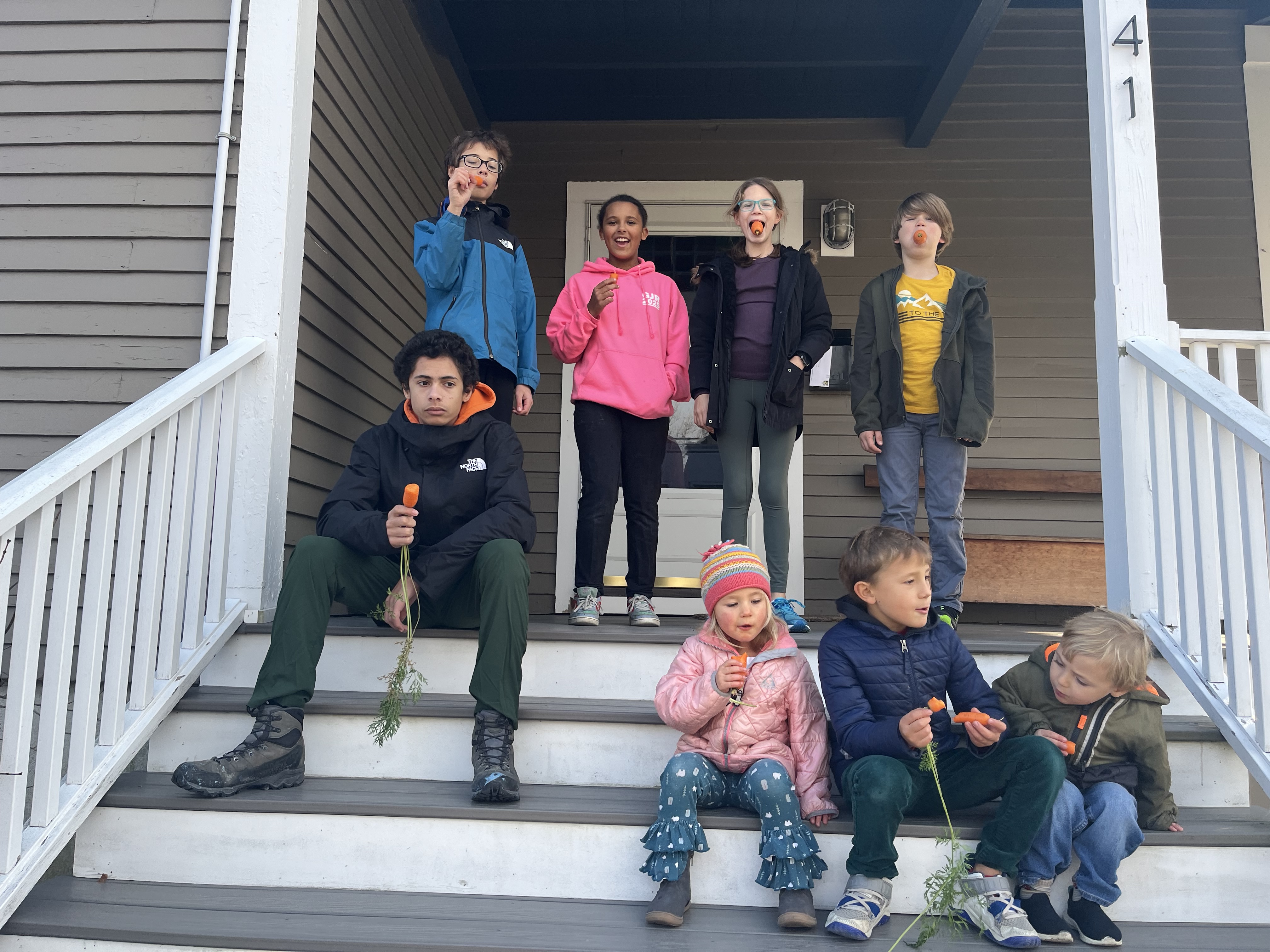
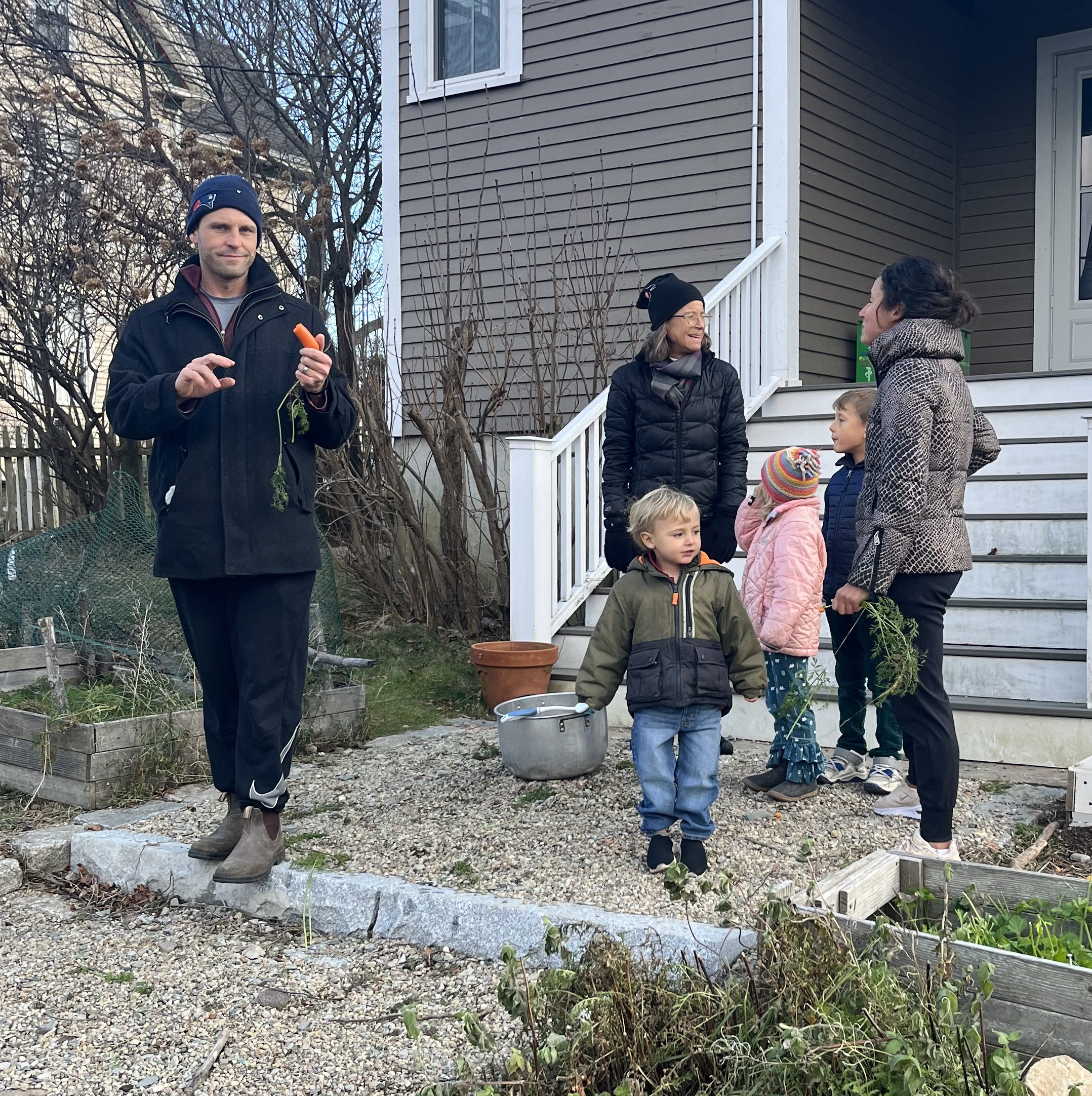
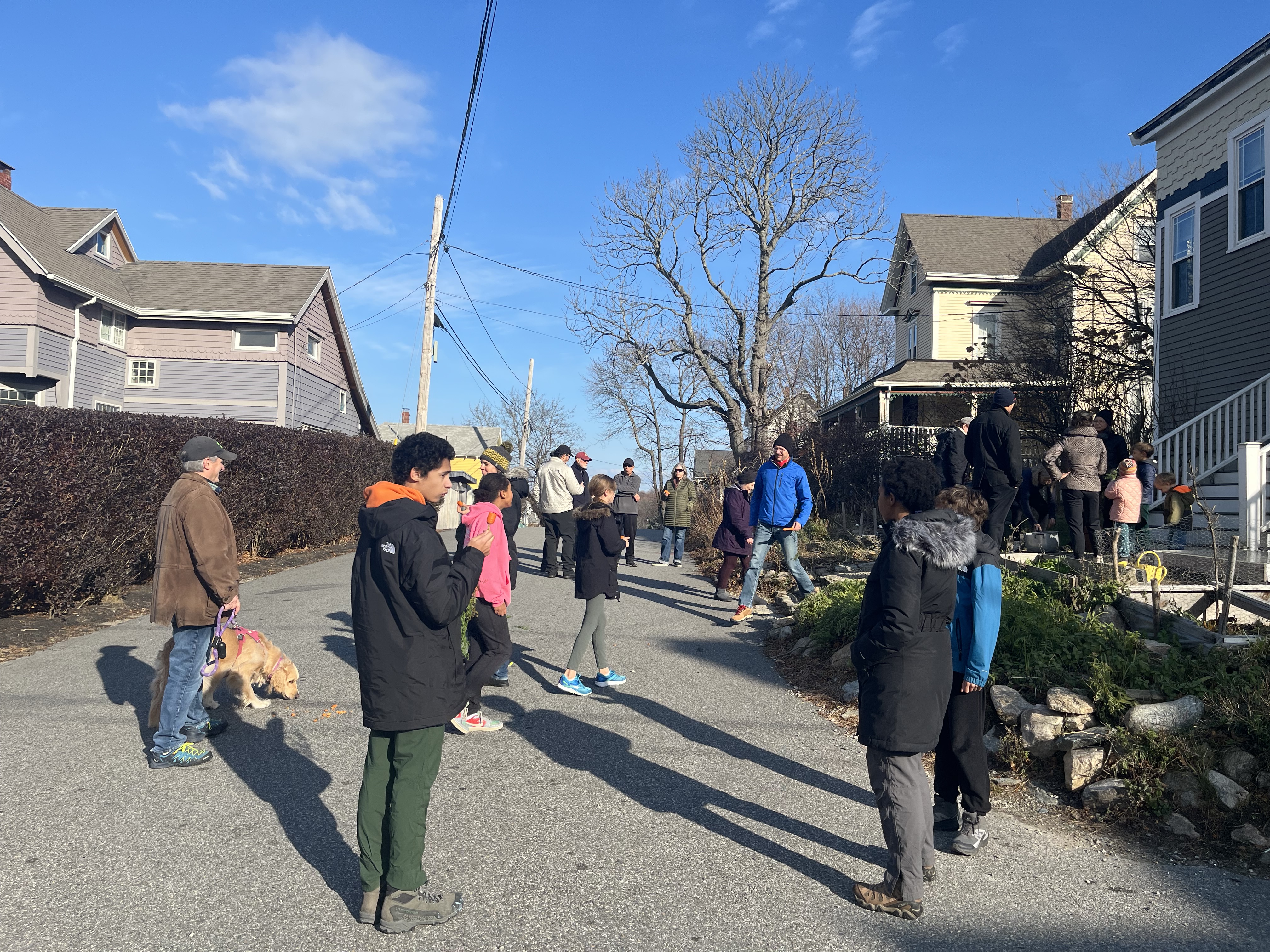
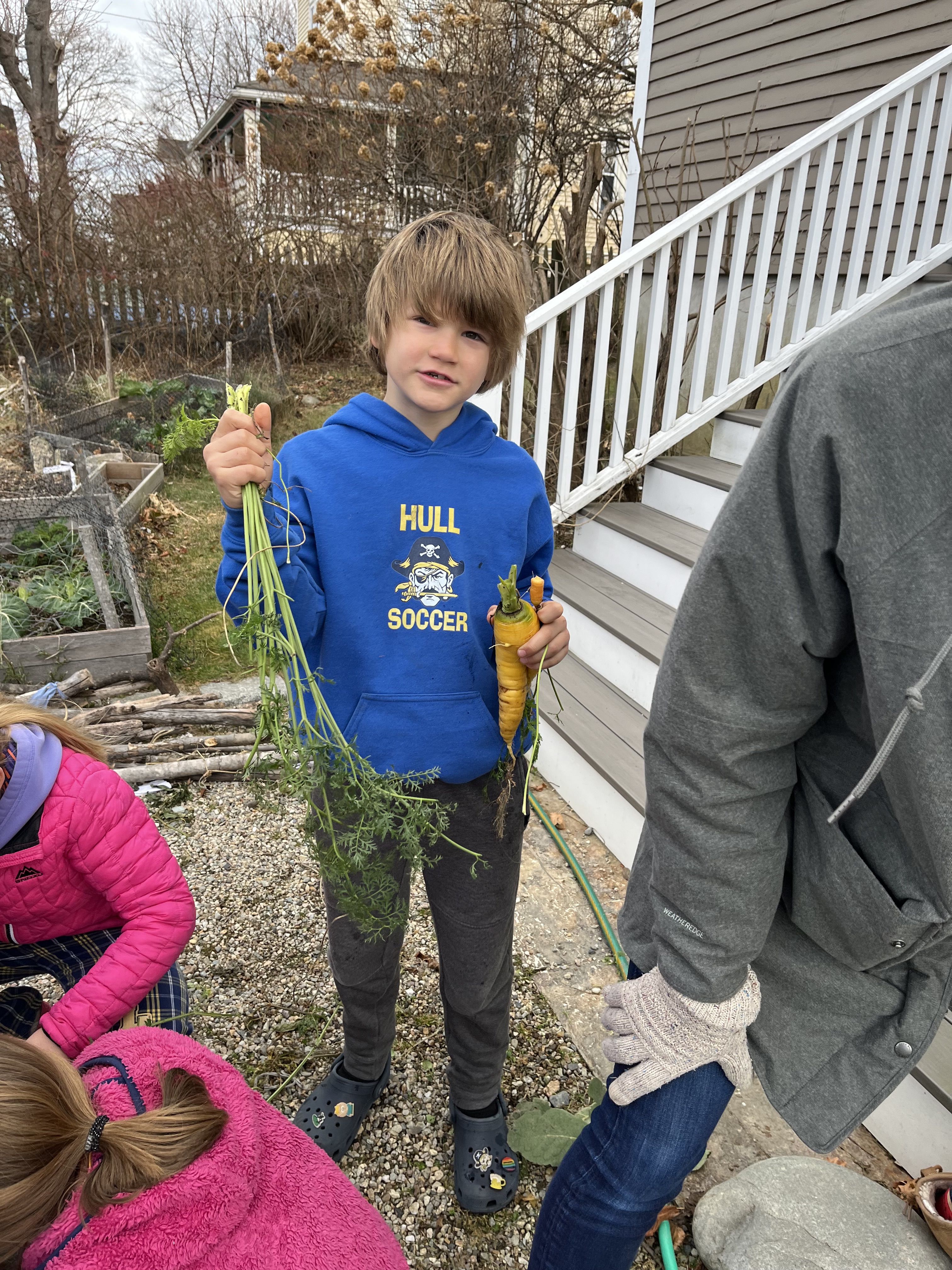
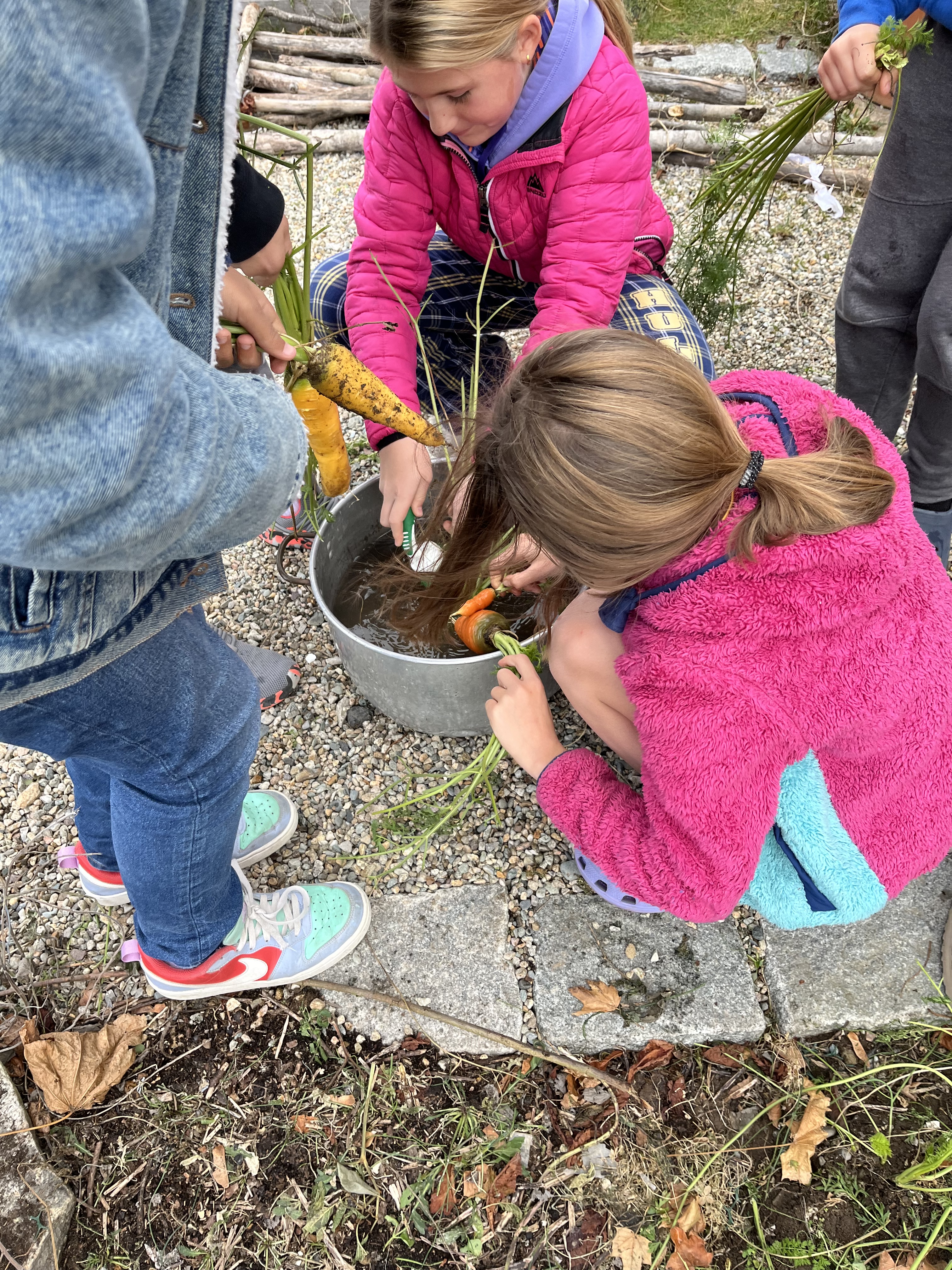
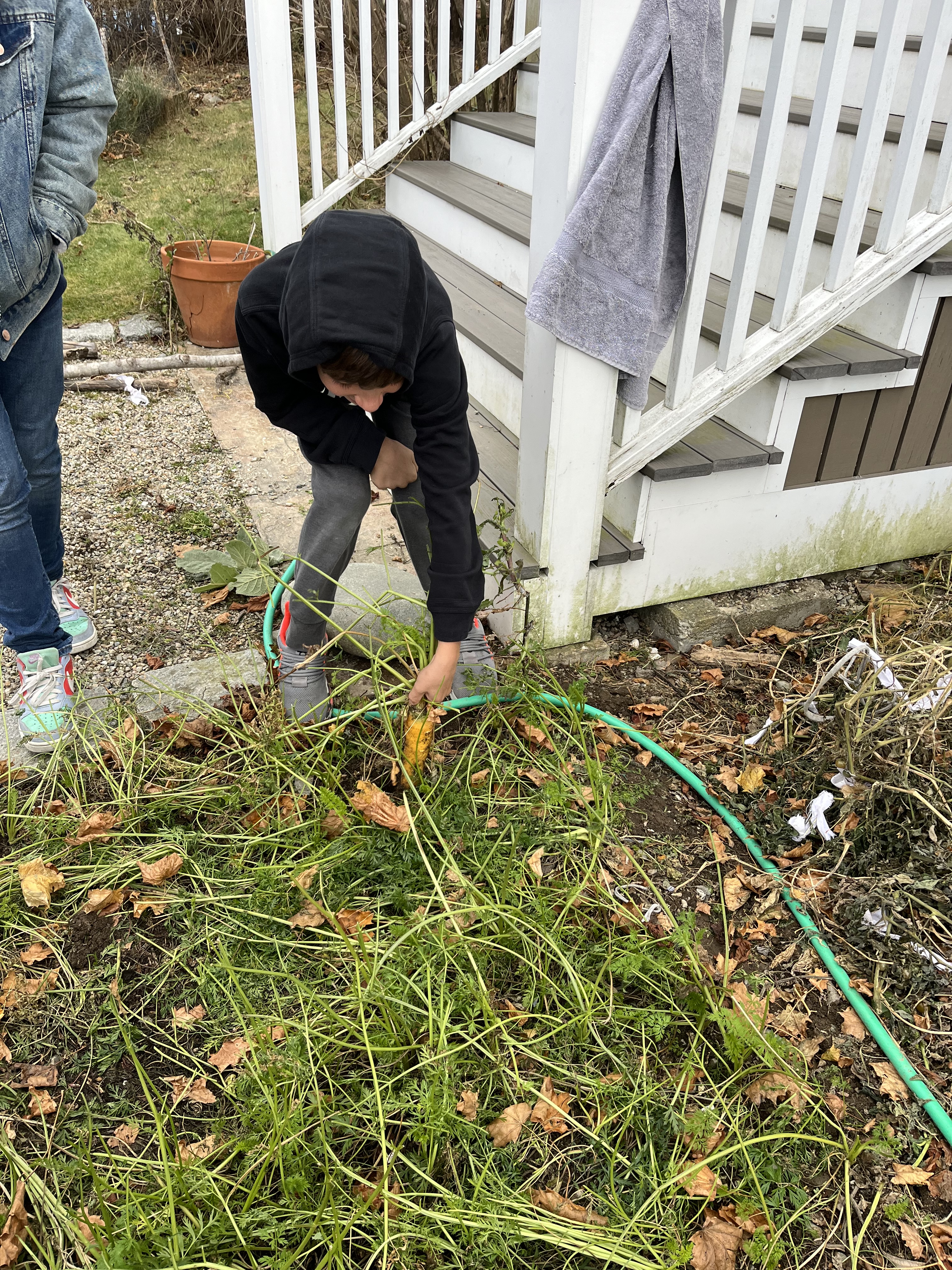
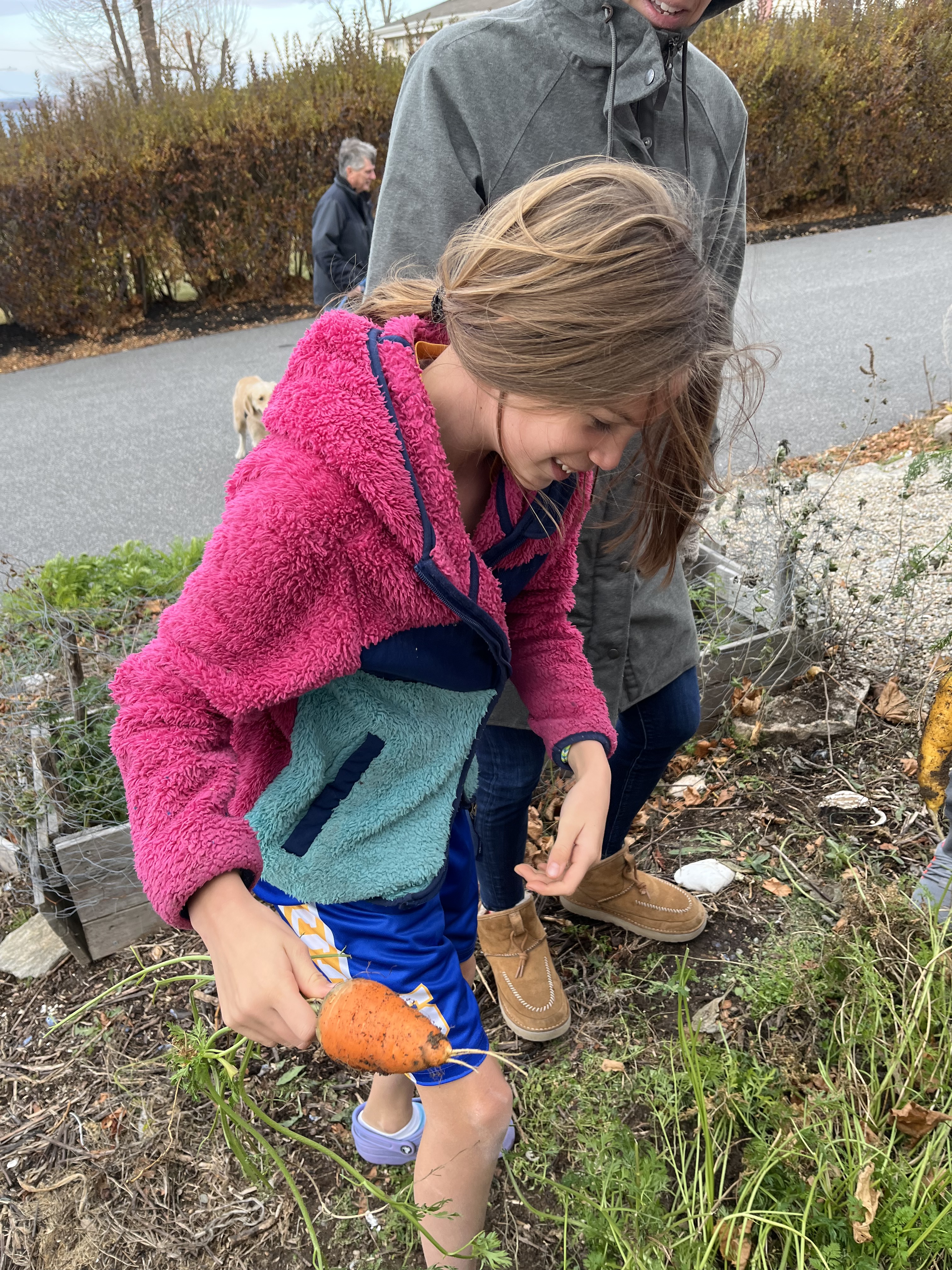
In Early December, with the neighborhood kids, we celebrated Carrot Day in Hull. I took down the carrot bed fence and got a bucket of warm water and some scrubbing tools and the neighbors came over.  The new insurance company who is insuring our house had told us we needed to cut back some branches. One of the limbs we cut back held our tire swing. In years past the neighborhood kids picked their carrots and then washed them and would eat for five minutes or so and transition over to the tire swing while still eating their carrots. Well the tire swing is gone and after a few minutes the kids moved over to the house with the trampoline. They kept eating their carrots so essentially it was the same as they picked their carrots, washed their carrots, declared them good and most importantly they ate the carrots with gusto. But nothing stays the same and I missed seeing them on the tire swing.

Below are the pictures of the Hull crew on Carrot Day.

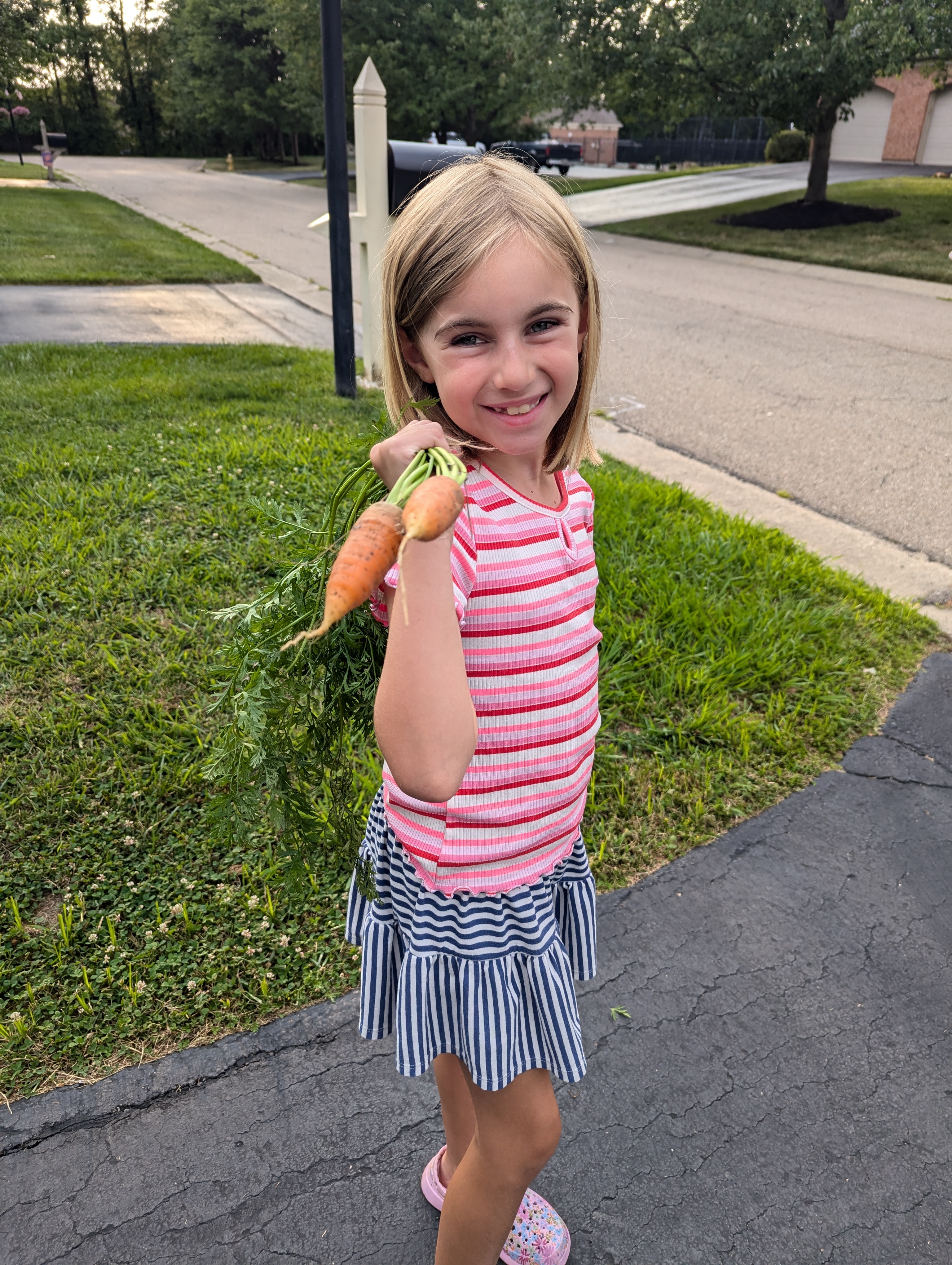
Below are pictures that folks sent to me from Connecticut, Ohio and Cape Cod.

Two partners, Holly Hill Farm in Cohasset MA and CitySprouts in Boston/Cambridge MA have been with Carrot Day since I began this as a Blog in the spring of 2019. Again in this, our sixth year, they contributed again and the pictures below give a sense of both organization’s commitment to children’s garden education.

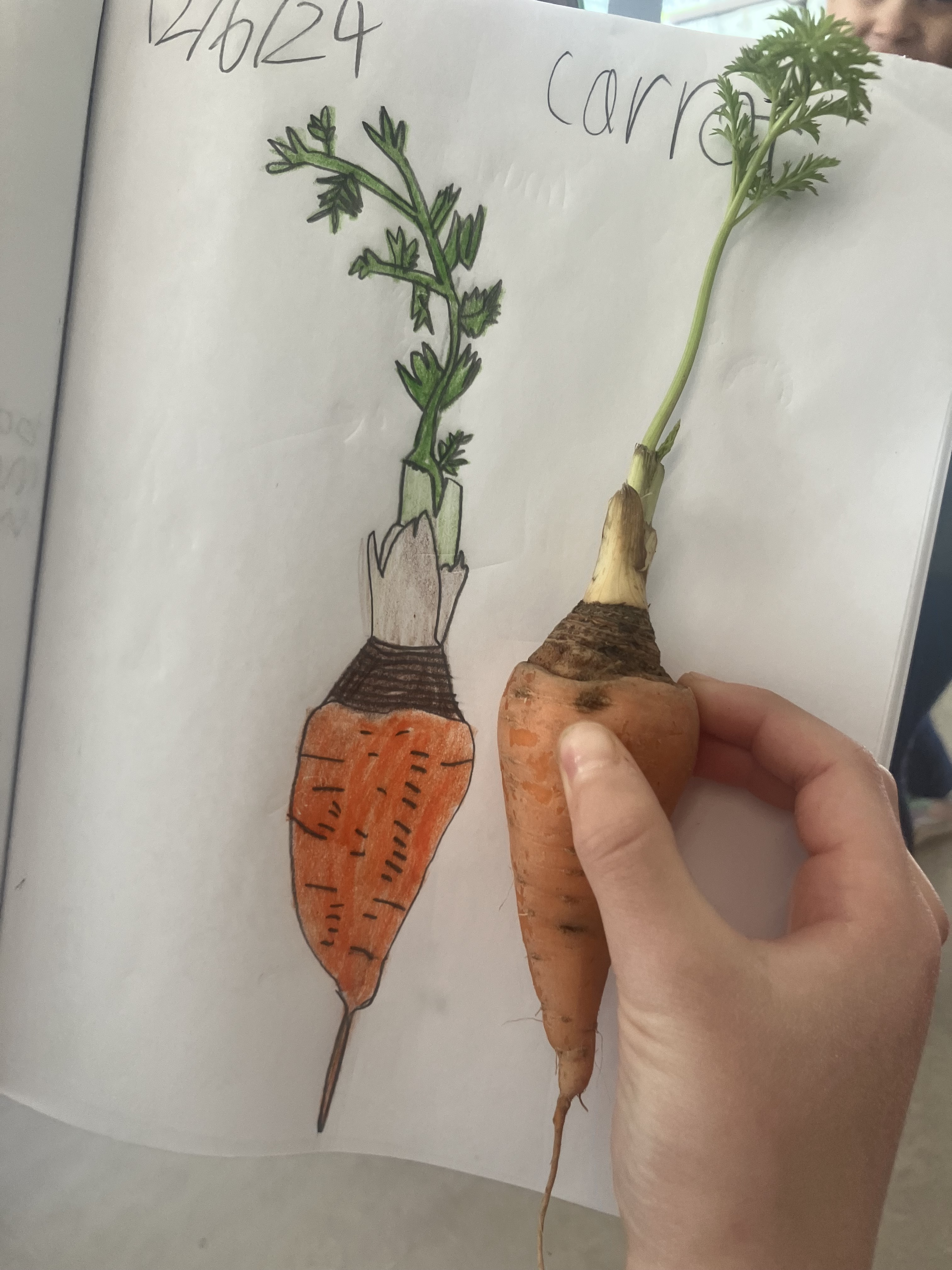
In the photo on the left, Jonny Belber of Holly Hill models the act of appreciating and loving food for a young farmer. In the photo on the right there is the hand and drawing of an elementary student in the CitySprouts program at the MLK Jr. School in Cambridge. This year MLK Jr. was selected as a Blue Ribbon School by the US Department of Education showing the value of gardening for schools. Maddie Kartoz, a City Sprouts educator, wrote to me: “Students finally got to harvest the carrots they planted way back in the spring.  With the guidance of a CitySprouts educator, they created drawings in their science notebooks before getting a taste. It’s an honor to carry on the work that Jane started!”

I close today’s Carrot Day 2024 Report with the words of a former student Van Harting who 21 years ago planted Carrots as a first grader and then in the fall harvested them as a second grader. He wrote me: ” Recently, a friend shared two rules I am trying to embrace: care for the things in your sphere, and grow the sphere. To this end, about a month ago I started volunteering at an urban farm in West Sacramento. ….

Today we harvested 2 rows of purple carrots and began preparing the beds for a new crop. The carrots are beautiful and delicious, although they are not frost kissed, as that doesn’t really happen in Sacramento, and none of them are as big as Connor’s king carrot from Holly Hill farm. 
In some sense it does not feel like I am celebrating carrot day today. I did not help sow these particular seeds. I do not know many of the other workers or volunteers that well yet, and none of them know about carrot day (yet). But also it feels obvious that ultimately that is not what carrot day is really about. It is about being excited to learn about where your food is coming from and doing something to be a part of it, for the sake of you and your community, and that is always worth celebrating.

Van is right and I want to thank him and Jonny, Kendra, Tom, Maddie, Henry, Jane, June, Kate, Jenny, Lam and Ning and the neighborhood kids and all of you who grew carrots or tried to grow carrots and joined in Carrot Day in 2024.

May 2025 be a good year for you. I take this moment to honor Jimmy Carter — my favorite President and a hero of mine. May we all try to be a little bit like him.

Here’s to the New Year and growing carrots. Just this weekend I reconnected with folks I worked with on a farm in Floyd County VA in 1979 and 1980 and had not heard from in four decades. The experience of working on that farm for 18 months more than 40 years ago formed me as an educator, father and gardener and it made me so happy to learn of their lives and their continued connection to the land. Here are a couple of sentences from an email they wrote to me when I told them I wrote a carrot blog: “And, as far as growing, thinning, weeding, harvesting, storing and eating carrots–we love it all. We grow Bolero carrots–since we store most of what we grow. They get sweeter and sweeter in the root cellar. We grew several hundred pounds for us this year and 1,000 pounds for Camphill. I gave a bag of carrots to my coworkers at the library for Christmas.” 

The list of “growing, thinning, weeding, harvesting, storing and eating carrots” is just the right list for a carrot blog. I can’t wait to try growing Bolero carrots and to learn more about storing carrots.

Here’s to learning new things in 2025!

Today and Tomorrow

I write to you just before the Elections of 2024 in the US. As a powerful nation what happens here in our election has an impact across the globe and the outcome will make a difference to many people on our earth.

We know that. We know that gardening is altered by both weather and climate. And the questions are what do we as individuals, families, communities, cities and towns, states, nations, countries and cultures do if the results are what we believe are right and true or if they do not go our way. No matter the outcome there will be those who rejoice and those who mourn.

Today was a beautiful day in Hull. Flat calm water and a great day for a swim. At least for me as flat water in the low 50’s on a sunny day is a sweat spot for me. It is warm enough to stay in comfortably for a fifty minute swim and cold enough to get the afterglow of a cold swim. After the swim I got warm, ate, did some gardening and some chores. A beautiful day in a beautiful place.
Theodore Parker, an abolitionist and Unitarian Minister wrote in 1853, “I do not pretend to understand the moral universe; the arc is a long one, my eye reaches but little ways; I cannot calculate the curve and complete the figure by the experience of sight; I can divine it by conscience. And from what I see I am sure it bends toward justice.”

Martin Luther King took this idea and remade it in the Civil Rights Era. He said in a sermon at the National Cathedral on March 31, 1968: “We shall overcome because the arc of the moral universe is long, but it bends toward justice.”

Barack Obama in 2007, the year before he became President, echoed them both at a speech at George Mason University. He said, “The arc of history is long but it bends towards justice.”

No matter the outcome this week let’s hope the three of them are right and that arc does bend toward justice but I worry that the arch of the moral universe may not bend that way.  I like Theodore Parker can not see but a “little ways” but unlike Parker I am less certain I can “divine” the direction of the arc.

Well back to carrots. Some folks have started to send me updates of their carrots. Up in Vermont they have had frost and over in Weymouth there has been some good cold. But as Hull is surrounded by water the coldest we have gotten was this morning at 34. That said, it is getting cold and today for the first time ever in November I gave my carrots a little water as you can see in the photograph below. We have had very dry conditions and you can smell that in the air with smoke coming to Hull from the North Shore where there have been many brush fires.

Well here is what I tell myself. Equanimity. If the election goes as I hope, remember there is still much to do and I should do my best. If the election goes as I fear, remember there is still much to do and I should do my best.

The fall garden is a metaphor for doing your best. The plants and the ambitious gardener does not merely say the peak is over there is nothing I can do. There are cold frames and there are cold tolerant plants. Right now in Hull Massachusetts the bend of the arc of growing is lessening but there is still some food coming in. Everytime Katy and I eat one of the last last heroic tomatoes we savor them. There are not many but there are some. And one tomato plant is still believing and blooming while all the rest have been pulled from the garden.

And it is a time for greens. They are in their glory and like carrots they get sweeter with the frost and in a month or so I will be celebrating Carrot Day and frost kissed carrots.

So let’s all try for equanimity and doing our best even if it is not the best weather or climate for us.

May the valiant zucchini and hearty poblano pepper, and the optimistic bean be our guide.

End of Summer and Start of Fall

It has been two months since I last wrote and the big star in the Hull Garden during these two months has been the mint. I would spend time each day looking at the bees. There were hundreds of bees and at least five different bee species on the mint flowers for well over a month. I loved it but last weekend I cut the mint down as they had dried out. In the last few days of summer here in Hull it is getting drier and drier. We have had no rain in 25 days and only 1 inch in the last 45 days.  The mint had done its work and the pollinators had moved on.

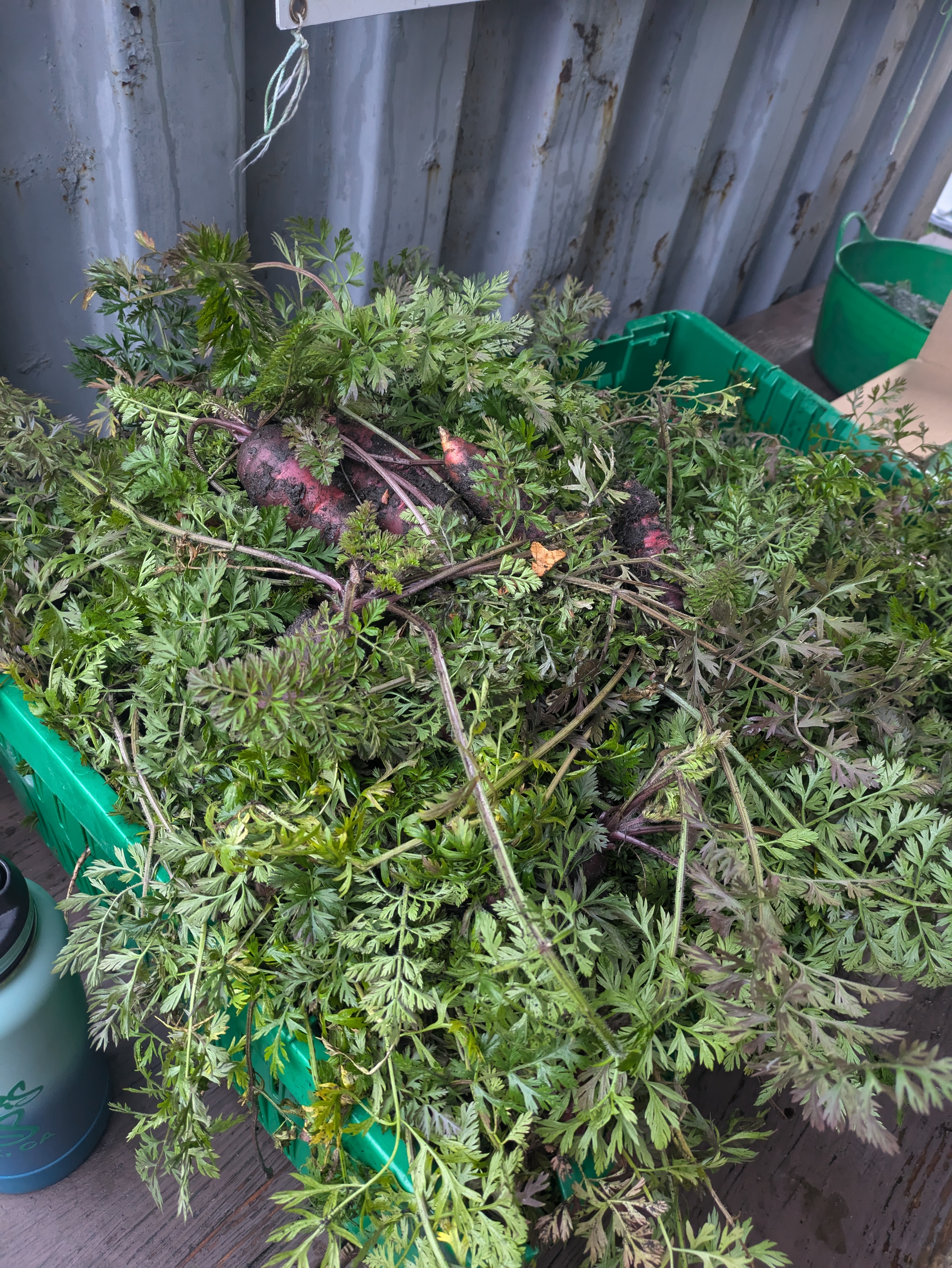
I hope that you thinned your carrots vigorously and that they are doing well in your garden. Here in Hull I planted an early crop for summer eating with the goal of pulling a few carrots when the grandchildren visited in summer (see photo above from the middle of July) and then a late crop from Carrot Day Harvests after the first frost. The visits were great and the second crop was doing exceptionally well until some animal came over the fence and ate a lot of tops. Not sure what it was but it was not a bunny as the fence was way too high.  I watered to help them recover and hope that the eater does not come back.

The photo on the right is from a Carrot Day Reader who also planted an early and a late crop and sent me the photo on the right.

For most of the past four years around this time of year we have had messages from Laney Signer. Laney is a scientist/educator who teaches about the benefits of regenerative farming and she, like me, tries to get folks to grow their own food. In general Laney teaches us a bit more about how to think about gardening and eating.  Today she discusses the negative practices that can occur in large scale agriculture and in this case some carrot farms. Without any more introduction here is Laney’s post.

September 2024
What makes a climate friendly carrot?

I was shocked to open an email one morning over the winter with the subject line:
BOYCOTT CARROTS. I run a farm-based educational program designed to teach
adults about regenerative agriculture and soil health (Climate Farm School), and as a
regular contributor to the Carrot Day blog, I am a lover of these multi-colored root crops.
Especially when pulled out of the ground on the day of the first frost, which is maybe no
more than a month or so away.
The email was from farmer-educator mentors of mine, who run a dry-farmed wine
and olive production ranch in one of the driest locations in California: the Cuyama
Valley. Steve and Robbie of Condor’s Hope ranch are legendary agroecologists,
farmers and activists, and incredibly knowledgeable about sustainable water
management practices when it comes to growing food in drought-prone climates. They
joined forces with community organizers and smaller scale landholders (they farm on
about 5 acres, surrounded by 1000+ acre operations of wine grapes and carrots) in
opposition to a ‘water grab’ by corporate food giants Bolthouse and Grimmway Farms.
The Carrot Boycott became their way of resisting the totally unsustainable water
withrdrawals from groundwater pumping on the large scale farms supplying Bolthouse
and Grimmway with millions of dollars of carrots annually (comprising 80% of the total
US carrot market). The inhumane working conditions for farmworkers in their fields is
also increasingly under scrutiny, after a woman died in the fields last year and others
were told to work around her dead body.
Tragically, extractive environmental practices
are likely to coincide with exploitative labor practices on large scale US farming
operations.
I read up on the issue on the “Stand with Cuyama” website: the Carrot Boycott
protests the excessive water usage (over 28,000 acre-feet per year, or enough to supply
3 cities the size of Santa Barbara with their water needs for a year) of the two largest
carrot growers in the area. It seeks to keep water rights in the hands of the community
rather than corporations, with the implicit understanding that the more locally rooted
farmers and land stewards are not pumping groundwater at such unsustainable rates.
Should this pumping continue, groundwater basins like the Cuyama Valley in California,
increasingly threatened by climate change impacts like worsening drought conditions
and heat waves, will suffer further degradation and potential collapse. It begs the
question, how much longer could we even continue growing carrots here with
groundwater basins facing collapse, and annual rainfall totals dwindling? This is not
climate resilience, it’s the opposite.

So, what makes a climate friendly carrot? Something like what we’re growing in
our home, community, and school gardens. On regenerative and diversified farms,
where carrots co-exist with weeds and worms and other biodiverse life in and above the
soil. I planted my Carrot Day seeds from Ted in my parent’s garden in Rhode Island on
Memorial Day weekend, and they are now popping out of the ground with great vigor.
We’ve harvested most to make salads and soups already, but a few remain to be
harvested for Carrot Day 2024. As we harvest our carrots this fall, from Massachusetts
to California, let’s be happy to be in the 20%… or should I say, probably less than 1% of
the US carrot market that is truly climate-friendly and home garden grown.

Laney Signer

It is hard to know what to do. Carrots are good, and in general the more plants we eat the more friendly to the earth our eating is.  Maybe a thing to do is to not just eat those you grow yourself but perhaps get carrots grown in Canada. I see carrots in my local store are often from Canada and those tend to taste better too. Perhaps I will find out the disadvantage of the Canadian carrot but it might be a good thing to do.  And yes do as much as you can to grow your own and to get to know your farmers.

Ted