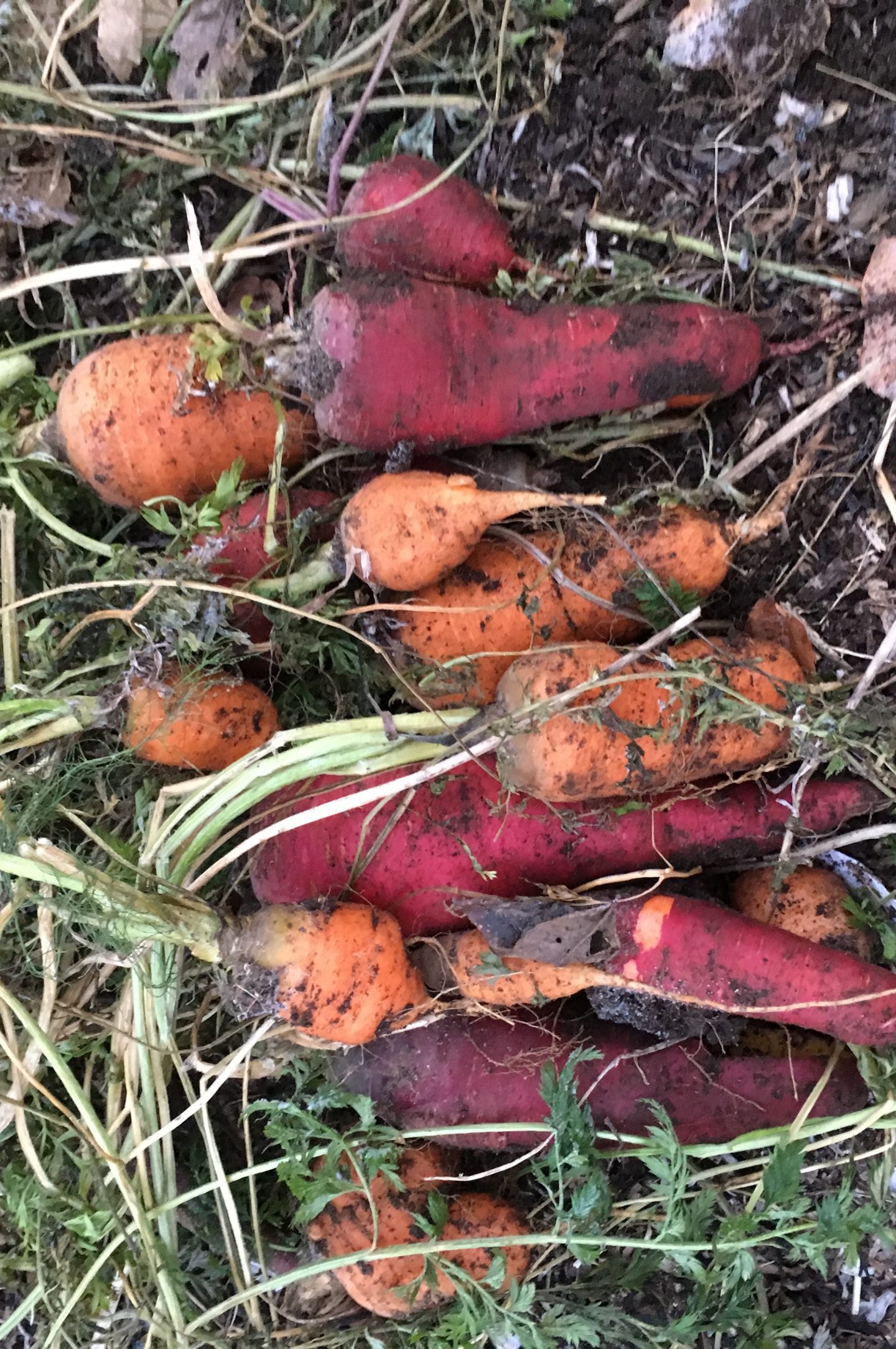

In case you don’t read this post to the end, here is a sentence from the last paragraph: “Please order your free carrot seeds using this form.“
Well, in Hull this past week, it has been a little bit colder than average, but despite that, the plants sure have thrived.
I took photos on May 3rd and then again a week later on May 9th. The difference is amazing. What I, as a gardener, hope would happen has happened. The labor of April is paying off with the joys of May. The saying goes, “April showers bring May flowers.” The photos below show what has happened in our side yard in the last week. The Wild Ginger, Money Plants, and False Solomon Seal have had subtle changes, but the Yellow Fairy Plants and the Lilies of the Valley have truly popped.
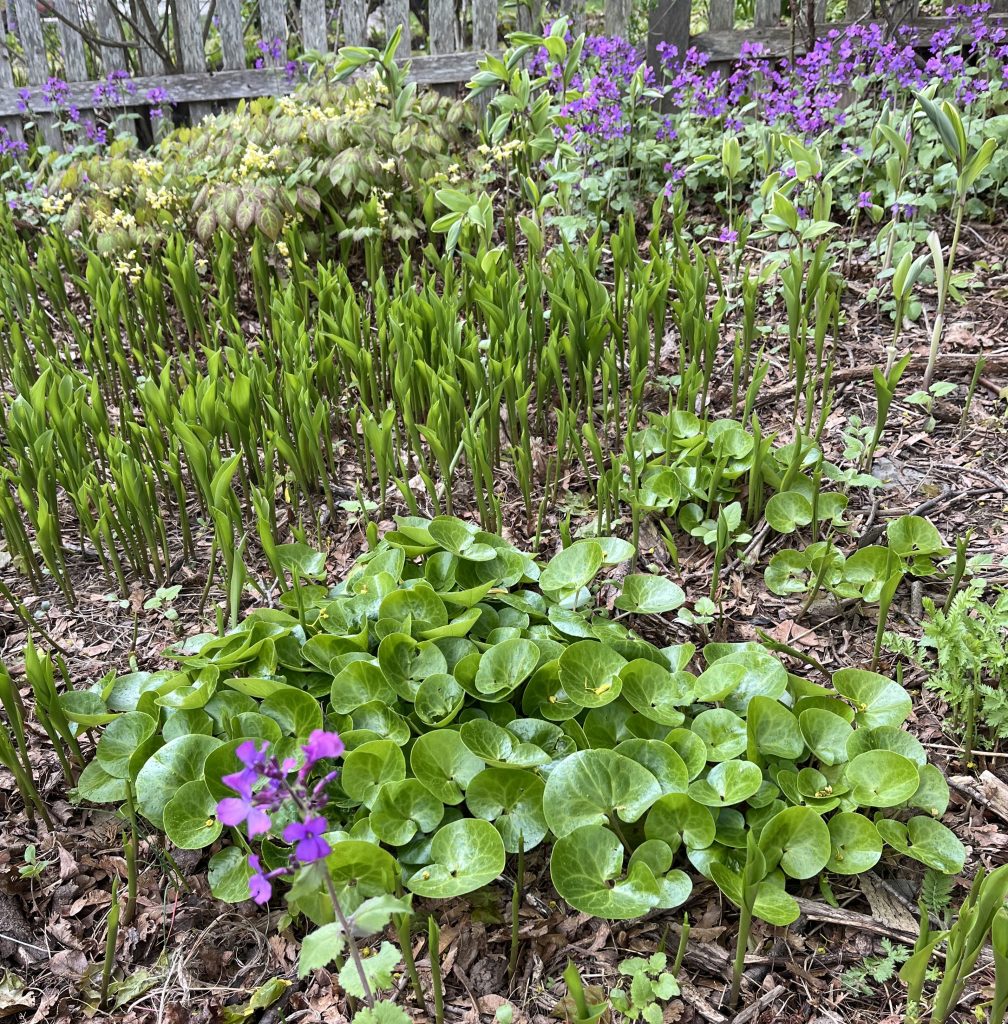
May 3,2026
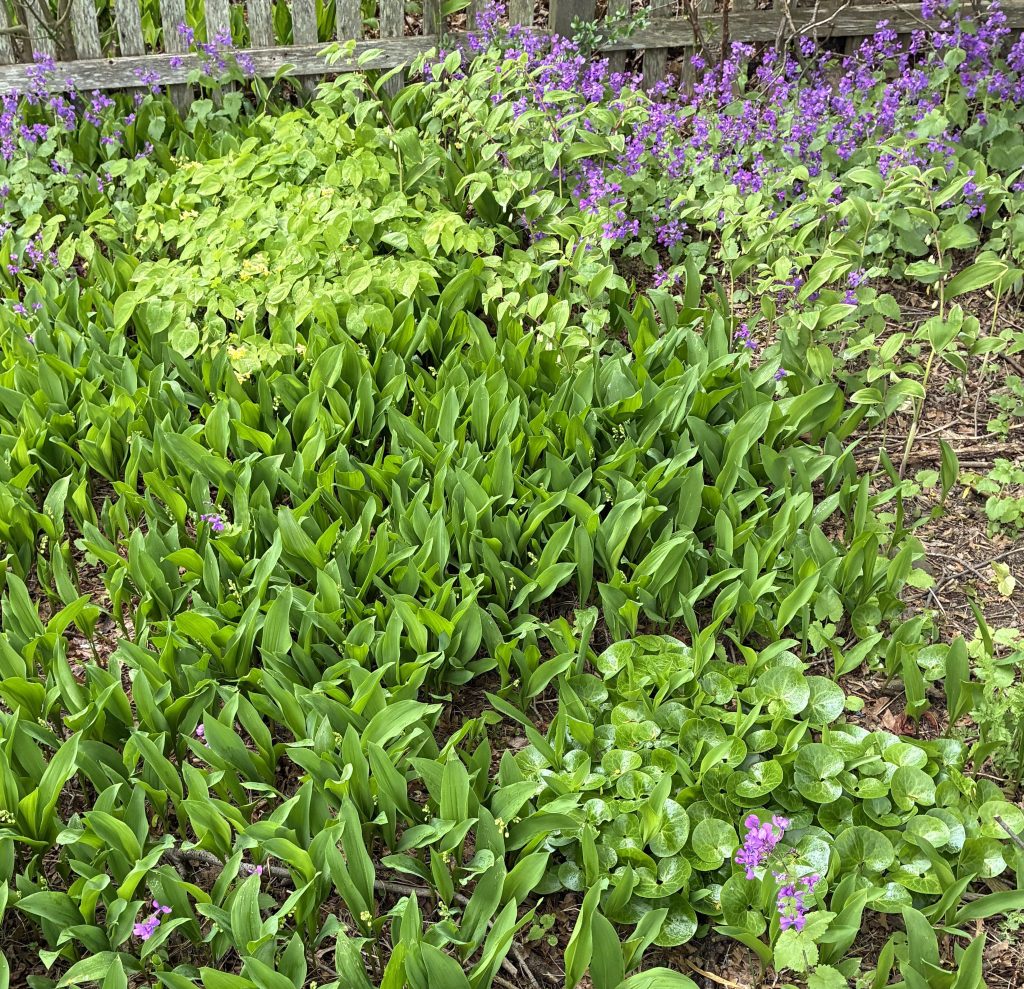
May 9, 2026
I might amend the saying “April showers bring May flowers” to “The garden work of April brings the glory of May harvests.” Of course, that is true not only for April to May but for every month; what we do now and what happens now impacts what we do later and what happens later.
WordPress sends me monthly updates of how many visitors come to the posts, how many times those folks visit, and what they look at on those visits. This past month, the second most visited post was Spring: Youth, Experience, and Joy. This post was published on May 9th, 2022, almost exactly four years ago. This post asks questions about the idea that the work we do now has benefits for what happens later. The May 2022 post is about being a teacher and trying to understand the conditions that are needed so that students can, in the present, complete the necessary work, so they have the strength to do the work they need to do later. I took the wisdom of the Carrot Day Massachusetts readers to re-read that post myself, and it was good and rang true to me. These posts, like the garden, are cyclical. As Pete Seeger quotes Ecclesiastes, “There is a time for every purpose.” As it is the same time of year, this post says more or less the same thing the post of May 9, 2022, said, which is to plant, weed, tend, and nurture the soil now so we can eat later.
In this post, most of the story is told in pairs of photos. That story is labor now brings food or beauty later.
One of the most rewarding changes to me in the last week is the deepening of the green and the increase in leaf size of the arugula. Both changes are signs of prospering plants, and are both a product of how the arugula and the soil are tended. That tending is labor.
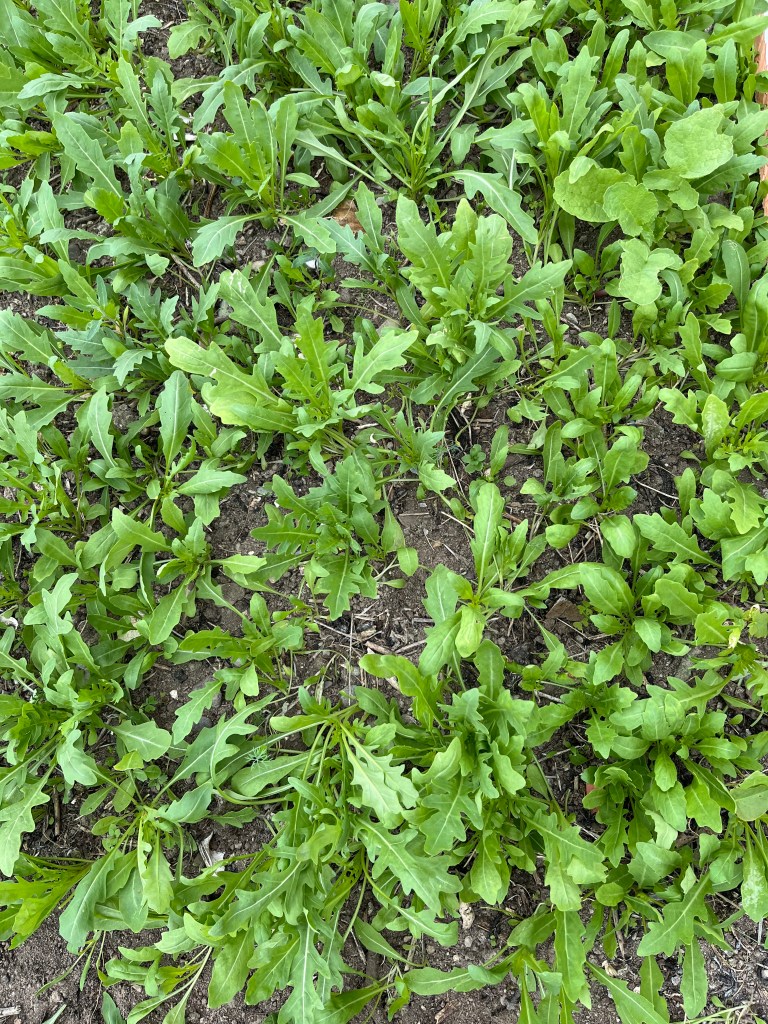
Masy 3, 2026
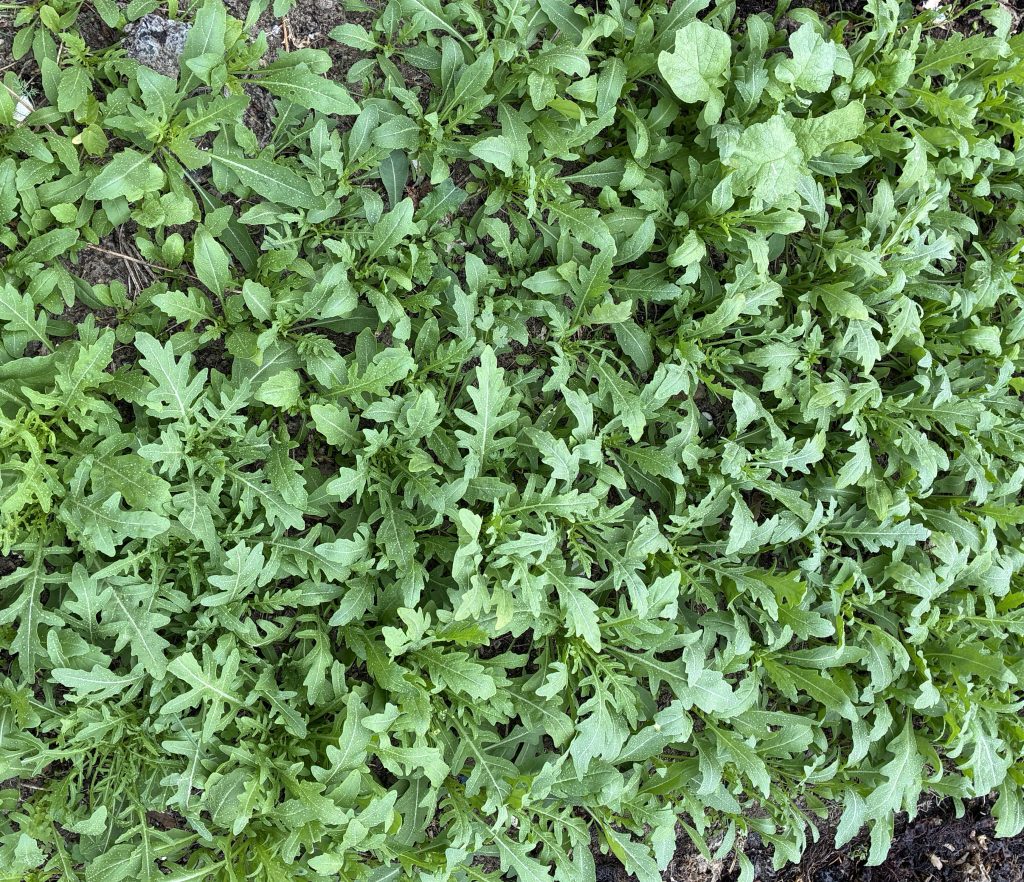
Masy 9, 2026
About seven years ago, in early summer, my son-in-law Josh and I were standing on our porch looking down on the garden. That day, he asked me what I was most proud of in the garden, and I told him it was the arugula bed. He is a scientist, and he did not stop at the first question, but as a good scientist, he also asked why it was my favorite. There are many reasons why I am proud of the arugula bed, then and now. First of all, some of my joy about the arugula bed comes from the fact that I developed an original method of planting and tending arugula. It is my tradition that in October, I select a spot for the bed, and I lay down arugula stalks on top of the soil. Those stalks have huge numbers of arugula seeds, and I simply place on a cold frame over the stalks. This past year, I also planted rows of radish seeds in that same bed. As winter ends and spring comes, I spend hours taking the thousands of baby arugula plants, and over time, harvest arugula by thinning plants. We eat the thinnings, but at first it is certainly not a rational endevor. I spend hours gathering a tiny amount of food. Gradually, as the individual plants gain more space and as the roots go deep, the harvesting gets easier and easier. Once the bed has arugula in six-inch spacing, and what were thousands of arugula plants are now only about 100, I no longer pull the plants but harvest with scissors. By then, it takes only a minute to harvest a family salad. For me, there is joy all along this cycle, with the vivid green of the tiny sprouts in March, the delicate salads of April, and the plenty of May, and overwhelming quantities of June, then the diminishing harvests of the rest of the summer. I am proud of this bed and the story it tells. It is a version of “April showers bring May flowers.”
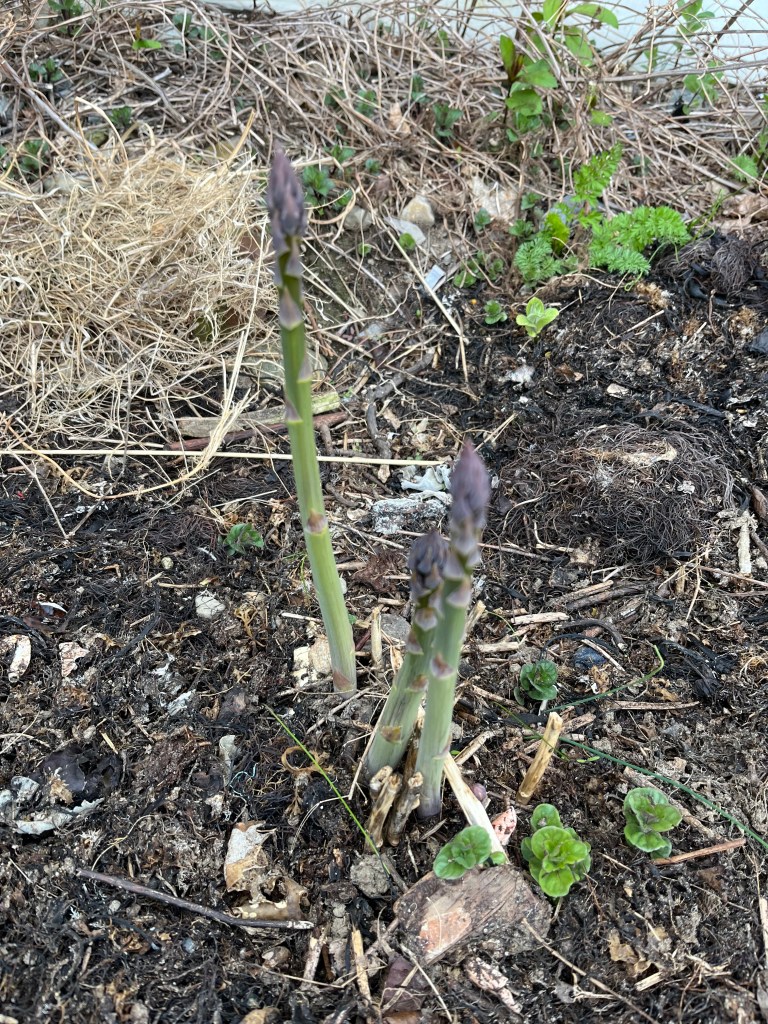
May 3, 2026
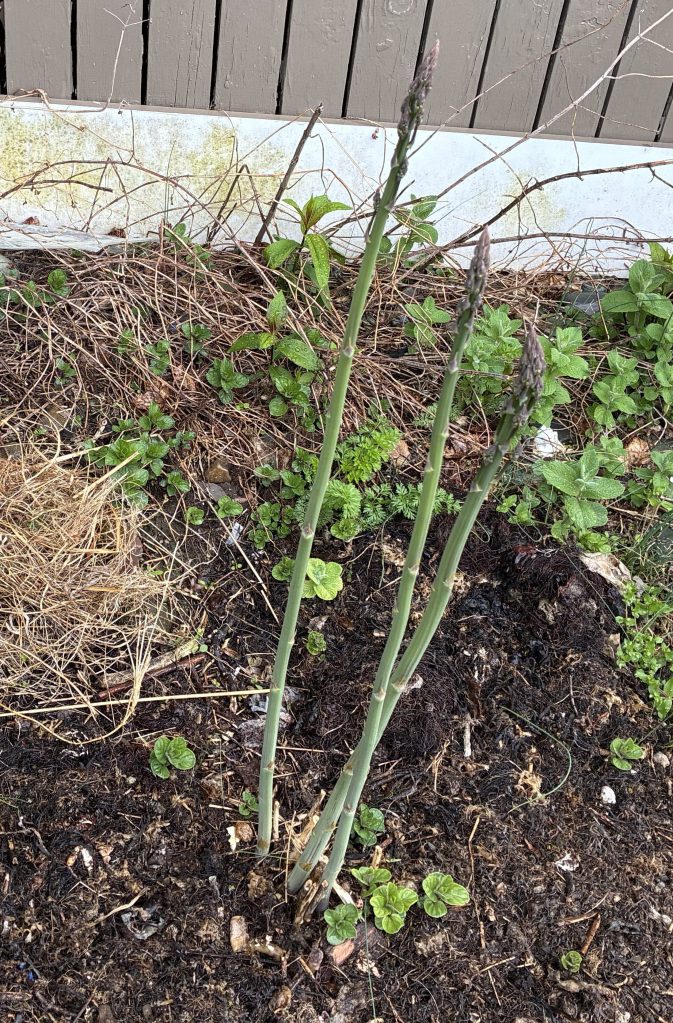
May 9, 2026
These asparagus are in their second year and need at least two more years before we start to harvest them. Another example of the value of patience. Not taking a few stalks now will bring us plenty of asparagus later.
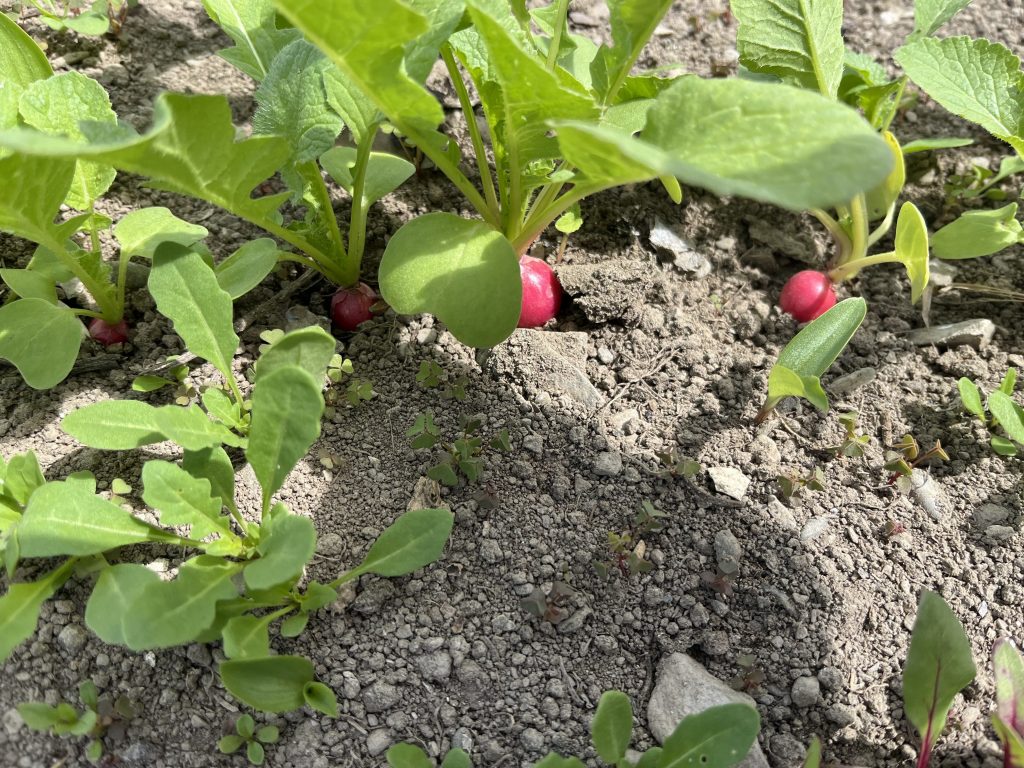
May 3,2026
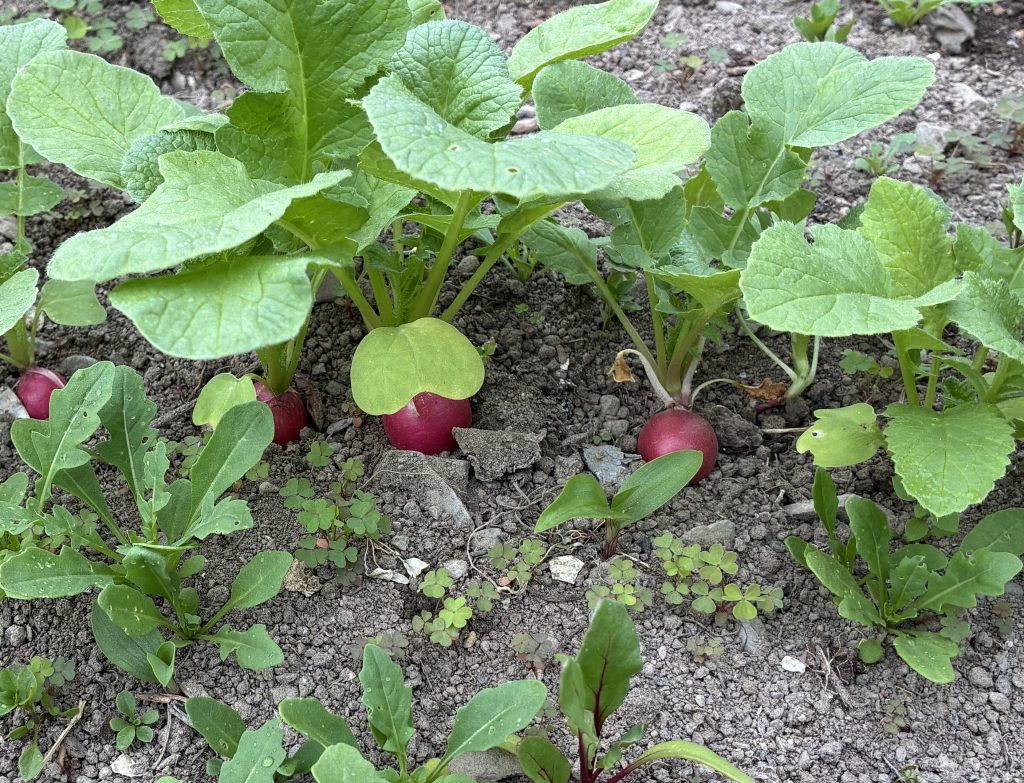
May 9, 2026
When I eat a perfect radish or a perfect arugula leaf, I am struck by the texture. The burst of water and the crunch that comes out as the spice and flavor explode. It sure is good to eat. One thing that cooks say is that flavor is a marker of nutrition. One spectrum of taste tends to dominate our desires in eating, sweetness but there is nothing like the roundness of bitterness and hint of bite that make arugula and radishes in the early spring a place to feel at home.
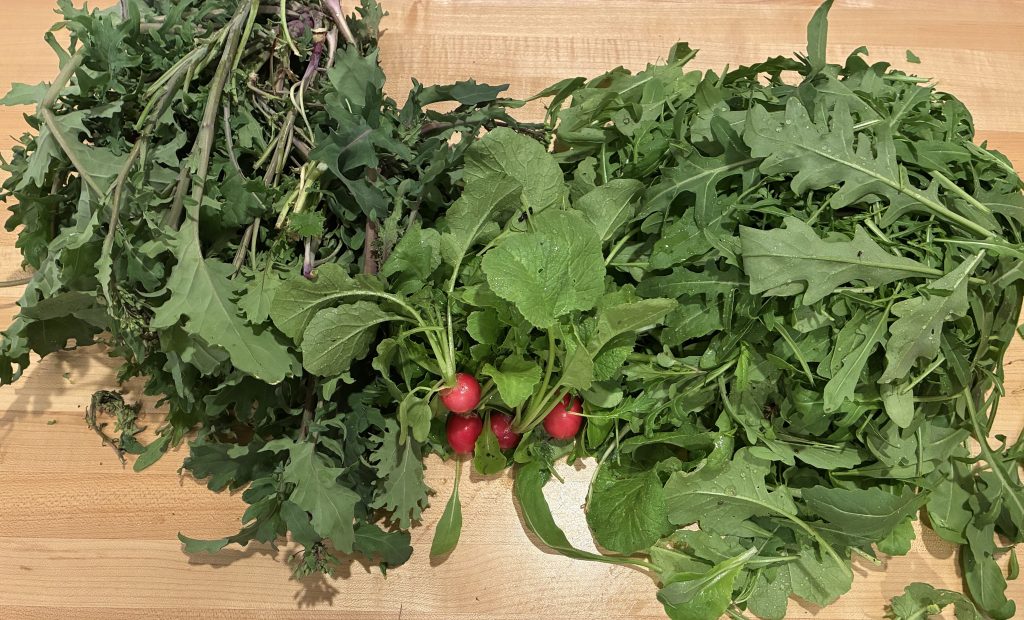
The Harvest of May 9, 2026,
But it is not only bitter and spice the garden can produce. Please order your free carrot seeds using this form. I will be sending them out ready for an early June planting and post-frost harvest. Then you can taste that same burst I had this week, along with the glow of frost-kissed sweetness. To everything there is a season, and I sure hope you join me in the season of a really good carrot sometime deep in the fall.

