
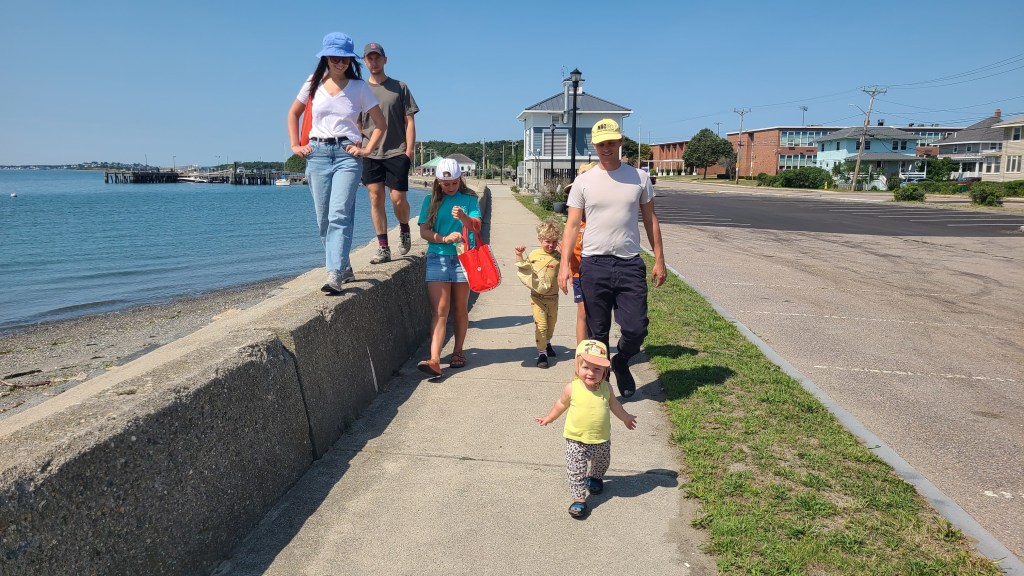
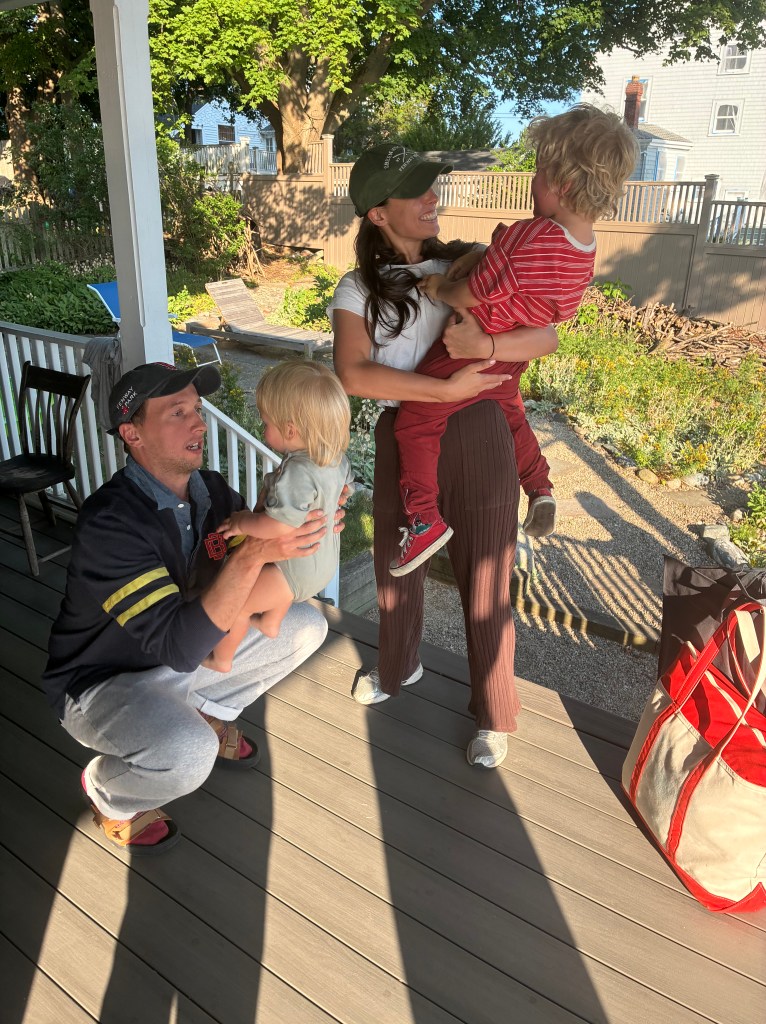
They came, all three of our children and their partners and families. They came and visited and ate from the garden. Eleven folks and one dog stayed with us, with six the most at any one time. They made our house rich and wonderful with meals, dishes, celebrations, conversations, toys, barriers to keep the little ones safe, and energy we no longer have. Katy and I shake our heads and remember that once we did all that too.
It was the first summer in years when I did not also work at least part of the time. I have a new job — full time art teacher and I have the summers off now. I love it!
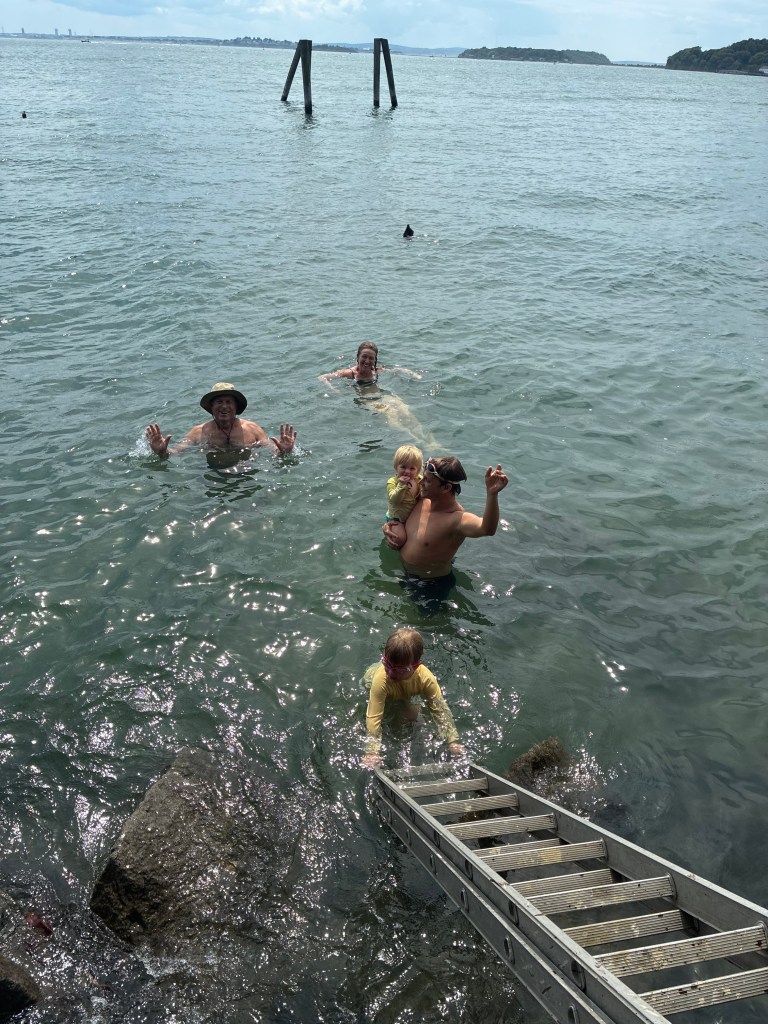
We had almost a full six weeks of big energy and big living. In those six weeks I got to focus on gardening, swimming, cooking, cleaning and being. The youngest visitor was almost sixteen months old, so not a baby anymore but still a great teacher in how to be present and how to understand all the things we have all accomplished in being able to tie our shoes and make our beds. It is so exciting to see all four of the grandchildren becoming their own individual selves. On leaving Maud, Ben’s spouse said, “Every year, I look forward to coming and eating the food from your garden. It is the best food of the year.” There are many reasons all of our children have been coming to visit in the summer every year, after all Hull has one of the best beaches I know, but certainly one of the reasons is to eat from the garden.
It is quiet now and that is good too and I am again sharing food with the neighbors.
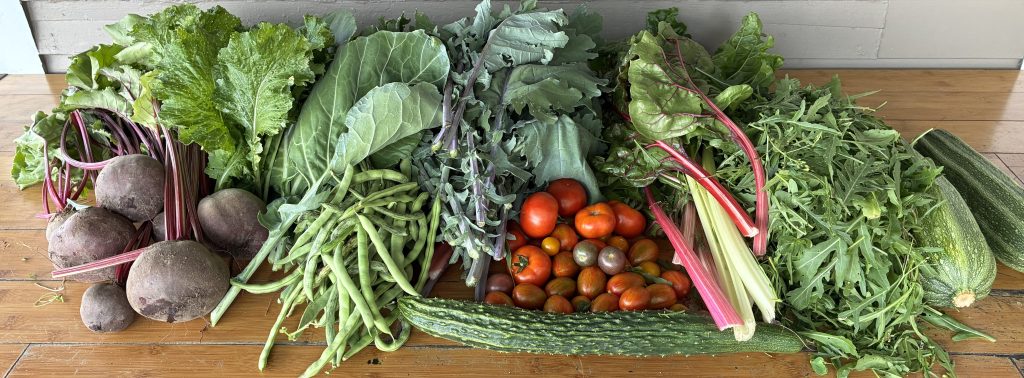
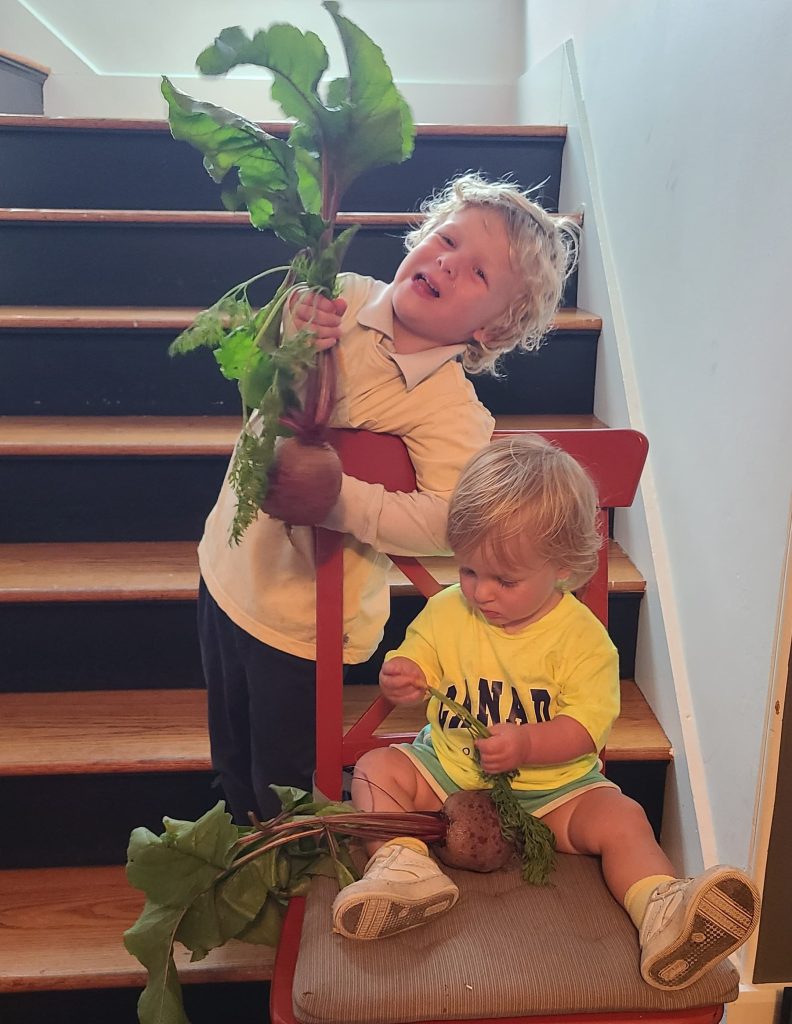
The picture above is the harvest from August 13th. A week after the last visitors left. From left to right are: beets, mustard, rattlesnake beans, collards, kale, cucumber, tomatoes, Swiss chard, arugula, and zucchini. While we ate each of these crops during the busy time, we never had so much food from the garden in any one day.
There is no way for Katy and I to eat all this food so it is the time of serious freezing and visiting neighbors with vegetables and always bringing vegetables to pot lucks. Below are pictures of the processing of the greens. To freeze greens you merely blanch them in boiling salted water and then chop and put in freezer zip lock bags. The blanching time for collards, chard and beet stems is three minutes, while it is two minutes for kale, chard and beet greens.
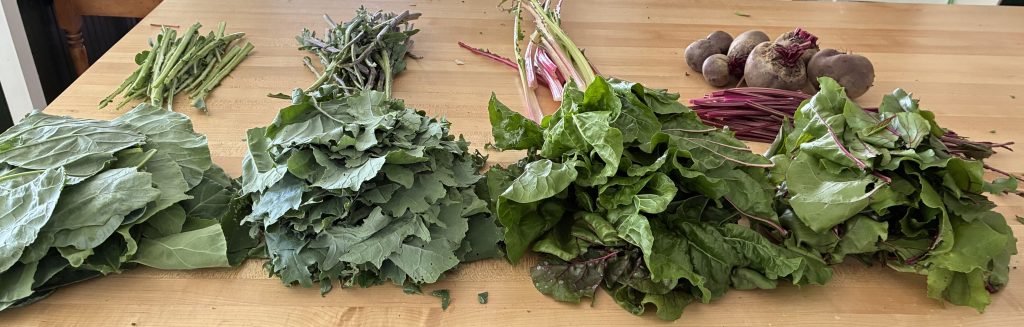
The photo above shows the greens in front of their stems and in the case of the beets their roots. From left to right are collards, kale, chard, and beets. I compost the collard stems, I use kale stems as a replacement for celery in sofrito. I chop the swiss chard and beet stems before I blanch them. Chard and beets are closely related and have seeds that are clusters of seeds. Collards and kale are brassicas. Two plant families and lots of good food for the winter.
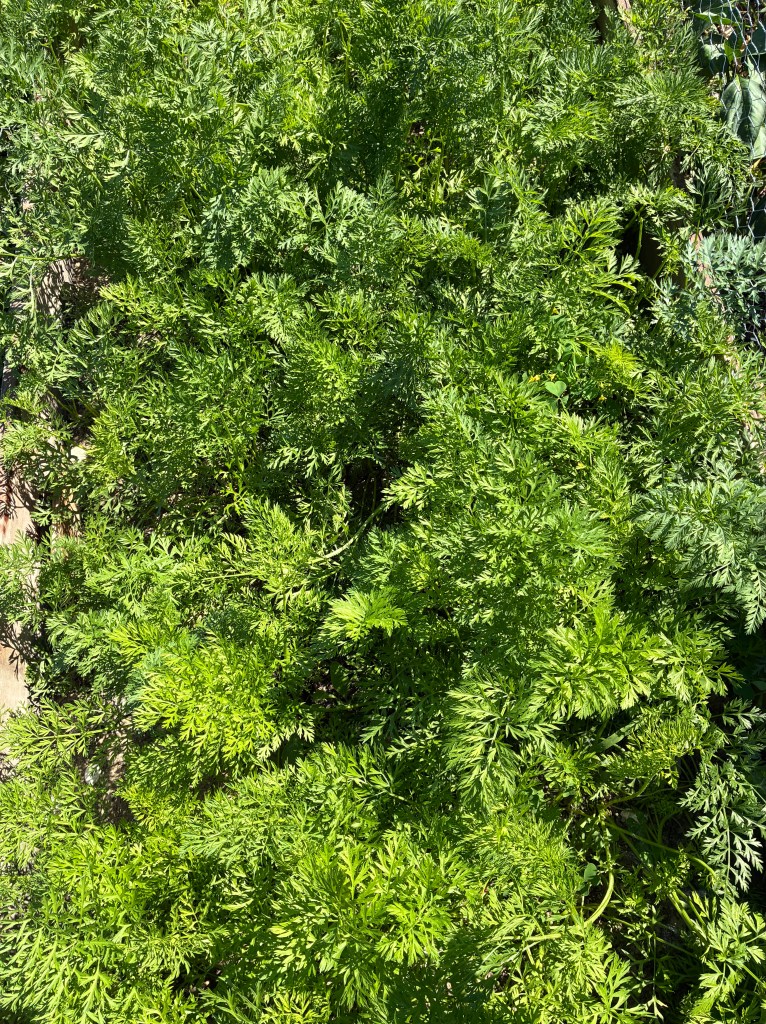
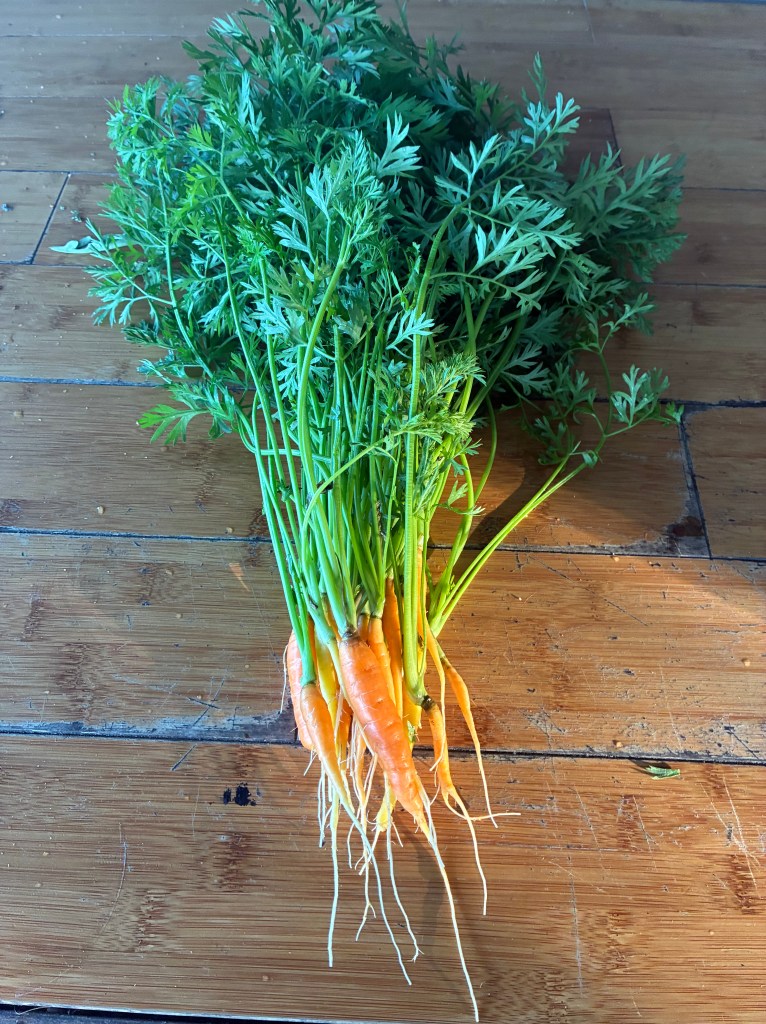
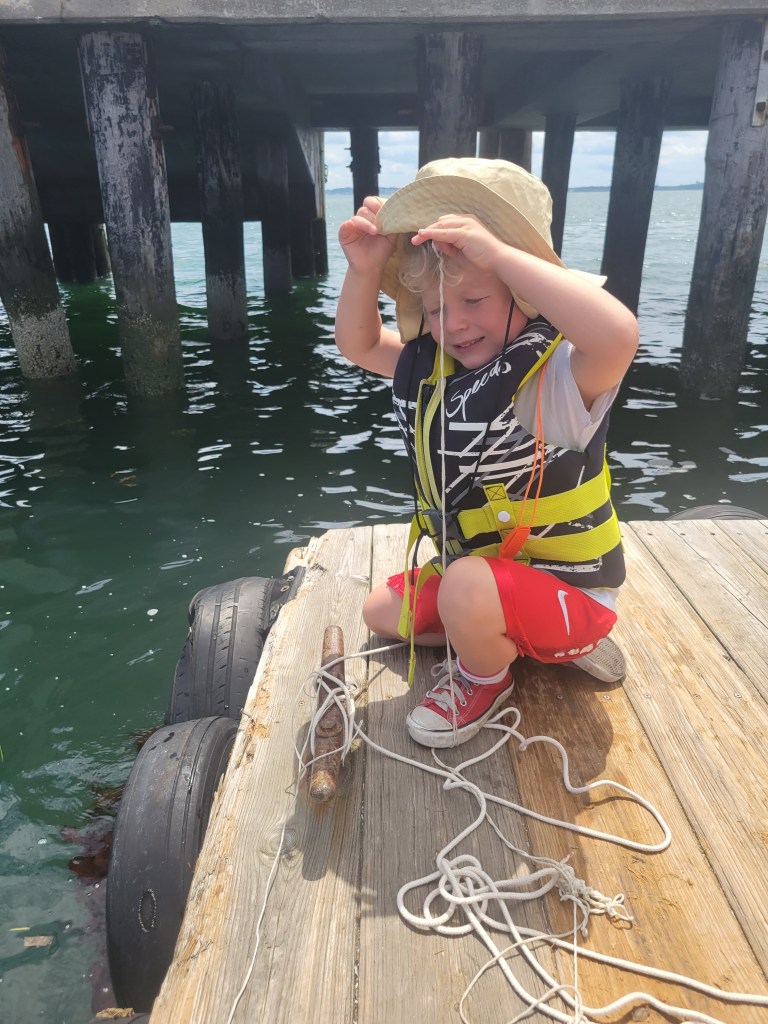
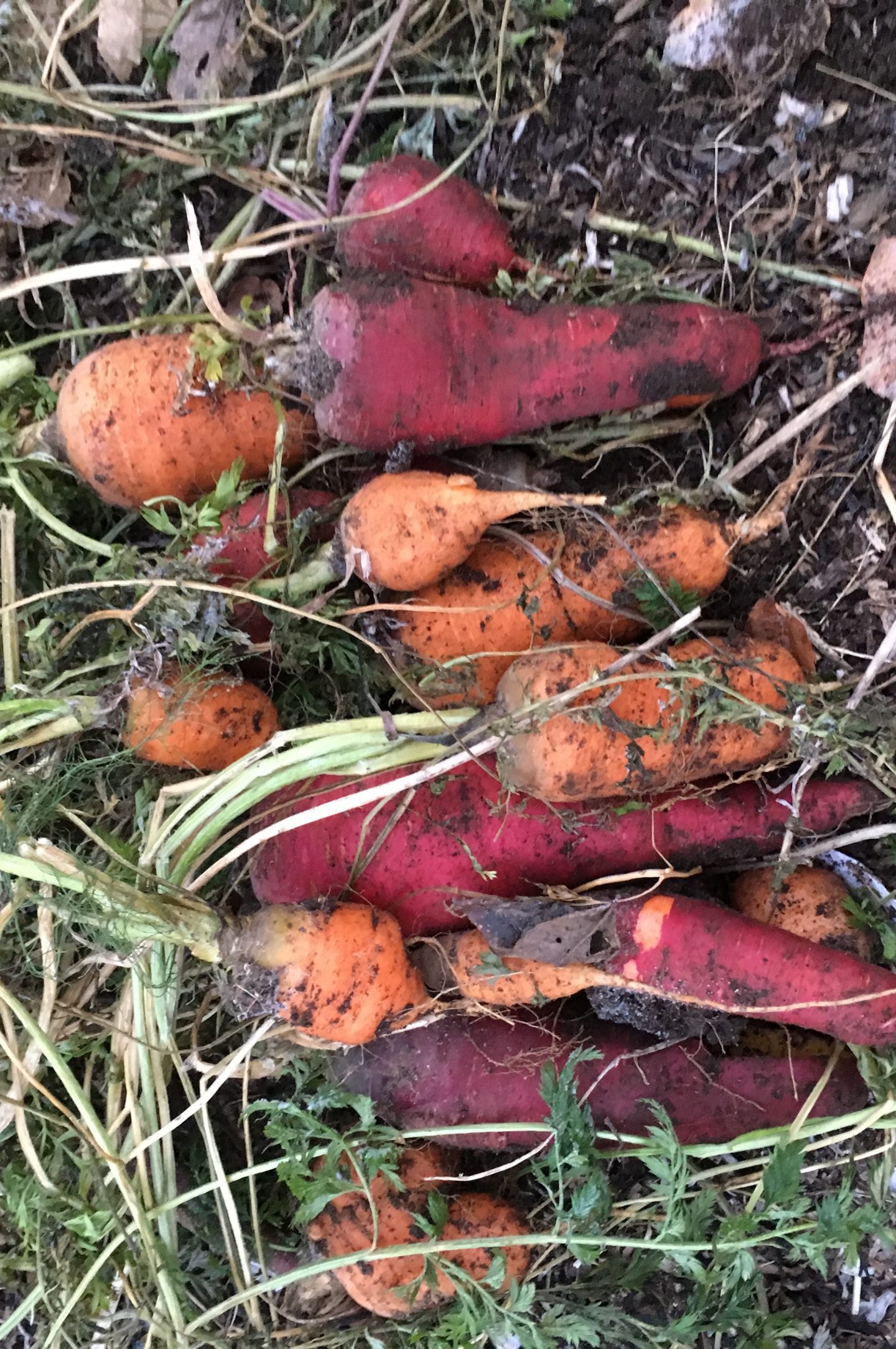
The carrot bed, a new bed that slightly expanded the garden into the flower border is doing well. There were a couple of days when an animal got ahead of me and burrowed under the wooden perimeter and ate a few carrot tops but I quickly patched the openings with some shingles. No animal has gotten in since and those munched on plants have recovered. The carrots in the middle photo were pulled as I had not thinned them well enough. I expect every few weeks I will decide that the carrots need to be thinned more. Perhaps they do or perhaps I just want to use a few. In this case I used the carrots and carrot stems along with an onion as a sofrito for a really great crab soup made from the crabs that Reggie and Ben caught. That is Reggie in the photo on the right at Pemberton Pier with the line to the crab trap. That day they got one big crab that Ben and I ate steamed and lots of other smaller crabs that I made into soup. The carrot tops rivaled the crab for the starring role in the soup.
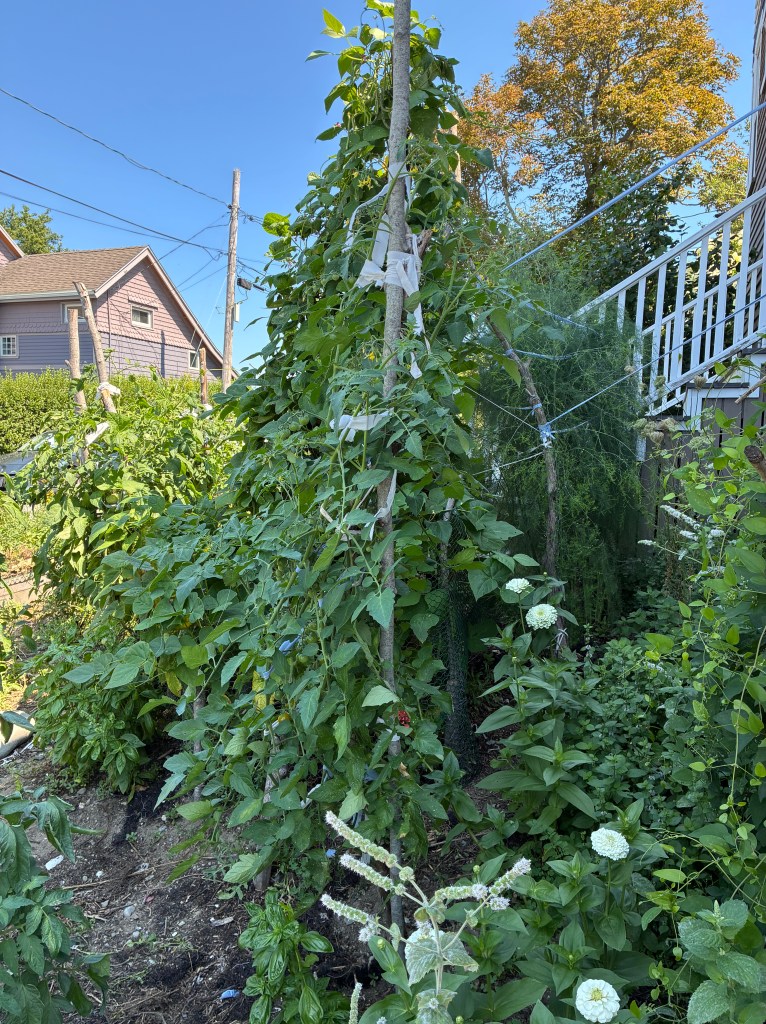
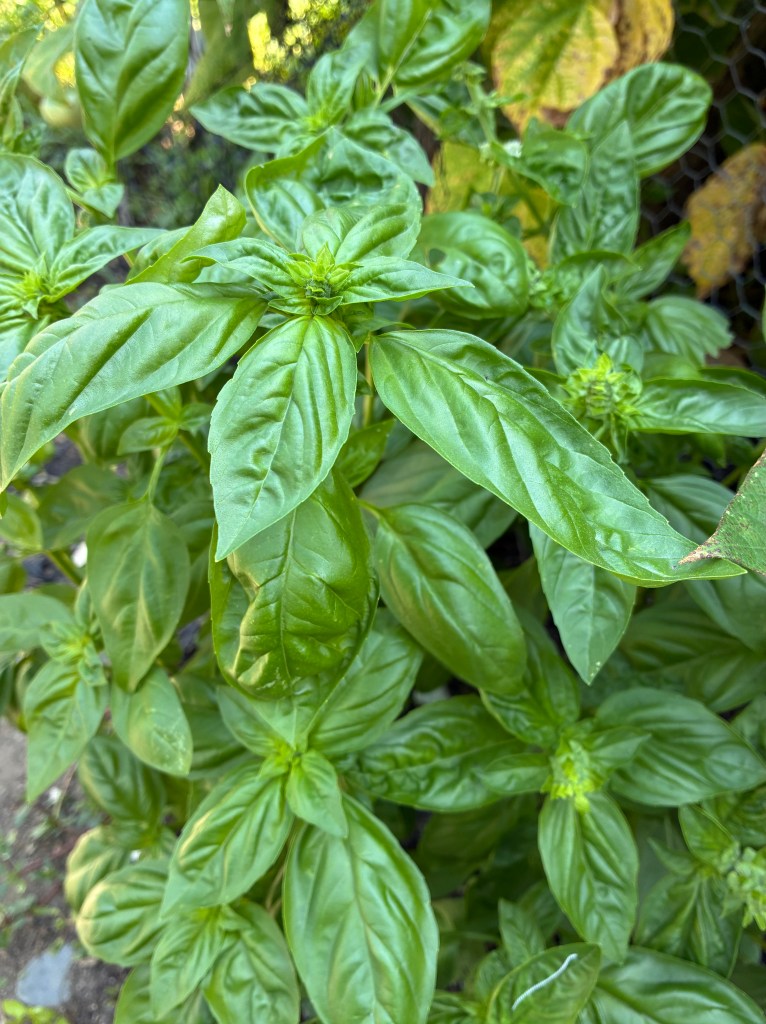
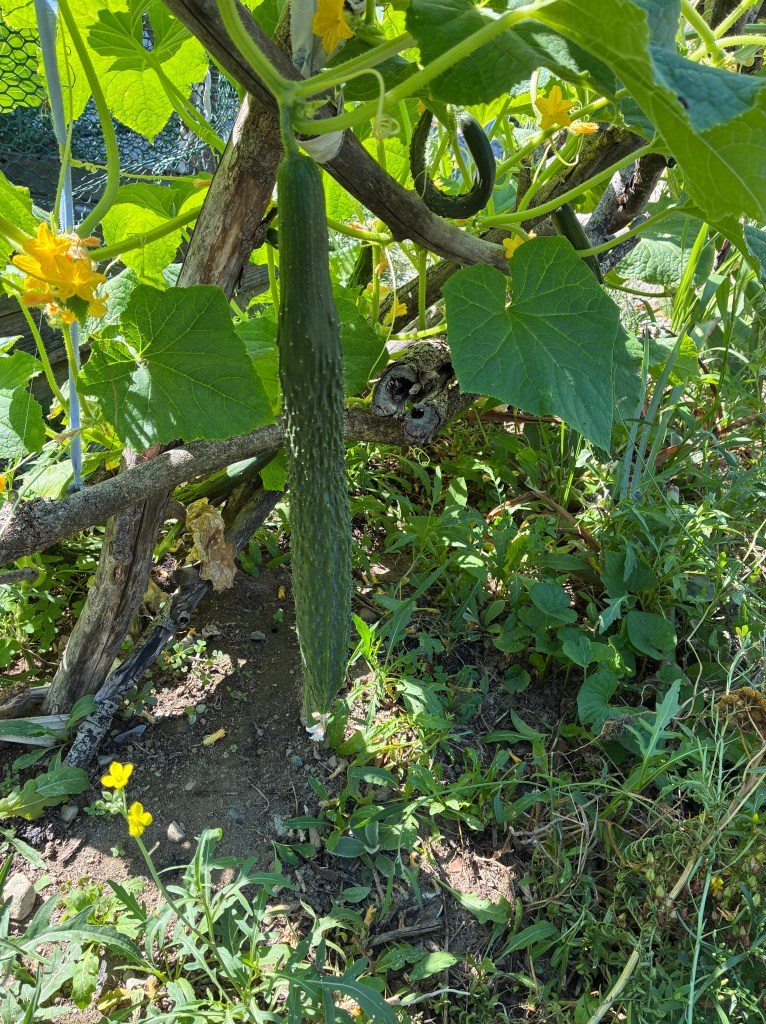
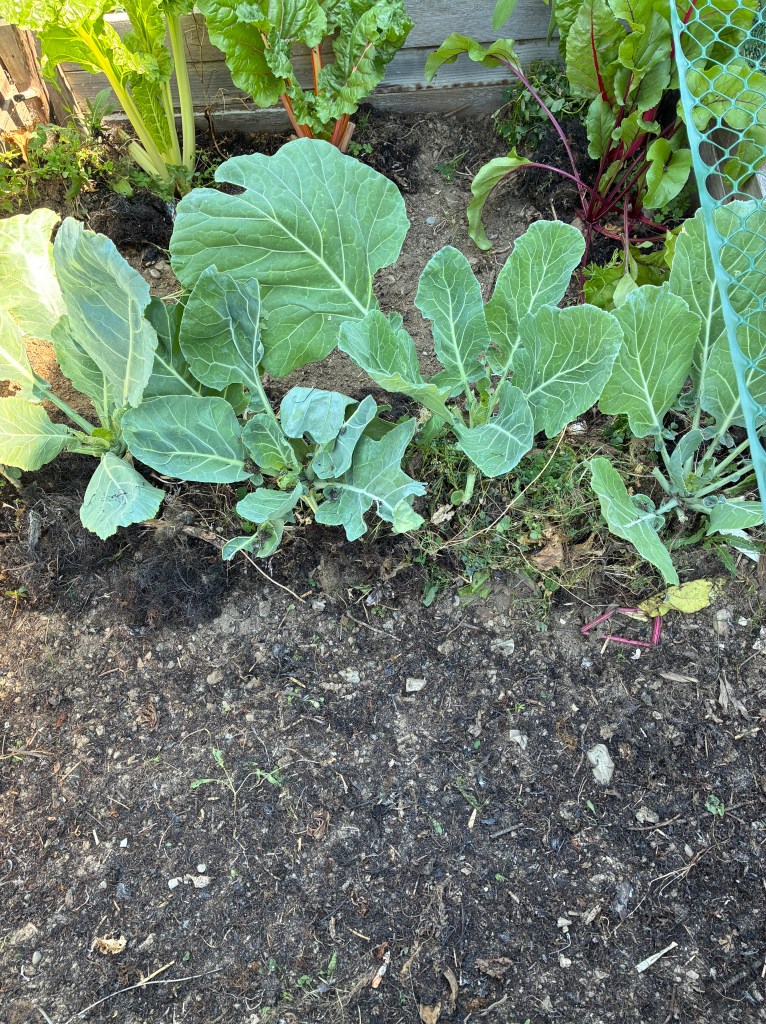
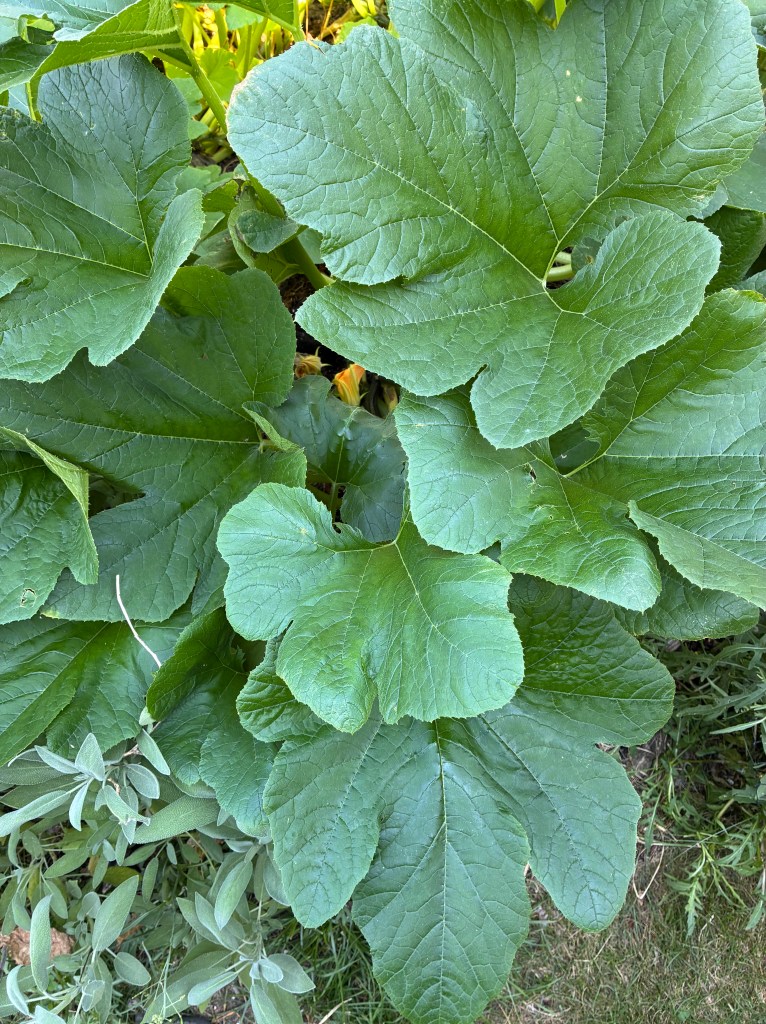
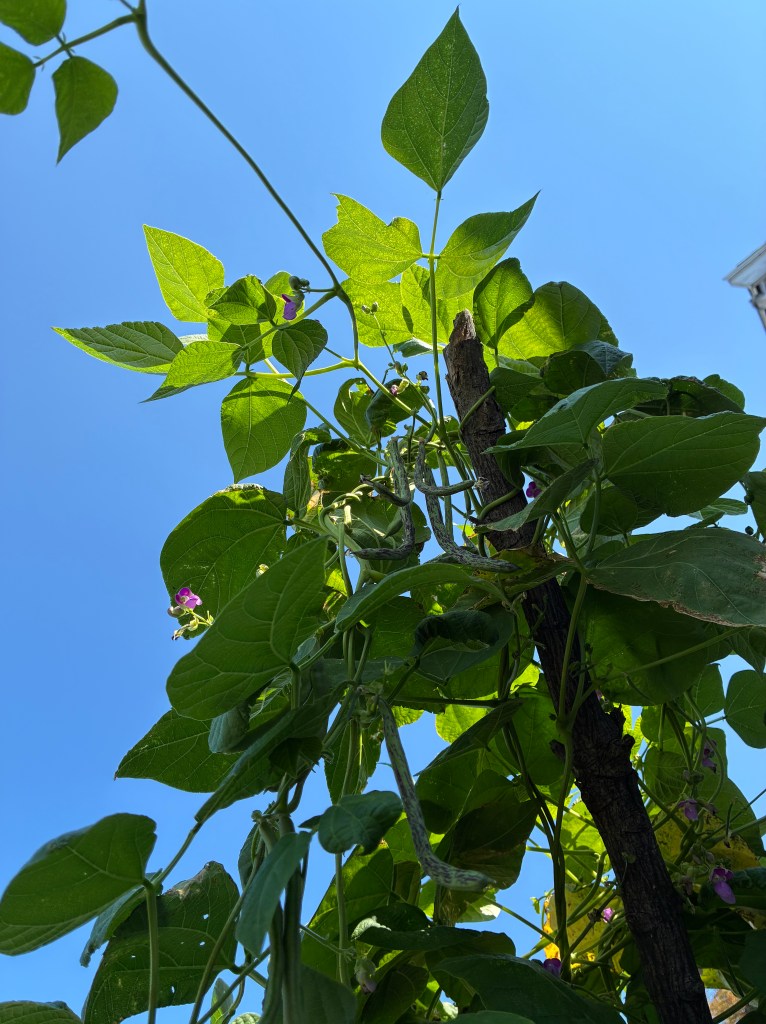
August is when it all comes together, the cucumbers, tomatoes, beans, zucchini, kale, collards, chard, while the arugula maintaines. I like to measure things and here is the report: rattlesnake beans 8.5 feet, apsaragrass 7.5 feet, tallest tomato plant 6.5 feet, cucumber vine 6 feet off the ground, zucchini five feet out from the stem, chard leaf over two feet. These measurements and the color of the plant leaves are a product of healthy soil. The healthy soil is a produce of crop rotation, care, minimal digging and continually adding organic matter. That is only possible with the privilege of stability and land. A few weeks ago Katy and I celebrated our 40th anniversary. For 30 of those years we have been eating from this garden. Summer in Hull is good and it feels amazing to have children who return in the summer to bring their partners and children to be here.
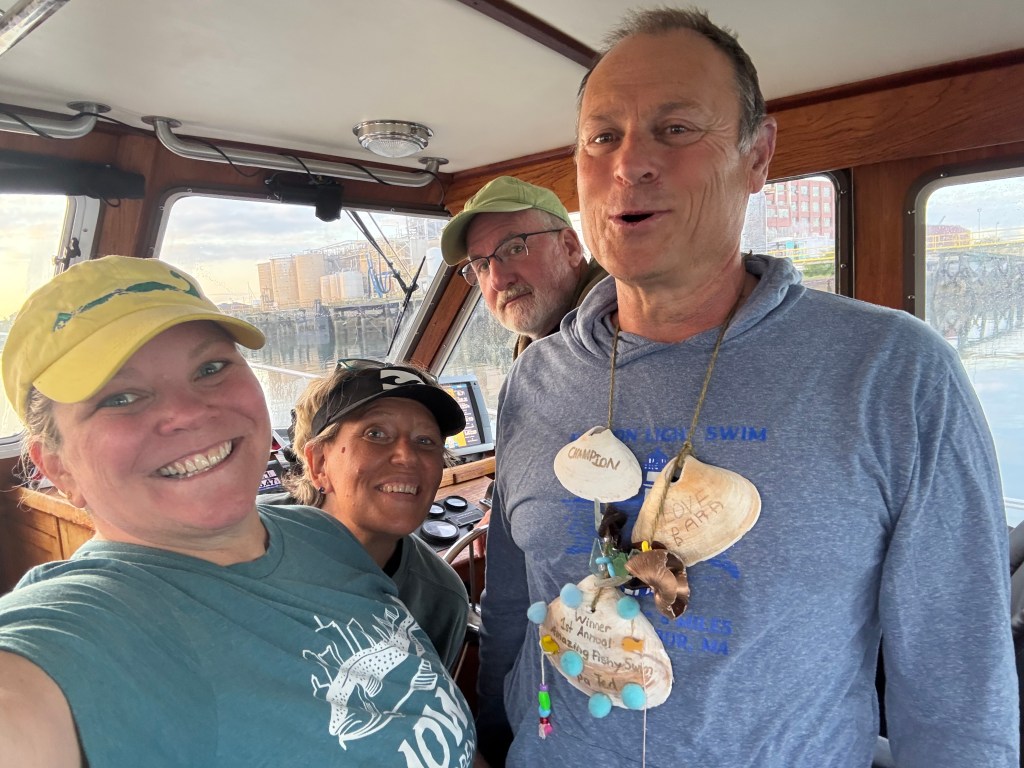
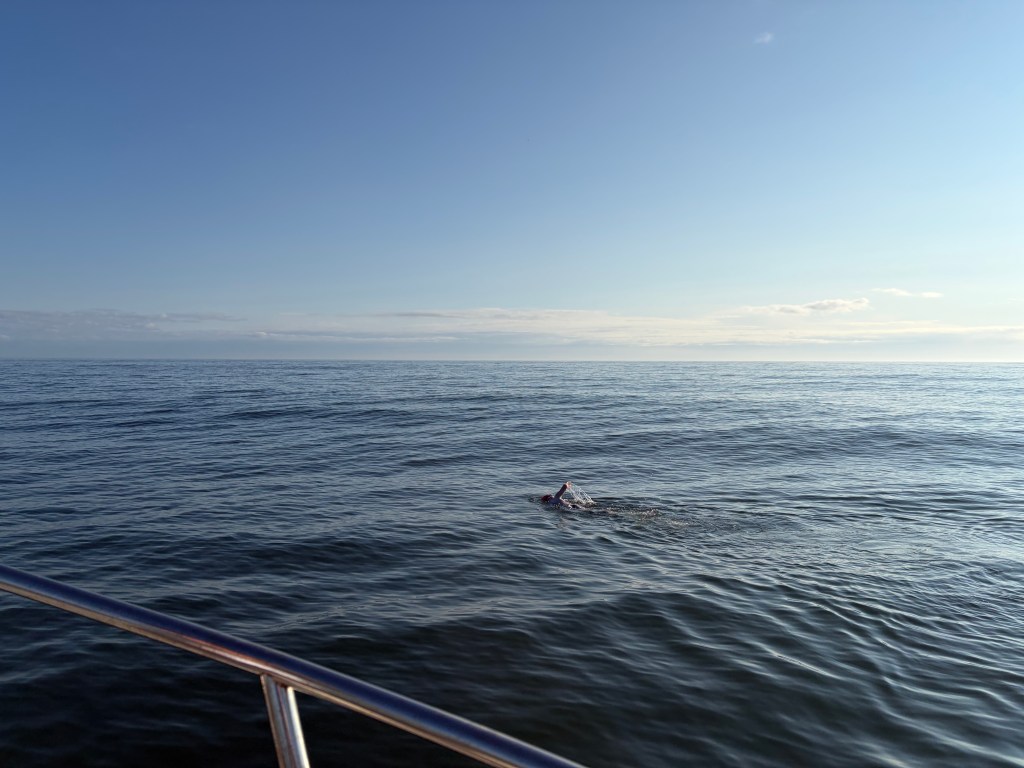
For me a big event this summer was on Friday July 31st. That day I went on a long swim starting at the southern most point of Nantasket Beach, landing briefly on Little Brewster Island and then swimming on to M Street Beach in South Boston. A swim of about 12 and a half miles. The conditions for the swim were magical. At the start the water was glassy smooth with gentle two/three foot swells moving in the direction I was swimming. Even better than the weather were the support boat and crew: Timmy Burke the pilot, Jess Garber the official observer, and Elaine Howley my feeder and support swimmer. Solo distance swimming is a team sport and I still feel the glow of that team. It is the feeling of security that comes out of dependence. While the swimmer may swim the strokes no one can do a swim like this alone and the need to let go of control and follow the pilot and the crew is a goodlesson to learn, a lesson that goes beyond swimming. Elaine swam in the last hundred yards with me and waiting for me on the beach was Katy and my training partner Anuj Sampat. That night we had the fifth annual cake party with our neighbors. It has been a tradition for Maud to make a cake to show appreciation for the love and care our neighbors Tracy and Sue and their children give to our grandchildren. Maud’s cakes are always the best cakes of the year. That Friday cake party was a double party as we celebrated the swim as well our friendship.
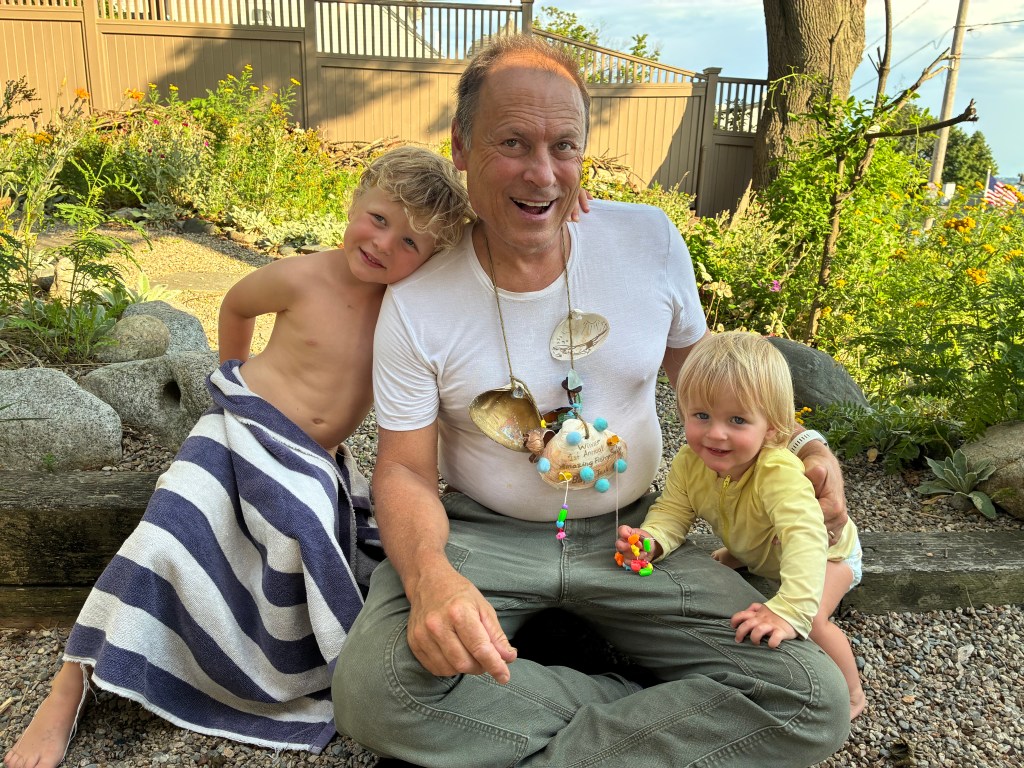
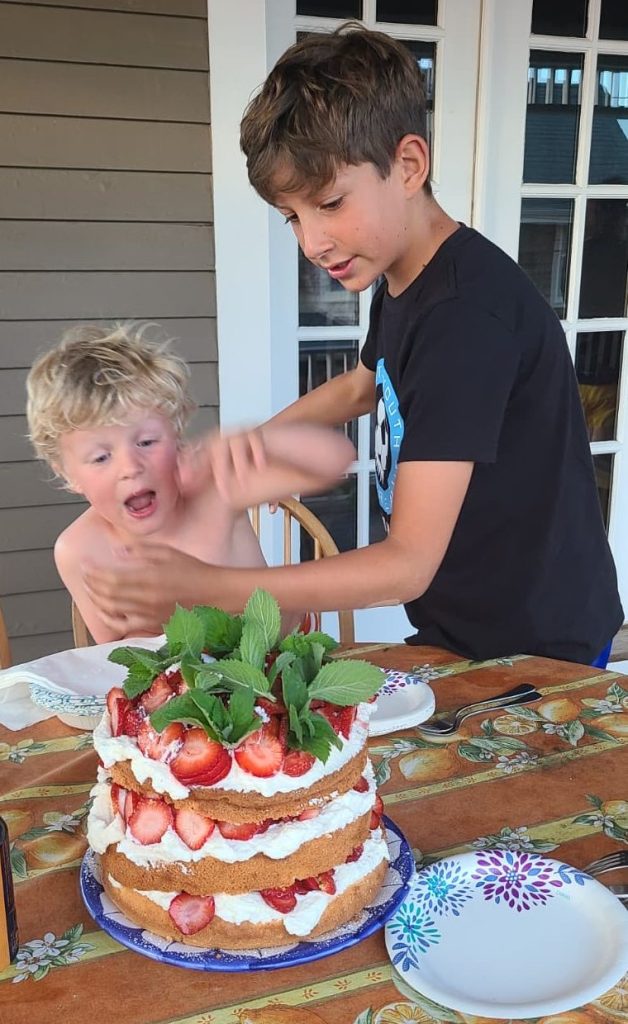
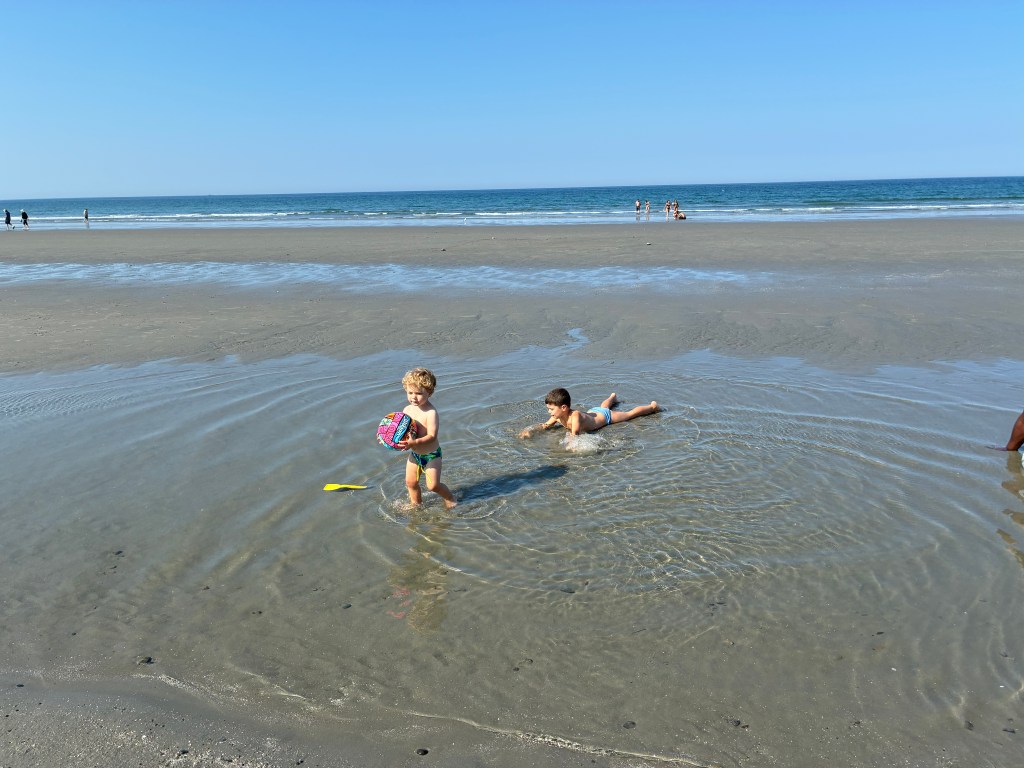
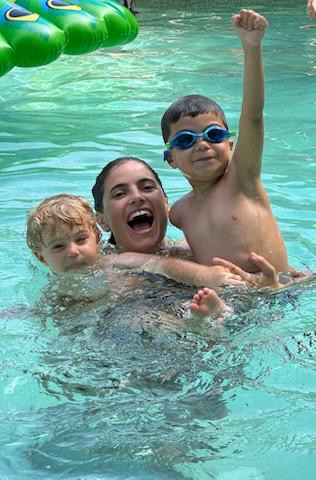
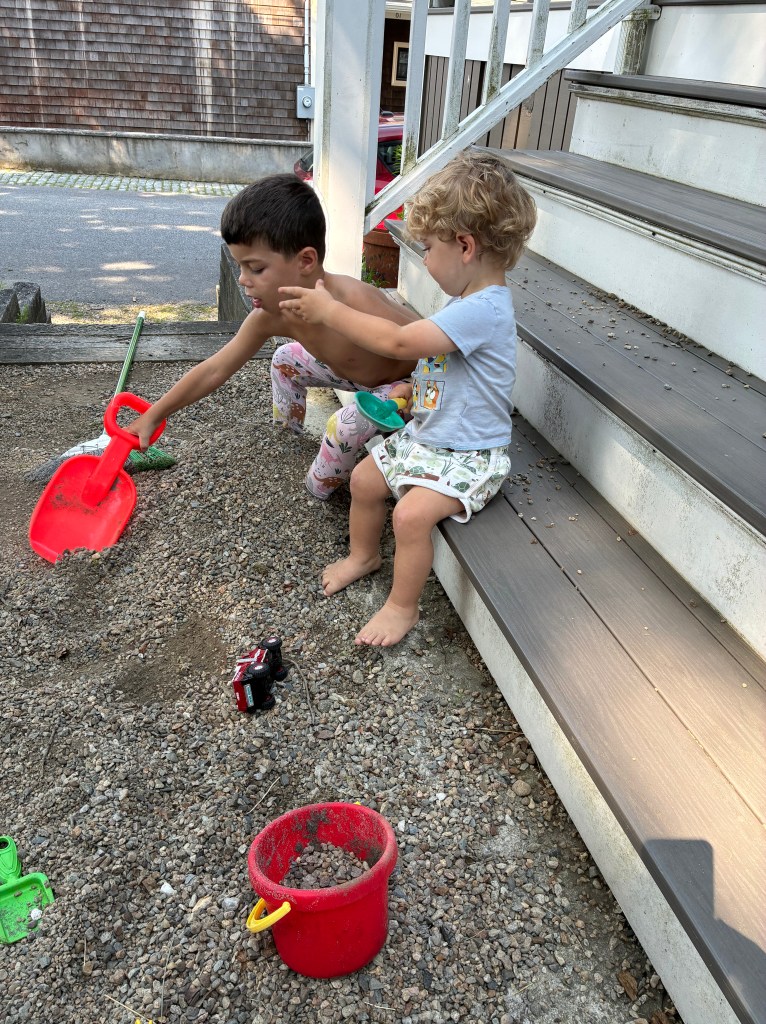
It is quiet now and until next summer our children and their families have left Hull. We are confident that with the water, our neighboors and the garden that they will be back. These photos below are a few memory of the six weeks of company.
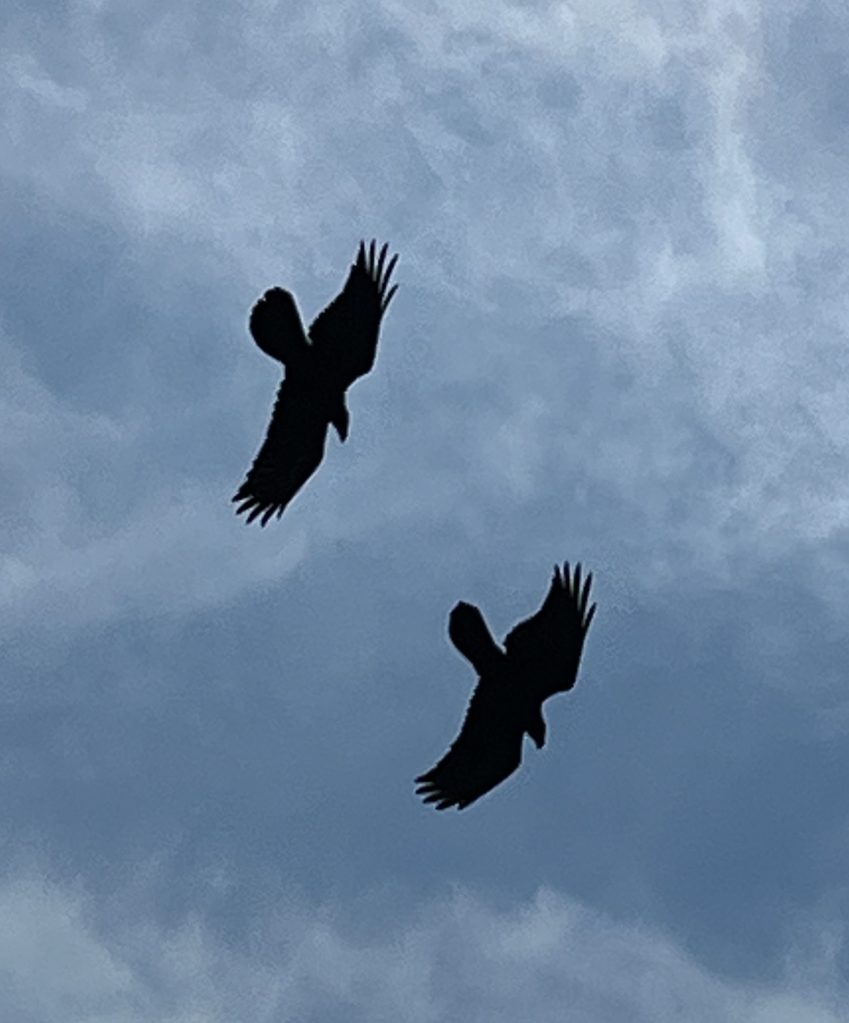
In late June just as Josh and Cleo and family came to Hull ravens came to Hull too. Ravens had briefly visited last summer. I suspect that it is the same ravens who are back this year as they too appreciate Hull in the summer. I have been interested in ravens since I was a child and then only saw them when visiting the Blue Ridge Mountains as they never came down to Charlottesville VA, where I grew up.
I am so focused on the ravens that Katy calls them, “your friends.” That is what they are. The ravens and the bees are my friends and with the visitors gone they are even more important to me. I usually hear the ravens before I see them. Ravens have among the most complex vocalization patterns of any bird. I hear them and then I go out to look for them. When I find them, I look at how they hang and glide on the wind. What I see now is not too different from what I remember seeing as a child. I remember watching them as they seemed to be enjoying the updrafts off Humpback Rock in the Blue Ridge. Ravens are new again for me but in the past few years I have really been appreciating the bees. I love watching the bees in the garden and I often stop passersby to show them the bees on the mint. Every afternoon when the bees are at their most dense I try, as a practice, to spend a few minutes admiring the bees on the mint. Seeing all the different kinds of bees and watching them go from flower to flower.
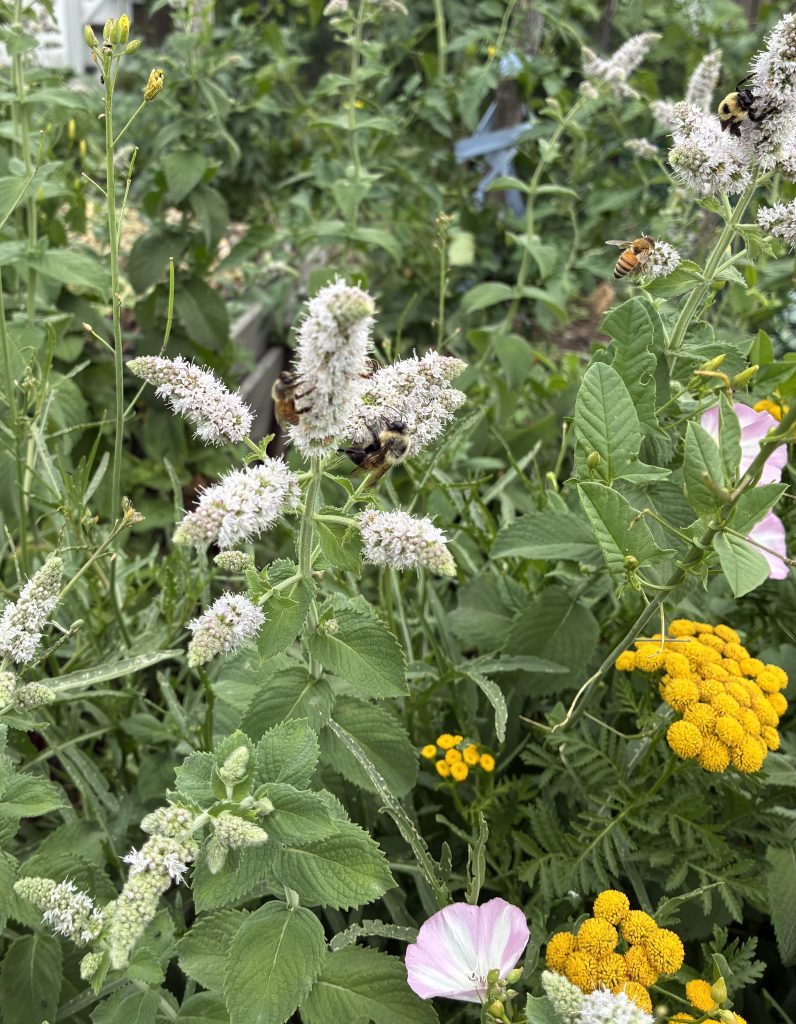
The garden with and without children is good. I hope you too can spend time in your gardens or appreciating other’s gardens and you too can make friends with the wild creatures that live where you live.


Bravo, Ted! Wonderful account of your loves, xo
LikeLiked by 1 person
That sounds like a marvelous swim. I swam (1) mile for the first time earlier this summer and I simply cannot fathom 12 let alone 12.5. A good team is indeed essential.We have a wealth of ravens in Northern California; so many in fact that sometimes I see a bird and hope it is a hawk or a falcon but then say to myself almost disappointedly “oh it’s just a raven” when I see that it is a raven. I am glad that the ravens are visiting hull in the summer and I am glad they are bringing you such joy. Next time I see a raven (which will probably be soon) I will say “Ted would be so excited to see one of his friends” and then I will be excited too. This is another nice reminder to experience life without the goggles of habit and categories.
LikeLike